
Roofing Guide for Long Island Homes
Everything Long Island homeowners need to know about roofing — materials, costs, what lasts in coastal weather, and how to choose the right contractor.
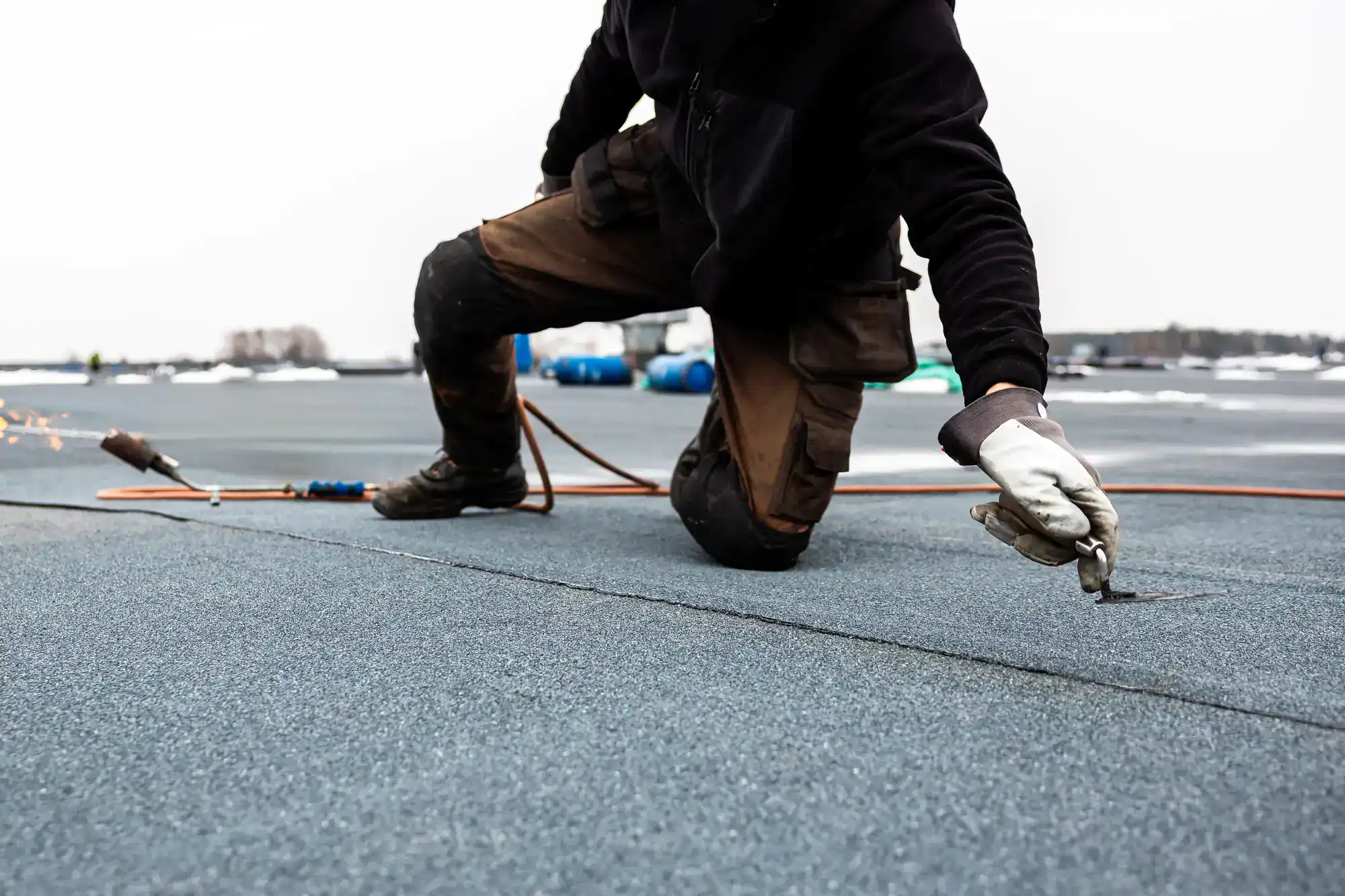
Most roofing decisions start with something going wrong. A water stain on the ceiling after a nor’easter. Shingles in the yard after a windstorm. Or a home inspector’s report that uses the phrase “end of useful life.” Whatever brought you here, you’re probably trying to figure out what you actually need — and whether the contractor quoting you is being straight with you.
This guide is built for Long Island homeowners specifically. Not generic advice that could apply anywhere, but real context for Suffolk County’s climate, building codes, and the materials that hold up here. We’ve been doing this work across Long Island for over 22 years, and the questions below are ones we hear every week.
Roofing Materials Comparison: What Works on Long Island
Suffolk County sits in Wind Zone 2, which means roofing systems here need to be rated for 130 mph wind speeds. That’s not a technicality — it’s a real design requirement that affects which materials make sense and how they need to be installed. Add salt air along the coast, freeze-thaw cycles in winter, and the occasional direct hit from a tropical storm, and you’re dealing with conditions that eliminate a lot of the cheaper options quickly.
The most common material on Long Island is still architectural shingles, and for good reason. They’re cost-effective, widely available, and when installed correctly with proper underlayment and ice-and-water shield, they perform well in this climate. A quality architectural shingle carries a 25–30 year lifespan, though some premium lines are rated up to 50 years. The average shingle roof cost in Suffolk County runs roughly $8,000–$18,000 for a standard single-family home, depending on pitch, complexity, and whether a tear-off is involved.
Metal Roofing, TPO, EPDM, and Premium Options
Beyond architectural shingles, Long Island homeowners have more options than most realize — and the right choice depends heavily on where you live, what your home looks like, and how long you plan to stay.
Standing seam metal roof systems run $10–$35 per square foot installed, with most homeowners investing between $20,000 and $34,000 for an average-sized home. Corrugated metal roofing comes in lower — typically $7–$12 per square foot installed — and works well for outbuildings, garages, and some residential applications. Metal roofs that look like shingles are also available if you want the longevity of metal without the industrial aesthetic. These systems are virtually indistinguishable from traditional shingles at street level, which matters in neighborhoods with strict HOA guidelines or historic character.
Metal roofing lifespan sits at 40–70+ years depending on gauge and coating. In coastal communities like Bay Shore, Babylon, or anywhere near the Sound, aluminum and Kynar-coated steel are the better choices over untreated galvanized metal — salt air will corrode unprotected panels faster than you’d expect.
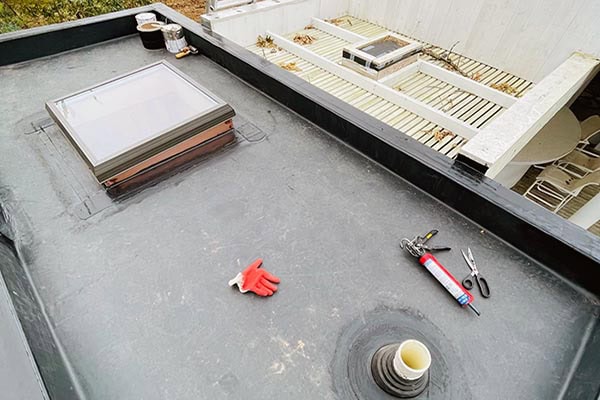
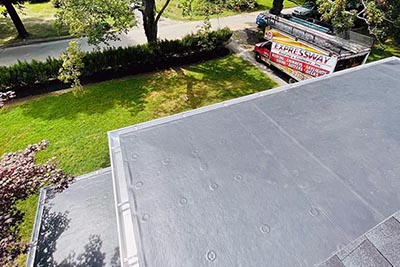
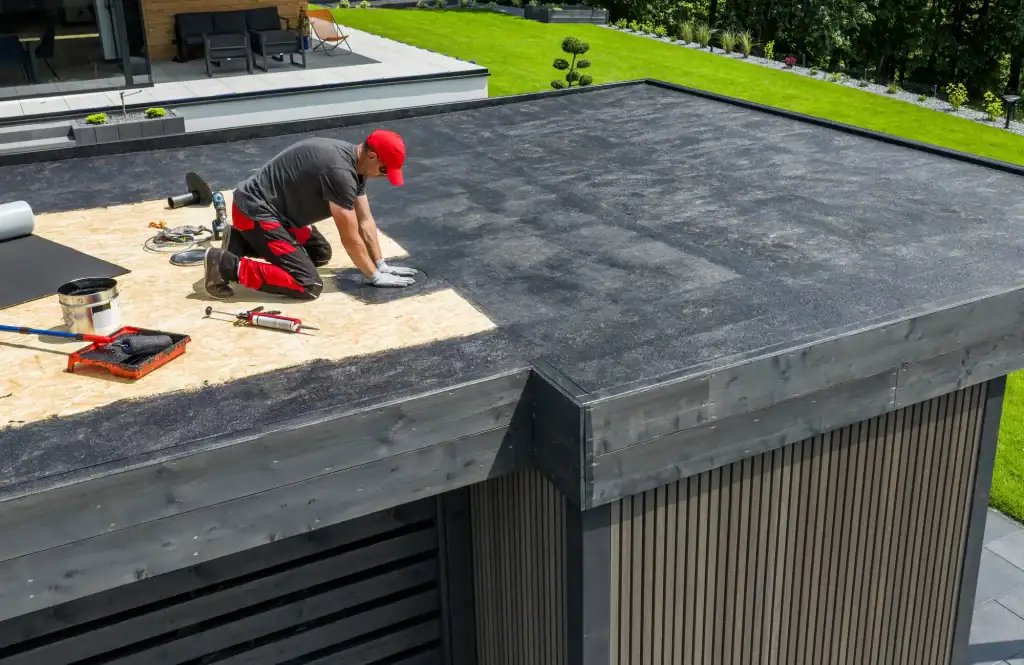
For flat or low-slope roofs — common on garages, additions, and commercial metal roof installations across Suffolk County — TPO roofing and EPDM roofing are the standard options. TPO is a single-ply membrane that reflects heat and handles UV well, with a lifespan of 15–30 years. EPDM rubber roofing is a durable synthetic rubber membrane that averages around $17,000 installed for a typical home and lasts 20–30 years. Both require proper drainage design to perform — flat roofs that pool water fail early regardless of the material.
On the premium end, copper metal roof systems last 70–100+ years and develop a distinctive patina over time. They’re a natural fit for high-value properties in East Hampton, Southampton, and the North Shore, where longevity and aesthetics both matter. Slate roofing can last 100 years or more and is still found on many older homes across the North Fork and Gold Coast communities — but it requires a specialist to install and repair correctly. Not every roofing company has that experience. Tin roofing, historically common on older Long Island farmhouses, has largely been replaced by corrugated steel roofing panels, which offer better durability and weather resistance while maintaining a similar profile.
What Goes Into a Roofing System Beyond the Shingles
The surface material is what people see, but it’s not what keeps water out of your home. A proper roofing system is made up of several layers, and skipping or skimping on any of them is where most roofing failures actually start.
Ice-and-water shield is required by New York State building code along the first 24 inches from the eave — and in many Suffolk County towns, inspectors expect extended coverage given the coastal exposure. This membrane is what prevents ice dams from driving water under your shingles during a freeze-thaw event. If your current roof was installed without it, you’ve probably already seen the results on your ceiling.
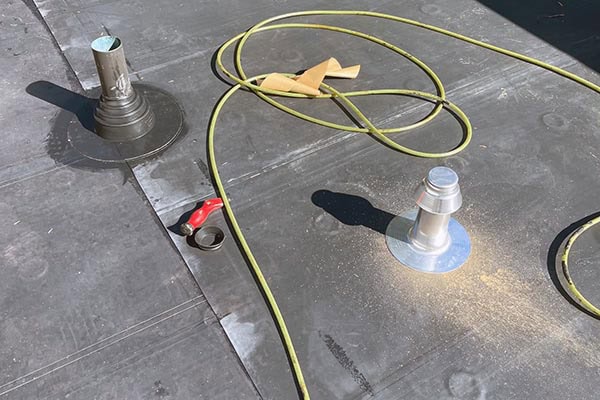
Underlayment sits beneath the surface material and acts as a secondary moisture barrier. Synthetic underlayment outperforms traditional felt in high-wind conditions because it’s lighter, more tear-resistant, and doesn’t absorb water. Drip edge along the eaves and rakes directs water into your gutters rather than letting it wick back under the shingles and rot the fascia. Flashing — the metal strips around your chimney, skylights, and roof penetrations — is the most common source of leaks when it’s done poorly. Proper step flashing and counter flashing installation is a skill, not an afterthought.
Attic ventilation is the piece most homeowners never think about until they have a problem. When warm air from inside your home rises into an under-ventilated attic, it creates the exact conditions that cause ice dams in winter and accelerate shingle degradation in summer. Balanced ridge and soffit ventilation extends the life of every material above it. We inspect ventilation as part of every roof assessment we do — because a new roof installed over a ventilation problem is a new roof that will fail early.
Roofing Cost in Suffolk County: What You Should Expect to Pay
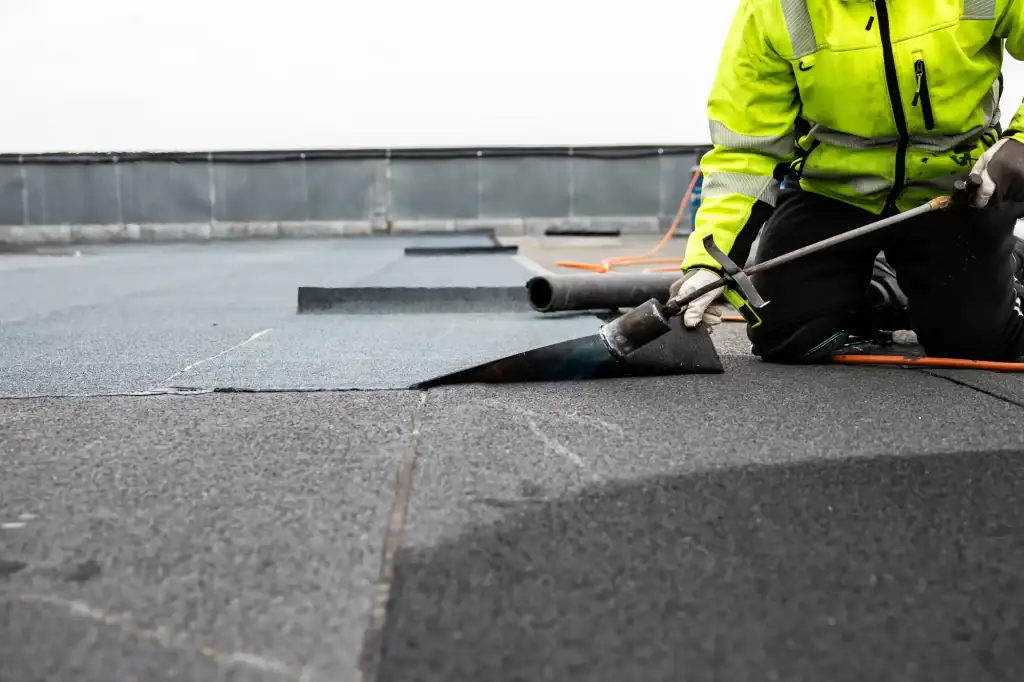
On Long Island, roofing costs run higher than the national average — labor costs are higher, coastal building code requirements add complexity, and permit fees vary by town. For most single-family homes in Suffolk County, a full architectural shingle replacement lands between $10,000 and $22,000 depending on the size of the home, roof pitch, number of penetrations, and whether the decking needs any repair after tear-off.
Roofing cost is one of the most searched topics for a reason — the range is wide, and it’s hard to know what’s reasonable without a baseline. A new roof is also one of the few home improvements with a near-100% cost recovery rate at resale, which changes the math on whether to delay.
Roofing Prices by Material Type: A Realistic Suffolk County Breakdown
Here’s how the major material types break down in terms of installed cost for a typical Suffolk County home. These are real-world ranges, not manufacturer marketing figures.
Architectural shingles remain the most affordable full-replacement option, with installed costs generally running $8,000–$18,000. Premium composite shingles — which combine fiberglass, asphalt, and recycled materials — can push toward $20,000–$25,000 but carry lifespans of up to 50 years, which changes the cost-per-year math considerably. Standing seam metal roofing typically runs $20,000–$34,000 for an average home, while corrugated metal panels come in lower at roughly $7–$12 per square foot installed. EPDM rubber roofing averages around $17,000 for a typical installation, though small flat-roof additions can come in under $5,000.
Copper metal roof systems and slate are the highest-cost options — copper can run $25–$50 per square foot installed, and slate varies widely based on the type and origin of the stone. Both are long-term investments that make financial sense on the right property, particularly in the Hamptons or North Shore communities where home values support the premium.
What drives cost up beyond material choice? Roof pitch is a major factor — steeper roofs require more safety equipment and slower installation, which adds labor time. Tear-off and disposal of old material adds cost, but we always do it — overlaying new shingles over old ones voids most manufacturer warranties and traps moisture against the decking. If the decking itself has rot or soft spots, that’s an additional line item. And in Suffolk County, permit fees vary by town — Brookhaven, Islip, Huntington, and Babylon all have different fee schedules and processing timelines.
Getting a metal roofing estimate or any roofing quote in writing with itemized line items — materials, labor, tear-off, disposal, permits — is the only way to compare bids accurately. A low number that bundles everything together is almost always hiding something.
This is where most homeowners spend the least time and take the most risk. The roofing industry has a well-documented problem with storm chasers — contractors who show up after a major weather event, offer low bids, collect deposits, and either do poor work or disappear entirely. Suffolk County has seen this pattern after every significant nor’easter and after Hurricane Sandy in 2012.
The baseline requirements for any roofing company you hire in Suffolk County: they must hold the correct local license for the town where your home is located, carry liability insurance and workers’ compensation, and be willing to pull permits themselves. New York State doesn’t issue a statewide roofing license — licensing happens at the town level, which means a contractor working across Brookhaven, Islip, and Huntington needs to be familiar with three separate building departments. If a contractor asks you to pull your own permit, that’s a red flag.
GAF certified roofers represent a meaningful credential in this market. GAF is North America’s largest roofing manufacturer, and their certification process requires verified licensing, insurance, and reputation checks. GAF contractors at the standard certification level can offer the System Plus Limited Warranty. GAF Master Elite contractors — a designation held by only a small percentage of roofing companies — unlock the Golden Pledge Warranty, which includes a 50-year material guarantee and a 25-year labor warranty. That labor warranty is the part that matters most: it means the company stands behind the installation, not just the product. One in four homes in the U.S. already carries a GAF warranty, which tells you something about the manufacturer’s reach and reliability.
Beyond certification, look for a company that’s been operating specifically on Long Island for a significant period of time. Local experience means we know which materials hold up in coastal conditions, which towns have stricter inspection requirements, and what a roof in Riverhead faces differently than one in Sag Harbor. Residential roofing companies that have been in this market for decades have a track record you can verify — through reviews, through neighbors, through the building department records of permitted jobs.
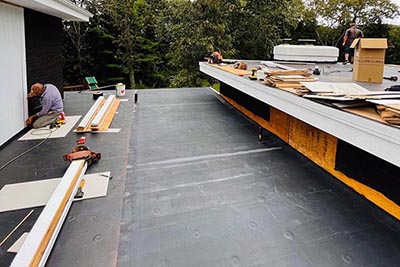
We’ve been working across Nassau and Suffolk County for over 22 years as a family-owned company based in Manorville. When we send a crew to your home, we use drone video to document the roof condition before we ever put a ladder up — so you can see exactly what we see, and there’s no ambiguity about what needs to be done. Our fleet of 10 trucks means we’re not booking six weeks out when you have an active leak. And because we also handle chimneys, gutters, siding, and decks, we can address everything at once rather than coordinating three separate contractors. That’s what working with a metal roof specialist or a full-service exterior contractor actually looks like in practice — one company, one schedule, one warranty relationship.
24 Hour Roofing Service and Emergency Repairs
Roof damage doesn’t wait for business hours. When a nor’easter tears through Suffolk County or a tree limb punctures your roof at midnight, you need 24 hour roofing service that’s actually available — not a voicemail system that calls you back the next morning.
We offer emergency roofing contractors support because we’re based here. Our crews know the local building departments, understand the permit process across Brookhaven, Islip, Huntington, and the other Suffolk County towns, and can coordinate with insurance adjusters who are familiar with coastal damage patterns. When you call us for 24 hour roofing service after a storm, you’re calling a company that’s been handling this work for over two decades — not a regional franchise that will disappear once the job is done.
Article details:
- Published by:
- Roofing & Chimney Contractor Long Island, NY
- Published to:
- Last modified: June 16, 2026
- July 1, 2026
Share:
Continue learning: