
Professional Roof Inspection in Suffolk County, NY
Most roof damage isn't visible from the ground — or even from a ladder. Here's how drone technology changes what a professional roof inspection can actually find.
You can’t always tell from the driveway. The roof looks fine, nothing’s leaking — but that’s not really the whole picture, and most homeowners know it. What you can’t see from the ground is often exactly what’s causing the slow, quiet damage that turns a $400 repair into a $10,000 problem.
If you’re a homeowner in Suffolk County, you already know what this climate does to a house. The nor’easters, the salt air, the back-and-forth freeze cycles every winter — it all adds up. A professional roof inspection, done right, is how you stay ahead of it. Here’s what that actually looks like when it’s done properly.
What a Professional Roof Inspection Actually Covers
A real inspection isn’t a contractor glancing up at your shingles from the driveway and handing you a quote. It’s a systematic assessment of every component that keeps water out of your home — shingles, flashing, ridge caps, valleys, chimney seals, gutters, soffits, and the attic beneath it all.
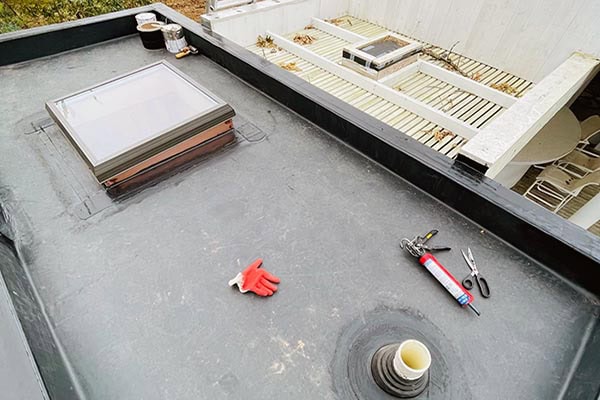
The exterior tells part of the story. Granule loss on shingles, cracked or curling edges, displaced flashing around the chimney or skylights, rust on metal components — these are the early warning signs that most homeowners never catch until water is already coming in. The attic tells the rest. Staining on the decking, mold in the corners, light showing through the boards — these are the signs of a roof that’s already past the early-warning stage.
We document all of it, give you a clear picture of what’s urgent and what can wait, and leave you with something concrete — not just a vague estimate.
Roof Damage Repair Starts With Knowing What You're Actually Dealing With
The reason roof damage repair gets expensive isn’t usually the damage itself — it’s how long it went undetected. A small flashing gap that lets in a quarter-inch of water during a storm doesn’t seem like much. But over two winters, that moisture works its way into the decking, sits there, and starts the process that leads to rot, mold, and eventually structural repair that costs far more than the original fix would have.
This is where drone technology changes the equation. A high-resolution drone camera can fly the full perimeter of your roofline, hover over the ridge, and get a close-up view of every valley and penetration point — without anyone setting foot on the surface. That matters for a few reasons.
First, it’s safer. OSHA data consistently shows that roof falls account for nearly 10% of all fatal workplace falls. Keeping the inspector on the ground eliminates that risk entirely. Second, it’s more thorough. A technician walking a steep-pitch roof is focused on not falling. Our drone operator on the ground is focused entirely on what the camera is showing. Those are different levels of attention, and the difference shows up in what gets caught.
Third — and this is the part most homeowners don’t think about until they need it — drone video footage is documentation. If you’re filing an insurance claim after a nor’easter or a hurricane, the difference between a claim that gets approved and one that gets disputed often comes down to what evidence you can provide. Aerial video of your roof captured before any repair work begins is hard for an adjuster to argue with.
We’ve been doing this on Long Island for over 22 years, and the shift to drone-assisted inspections has genuinely changed how much we can catch — and how clearly we can show homeowners what we found. There’s no “trust me” involved when the footage is right there on the screen.
Residential Roof Repairs Are Cheaper When You Catch Problems Early
A professional roof inspection in Suffolk County typically runs between $300 and $500. That number makes some homeowners hesitate. But the math gets clearer when you consider what deferred maintenance actually costs — and how often it compounds.
More than 30% of homeowners end up facing major, unexpected roof repair bills that a timely inspection would have caught early. We’re talking about the difference between replacing a few cracked shingles and replacing the decking beneath them because moisture had two years to work its way in. Or the difference between re-sealing a chimney flashing and repairing the interior ceiling damage it caused when no one noticed the gap until winter.
Residential roof repairs across Suffolk County carry the added weight of what this climate throws at a house. Salt air accelerates corrosion on every metal component — flashing, chimney caps, drip edges, gutter hangers. You won’t see that corrosion from the ground, and you won’t feel it until something fails. Freeze-thaw cycles stress shingles in ways that shorten their effective lifespan well below what the manufacturer’s rating assumes. Ice dams — a real and recurring problem across Long Island winters — form when heat escapes through the roof, melts snow at the surface, and the water refreezes at the cold eaves, backing up under the shingles and into the home.
None of these are dramatic, sudden failures. They’re slow, invisible processes that a drone-assisted inspection can surface before they become expensive. That’s the actual value of getting your roof looked at on a regular schedule — not just when something goes wrong, but before it does.
Because we also handle chimney work, gutters, and siding, our inspections don’t stop at the shingles. We’re looking at the whole exterior picture in one visit. A chimney flashing failure that a single-trade roofer might miss — or not mention — is something we catch and can address the same day. That integrated view is something most contractors in this market simply can’t offer.
Roof Maintenance in Suffolk County: What the Schedule Should Actually Look Like
Most roofing manufacturers recommend an inspection at least once a year. For homeowners in Suffolk County, twice a year is smarter — once in the spring to assess what the winter left behind, and once in the fall before nor’easter season starts. If you’ve been through a significant storm, that’s a third inspection, regardless of where it falls on the calendar.
Suffolk County has weathered 45 hurricanes since 1930. Hurricane Sandy alone caused roof damage to hundreds of thousands of Long Island homes. The nor’easters that roll through every winter bring sustained winds over 60 mph and enough moisture to find every weak point in a roofing system. That’s not a reason to panic — it’s just the reality of living here, and a consistent inspection schedule is the straightforward response to it.
How Often Should Long Island Homeowners Schedule a Roof Inspection?
The honest answer is: more often than most people do. The industry standard of once per year is a floor, not a ceiling — and that standard was written for climates less demanding than what Suffolk County delivers on a regular basis.
Spring inspections make sense because winter is consistently the hardest season on a roof here. Ice dam formation, snow load stress, freeze-thaw cycling — all of it accumulates between November and March. By the time April arrives, there’s often damage that formed gradually and quietly over months. A spring inspection catches it before the warm-weather moisture season adds another layer of stress.
Fall inspections are about preparation. You want to know your roof is sealed and structurally sound before the first nor’easter of the season. A loose flashing, a handful of missing granules, a cracked ridge cap — these are manageable repairs in October. They become emergency calls in February.
For homeowners on the East End — Southampton, East Hampton, Bridgehampton, Montauk — there’s an additional consideration. Properties that sit vacant through the winter can accumulate storm damage that goes undetected for months. A post-season inspection in the spring and a pre-season check in the fall is the minimum for a second home or seasonal property. By the time you arrive in May and notice water staining on the ceiling, you’re already dealing with a problem that’s been developing since January.
Older homes across Brookhaven, Islip, and Babylon — much of which was built during the post-WWII suburban expansion — are on their second or third roof system. That aging housing stock is particularly vulnerable to the compounding effects of Long Island’s coastal climate, and those roofs deserve closer attention than a newer build would.
What Should You Expect From a Roof Inspection Report?
This is a question worth asking before you hire anyone, because the answer varies more than it should.
A professional inspection should leave you with something concrete — not a verbal summary and a quote you can’t verify. At minimum, you should receive a written assessment of what was found, clear photos or video documentation of any issues identified, a breakdown of what needs immediate attention versus what can be monitored, and a clear explanation of your options.
When drone technology is part of the process, that documentation is aerial video footage — a complete visual record of your roof’s condition captured before any work is done. That footage serves multiple purposes. It shows you exactly what we found, in a format you can actually review rather than take on faith. It provides a baseline for future inspections, so you can see how conditions have changed over time. And as mentioned earlier, it’s the kind of documentation that carries real weight when you’re dealing with an insurance claim.
One thing worth being direct about: the market in Suffolk County, like most markets after a major storm, sees an influx of contractors offering “free inspections.” The BBB has specifically warned about this tactic — unlicensed crews who either manufacture damage or exaggerate findings to generate work. A professional inspection from a licensed, insured contractor with a verifiable local track record is a categorically different thing. The documentation, the process, the accountability — none of that exists with a door-to-door crew that showed up the week after a storm and won’t be here next year.
We’re fully licensed and insured, have operated out of Manorville for over 22 years, and have the reviews to back it up. When we hand you an inspection report, it reflects what’s actually on your roof — and we can show you the footage to prove it.
Finding a Trusted Roof Inspector in Suffolk County, NY
A roof inspection isn’t a complicated decision. It’s a straightforward way to know what’s actually going on up there — and in a climate like Long Island’s, that knowledge is worth having on a regular basis.
The right inspector shows you what they found, explains what it means, and gives you a clear path forward without pressure. Drone technology makes that process more thorough, safer, and better documented than a traditional walkover — and in a market where storm damage claims and insurance renewals are a real part of homeownership, that documentation matters.
If you’re a homeowner in Suffolk County and you’re not sure when your roof was last properly inspected, that’s reason enough to schedule one. We’ve been doing this work on Long Island for over 22 years — reach out for a free, honest assessment and see exactly what your roof is telling you.
Article details:
- Published by:
- Roofing & Chimney Contractor Long Island, NY
- Published to:
- Last modified: July 23, 2026
- July 23, 2026
Share:
Continue learning: