
Roofing Materials Compared: Which Fits Best for Your Home?
Asphalt, metal, slate, cedar — every material has a trade-off. Here's what actually matters when choosing a roof on Long Island.
You’re not replacing your roof every few years. This is a decision that sticks — literally — for the next two or three decades. So when you’re staring at a quote and wondering whether to go with standard asphalt shingles or spend more on metal or slate, it’s worth taking a few minutes to understand what you’re actually choosing between.
Every material has a different price point, lifespan, maintenance requirement, and performance profile. And in Suffolk County, where nor’easters roll through every winter and salt air eats through materials near the water, those differences matter more than they would in a calmer climate. Here’s what you need to know before you decide.
What Are the Main Roofing Materials Available to Suffolk County Homeowners?
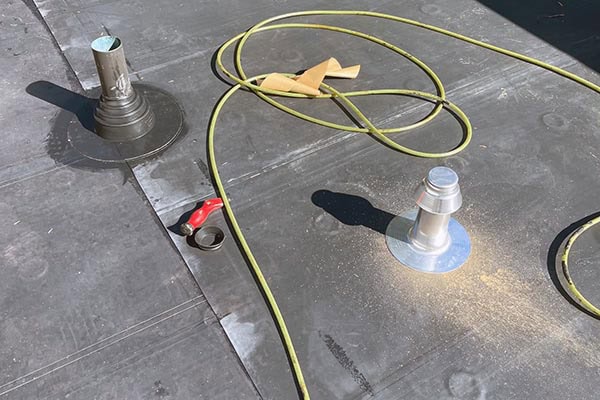
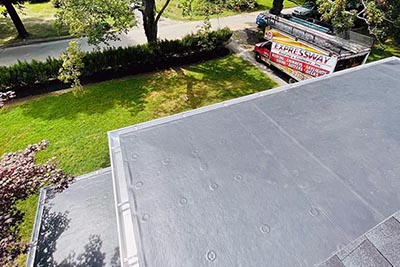
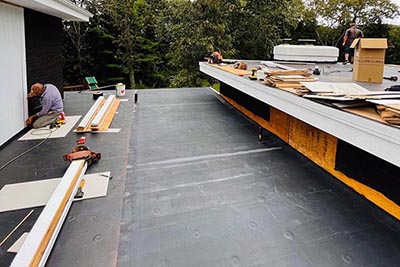
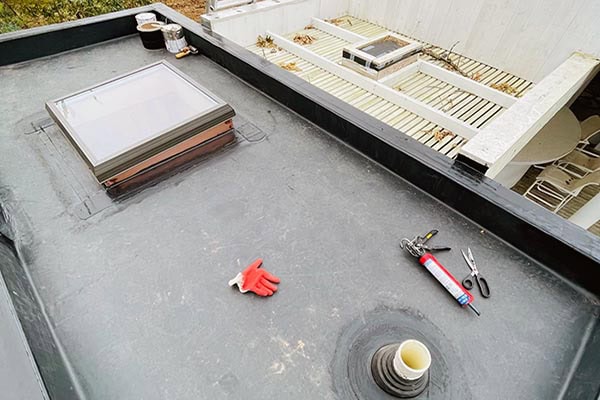
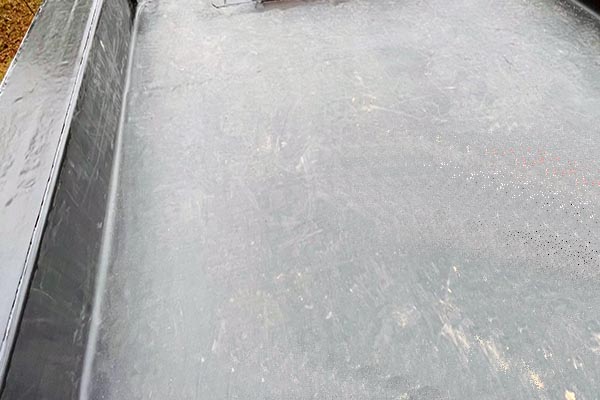
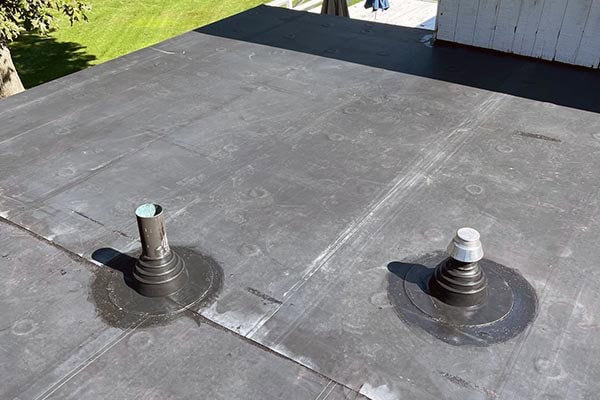
Most homeowners across Suffolk County are choosing between four or five materials: asphalt shingles, metal roofing, natural slate, cedar shake, and flat roofing systems like EPDM for low-slope areas. Each one fits a different combination of budget, home style, neighborhood, and long-term goal.
Asphalt shingles are by far the most common — and for good reason. They’re affordable, widely available, and come in a range of quality tiers. Metal roofing has grown significantly in popularity over the last decade, especially among homeowners who want something that will outlast them. Slate and cedar shake tend to show up in the Hamptons, the North Shore, and other areas where the home’s character calls for something more distinctive. And flat roofing is its own category — primarily relevant for additions, commercial properties, and certain ranch-style homes.
Roofing Materials Comparison: Asphalt, Metal, Slate, and Cedar Side by Side
Start with asphalt shingles, because they’re the benchmark everything else gets measured against. Standard 3-tab shingles run roughly $400 to $600 per square — one square covers 100 square feet — and typically last 15 to 20 years. Architectural shingles, also called dimensional shingles, cost a bit more at $500 to $900 per square but last 25 to 30 years and handle wind and impact significantly better. On Long Island, where a nor’easter can push gusts past 60 mph, that upgrade is often worth the difference.
Metal roofing sits in a different price range entirely — typically $8 to $14 per square foot installed — but the lifespan jumps to 40 to 70 years. Standing seam metal panels are particularly well-suited to Long Island’s climate because they shed water and snow efficiently, resist algae growth that’s common in humid summers, and can be coated to reflect 60 to 70 percent of solar heat. For waterfront homes near the Great South Bay or Long Island Sound, aluminum metal panels are specifically recommended over steel because they don’t corrode in salt air the way steel eventually can.
Slate is the most durable option available — natural slate roofs regularly last 100 years or more. The trade-off is cost, which typically runs $15 to $30 per square foot or higher depending on the slate variety, and the fact that your home’s structure needs to support the added weight. Many of Suffolk County’s older colonials and capes were built with enough framing to handle it, but that’s something that requires a proper assessment before you commit. In the right setting — a historic home in Southampton, a traditional colonial on the North Shore — slate isn’t overkill. It’s the right call.
Cedar shake roofing is worth a separate mention because it’s genuinely underrepresented in most online comparisons, yet it’s a meaningful choice for Long Island homeowners. Cedar gives a home a warm, textured look that no synthetic material fully replicates, and it’s particularly common in the Hamptons and North Fork communities where aesthetic standards are high. Properly maintained cedar shake lasts 25 to 50 years. It does require periodic treatment and inspection — more so than asphalt or metal — but modern pressure-treated cedar has reduced that maintenance burden considerably. If your neighborhood has an HOA or sits in a historic district, cedar shake may not just be an option — it may be expected.
How Does Long Island's Climate Affect Which Roofing Material Makes Sense?
This is the question most national roofing guides skip entirely, and it’s the one that matters most if you live in Suffolk County.
Nor’easters are the most obvious factor. From October through April, Long Island gets hit with storms that combine high winds, driving rain, and heavy snow — sometimes all three in the same event. Superstorm Sandy in 2012 left a mark on this community that homeowners still reference when they’re thinking about what their roof needs to handle. Any material you choose should be rated for high wind uplift, and your installation should include proper ice-and-water shield underlayment at the eaves and valleys where ice dams form during freeze-thaw cycles.
Salt air is a factor that often gets overlooked unless your contractor has actually worked near the water. Homes within a few miles of the Atlantic Ocean, the bays, or Long Island Sound are exposed to salt-laden air year-round. That accelerates corrosion on metal components — flashing, fasteners, gutters — and can degrade certain materials faster than you’d expect. It’s one of the reasons material selection near the coast isn’t a one-size-fits-all conversation.
Algae and moss growth is a quieter issue, but it’s one that Suffolk County homeowners deal with regularly. Long Island’s humid summers create ideal conditions for algae to take hold on north-facing roof surfaces — those dark streaks you see on older asphalt roofs. Algae-resistant shingles with copper granules are a worthwhile upgrade if you’re going with asphalt. Metal and slate are naturally resistant to biological growth, which is another point in their favor for Long Island homes.
The honest takeaway: the right material for your home depends on where in Suffolk County you live, what your home’s structure can support, what your neighborhood’s character calls for, and how long you plan to stay. There’s no universal answer — but there is a right answer for your specific situation.
What Does a Roof Replacement Actually Cost in Suffolk County?
Cost is usually the first question, and it’s a fair one. Most homeowners in Suffolk County see roof replacement projects fall somewhere between $20,000 and $25,000 for a mid-size home with asphalt shingles, though that number moves depending on roof complexity, material choice, and what’s found underneath once the old roof comes off.
The broader range across all materials runs from roughly $4 to $13 per square foot — with asphalt at the lower end and slate at the higher end. That spread can feel overwhelming, but it becomes easier to interpret when you think about cost per year rather than cost upfront.
Average Shingle Roof Cost vs. Premium Materials: Which Is Actually Cheaper Over Time?
Here’s a framing that doesn’t get used enough: divide the total installation cost by the expected lifespan, and you get an annual cost that makes comparisons much more honest.
A standard asphalt shingle roof at $18,000 that lasts 20 years costs you roughly $900 per year. An architectural shingle roof at $23,000 that lasts 30 years costs about $767 per year — and performs better in wind and impact along the way. A metal roof at $40,000 that lasts 50 years comes out to $800 per year, with significantly less maintenance and better storm performance. The upfront number alone is a poor basis for a decision. If you’re planning to sell your home in five years, a premium material may not make financial sense. If you’re staying put and want to stop thinking about your roof for the next few decades, the calculus shifts.
It’s also worth knowing that a new asphalt shingle roof delivers roughly a 68 percent return on investment at resale — which means it contributes real value even if you do sell. A metal roof delivers around 50 percent ROI. Neither is a loss; they just serve different goals.
One more thing: roofing material prices increased in April 2025, and costs have been trending upward for several years. Waiting to replace an aging roof isn’t a savings strategy — it’s a risk. A minor leak left unaddressed has a way of becoming a structural problem that costs far more than the roof replacement would have.
Average Cost to Roof a House in Suffolk County, NY — FAQ
**How much does a roof replacement cost in Suffolk County?** Most homeowners in Suffolk County pay between $20,000 and $30,000 for a full asphalt shingle replacement on a standard single-family home. Premium materials like metal, slate, or cedar shake push that number higher — sometimes significantly — but the lifespan and performance gains are proportional. Permitting adds cost and timeline, and every one of Suffolk County’s ten towns — from Huntington and Babylon to East Hampton and Southold — has its own process. We know those local requirements inside and out, and we can save you time and prevent delays.
**Does the type of material affect how long the project takes?** Yes, in a few ways. Asphalt shingle replacements are typically the fastest — a standard job can often be completed in one to two days. Slate and cedar shake require more precision and take longer. Metal roofing installation time varies depending on the panel system. The bigger variable is often contractor availability, especially during peak season from May through October when schedules fill up quickly across Long Island.
**What should I ask a contractor before choosing a material?** Ask whether they have direct experience installing the material you’re considering — not just a general license to do roofing work. Ask what underlayment they use and whether it includes ice-and-water shield at the eaves, which matters in a Suffolk County winter. Ask about the labor warranty specifically — not just the manufacturer’s material warranty — because most installation problems aren’t covered by the material warranty alone. And ask whether the estimate includes full tear-off and disposal of the old roof, because that’s where hidden costs often appear.
**Is metal roofing loud when it rains?** This comes up constantly, and the short answer is no — not with a modern installation. Metal roofing installed over solid decking with proper underlayment is no louder than asphalt shingles during a rainstorm. The “loud metal roof” experience comes from older agricultural-style installations without solid decking beneath. Residential standing seam metal is a different product entirely.
How to Choose the Right Roofing Material for Your Suffolk County Home
There’s no single right answer to the material question — but there is a right answer for your home, your neighborhood, your budget, and how long you plan to stay. The goal of this comparison isn’t to push you toward the most expensive option. It’s to give you enough context to have a real conversation with a contractor instead of just accepting whatever they recommend.
What matters most: how your material choice holds up against Long Island’s specific climate, whether your home’s structure supports it, what your neighborhood expects, and what the total cost looks like over the life of the roof — not just on the day of installation.
If you’re ready to talk through the options for your specific home, we’ve been doing exactly that for Suffolk County homeowners for over 22 years. Reach out for a free, honest estimate — no pressure, no alarmism, just a straight answer about what makes sense for your roof.
Article details:
- Published by:
- Roofing & Chimney Contractor Long Island, NY
- Published to:
- Last modified: July 21, 2026
- July 22, 2026
Share:
Continue learning: