
Roof Leak Detection: Advanced Technology
Not sure if you have a roof leak — or where it's coming from? Here's how modern detection actually works, and what Suffolk County homeowners need to know.
You noticed a water stain on the ceiling. Maybe it appeared after a nor’easter, maybe it’s been there a few weeks and you’ve been hoping it would just go away. Either way, something got in — and the tricky part isn’t fixing it. It’s finding exactly where it came from.
Roof leaks rarely appear directly above where the water shows up inside your home. Water travels. It follows rafters, runs along insulation, and can travel several feet before it drips through your ceiling. That’s what makes self-diagnosis so frustrating — and why getting it right matters. Here’s what professional roof leak detection actually looks like, and what you need to know if you’re a homeowner in Suffolk County.
How Professional Roof Leak Detection Works
Most people assume a leak inspection means someone climbs up on the roof, looks around for a few minutes, and gives you a number. That’s not how a thorough inspection works — and a surface-level look is exactly how real problems get missed.
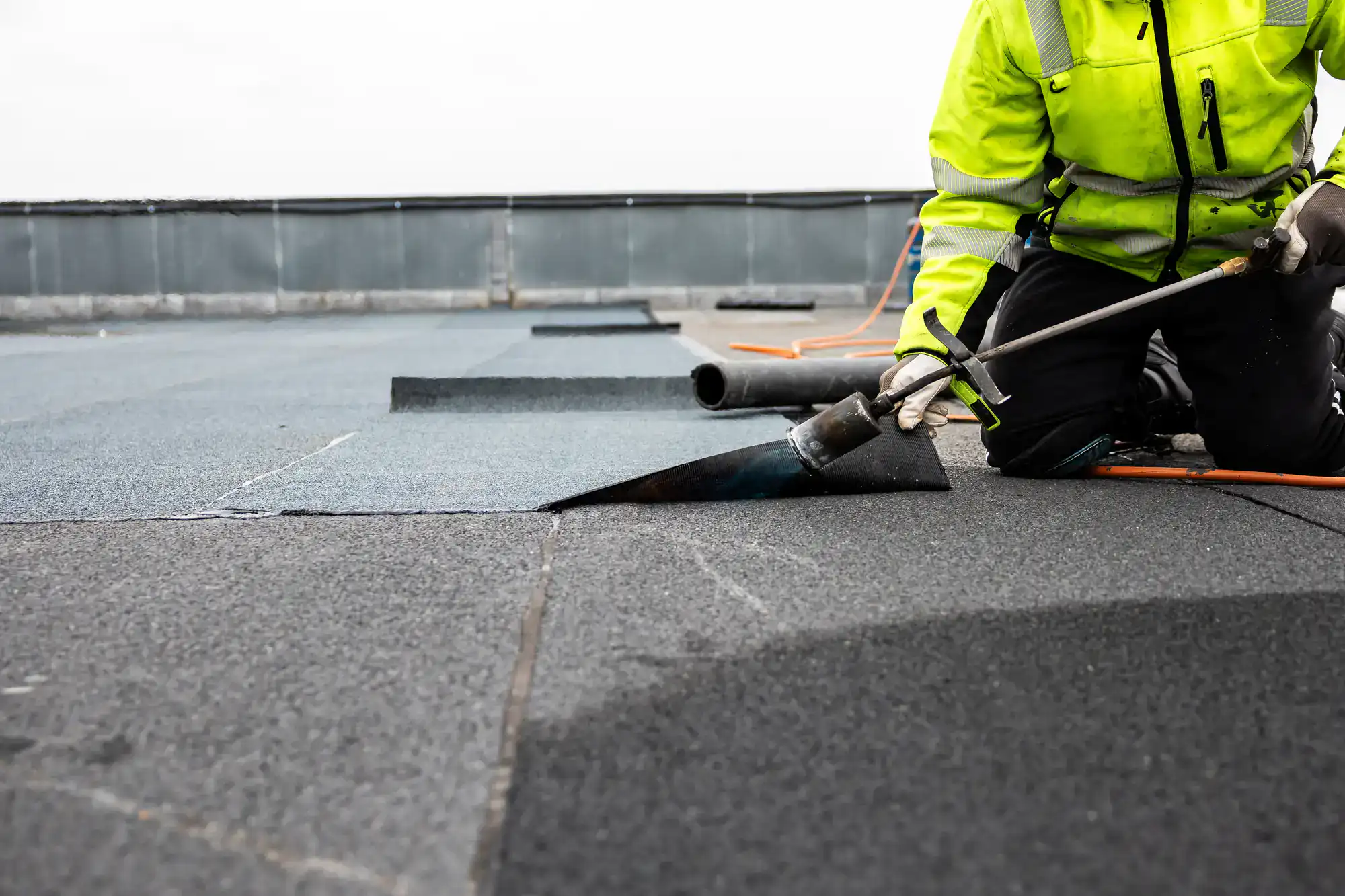
We combine several methods in our roof leak detection process: a detailed visual inspection of the roof surface, flashing, valleys, and penetrations; an attic check for water stains, wet insulation, and daylight gaps; and where needed, moisture mapping equipment that identifies wet areas without tearing anything open. The goal is to trace the water back to its actual point of entry — not just the nearest visible damage.
What Drone Technology Actually Reveals That a Ladder Can't
We use drone video as part of our assessment process, and it changes what’s possible in a meaningful way. From the ground — or even from a ladder at the eave — you’re seeing maybe 20% of your roof. Valleys, ridge lines, the area around chimney flashing, and sections near skylights or vents are either hard to reach safely or simply out of view. A drone covers all of it.
Beyond the aerial perspective, drone-mounted thermal sensors detect infrared radiation — essentially heat signatures — that reveal temperature differentials invisible to the naked eye. Wet insulation holds heat differently than dry insulation. A compromised membrane or saturated roof deck shows up as a distinct thermal anomaly, even when the surface above it looks completely intact. This is the same principle behind ASTM C1153, the professional standard for thermal infrared moisture detection in roofing systems.
For homeowners across Suffolk County, this matters for a specific reason: the coastal environment here accelerates the kind of damage that hides. Salt air corrodes metal flashing around chimneys and skylights gradually, from the inside out. Freeze-thaw cycles — and Suffolk County sees real swings, from the low 20s in winter to the 80s in summer — open micro-fractures in shingles and sealants that don’t look like much until water has already been getting through for months. Drone thermal imaging catches those conditions before they become a gut-renovation situation.
There’s also a practical safety element. After a major storm, a roof that looks stable may not be. Sending a crew member onto a potentially compromised deck to do a visual inspection creates real risk. Drone assessment lets us document the full scope of damage without putting anyone in a dangerous position — and it produces footage and imagery that tells a clear, documented story of what happened and where.
The Roof Penetrations Most Homeowners Don't Think to Check
If you ask most homeowners where roof leaks come from, they’ll say shingles. And yes, missing or damaged shingles are a factor — but they’re not the most common culprit. The majority of leaks we find on Long Island homes originate at penetrations: the points where something passes through or interrupts the roof surface.
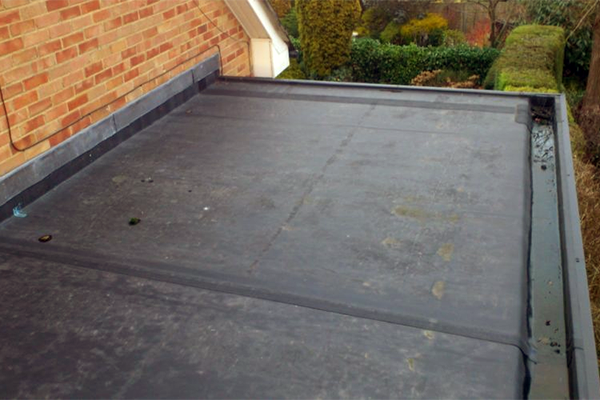
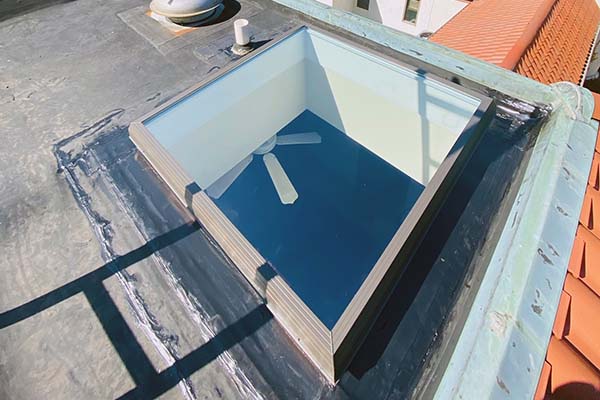
Chimney flashing is one of the biggest offenders. The metal that seals the gap between your chimney and the surrounding roof takes a beating from thermal expansion, salt air, and freeze-thaw movement every single year. When it fails, water doesn’t necessarily pour in dramatically — it seeps, slowly, and shows up as a stain on a ceiling near the fireplace wall weeks later. Pipe boots — the rubber collars around plumbing vents — crack and shrink with age and UV exposure. Skylight seals fail. Ridge vent seals degrade. Each of these is a potential entry point that a visual-only inspection can miss if the inspector isn’t looking closely at the right things.
This is also where our multi-trade experience makes a real difference. Because we handle roofing, chimney work, siding, and gutters under one roof, we understand how these systems interact. A leak that looks like a roofing problem near a chimney is often actually a chimney flashing problem — which means a roofer who only does roofing may patch the wrong thing, charge you for it, and leave the actual source untouched. When we do a leak detection, we’re looking at the whole picture, not just the part of the roof that’s easiest to blame.
Roof Leaks in Heavy Rain — What It Means and What to Do
A lot of homeowners tell us the same thing: “It only leaks when it’s really coming down.” They figure that means it’s not serious. It usually means the opposite.
A roof that leaks only under heavy rain is a roof with a vulnerability that hasn’t fully failed yet. High-volume, wind-driven rain — the kind Suffolk County gets during a nor’easter or a tropical system — finds entry points that light rain doesn’t. That’s not a sign the problem is minor. It’s a sign the window to address it before it gets worse is still open.
Why Intermittent Leaks Still Cause Serious Damage Between Storms
Here’s the thing about intermittent leaks: the damage doesn’t stop when the dripping does. Once water gets into the roof assembly — past the shingles, into the underlayment, the insulation, or the decking — it doesn’t just evaporate when the sun comes out. It sits. It spreads. And within 24 to 48 hours of intrusion, mold can begin to develop in the right conditions.
Over a single winter season on Long Island, a slow intermittent leak can rot the wood decking beneath your shingles, compromise the insulation in your attic, and create the kind of mold problem that turns a $500 repair into something that costs several times that to address properly. That number isn’t driven by dramatic flooding events — it’s driven by the kind of slow, invisible damage that builds up while homeowners are waiting to see if the problem resolves itself.
Suffolk County’s climate makes this worse than it would be elsewhere. The freeze-thaw cycle doesn’t just damage roofing materials — it actively pumps water deeper into any gap or crack that already exists. Water seeps in, freezes, expands, and forces the opening wider. Then it melts, allows more water in, and the cycle repeats. Ice dams — which form when heat escaping through the attic melts snow on the upper roof, which then refreezes at the colder eaves — are a direct product of this cycle, and they’re one of the most common causes of winter ceiling leaks in homes across Huntington, Babylon, Islip, and Brookhaven. By the time water shows up on your ceiling, the damage above it has typically been accumulating for longer than most people want to know.
Roof Damage Insurance Claims — What Suffolk County Homeowners Actually Need to Know
The insurance question comes up in almost every conversation we have after a storm. “Will my homeowners insurance cover this?” The short answer is: it depends on what caused it — and whether you can prove it.
Homeowners insurance generally covers sudden, accidental damage. A nor’easter tears off shingles, drives water into your home, and causes a leak — that’s a covered event in most policies. A roof that’s been slowly deteriorating for years and finally lets water in during a rainstorm — that’s typically categorized as gradual wear and tear, and it’s usually excluded. The cause of the damage matters enormously, and the insurance adjuster’s job is to determine which category your situation falls into.
This is exactly why professional documentation before you file a claim is so important. Drone video footage showing storm damage — lifted shingles, displaced flashing, impact marks from debris — tells a clear, timestamped story that supports your claim. A written inspection report from a licensed contractor adds professional weight to that story. Without documentation, you’re relying on an adjuster’s assessment alone, and that adjuster works for the insurance company, not for you.
We’ve worked with Suffolk County homeowners through this process for over 22 years. The homes we’ve inspected after Hurricane Sandy, after the nor’easters that roll through every winter, after the severe thunderstorms that hit Brookhaven and Smithtown and Riverhead in the summer — the homeowners who had professional documentation in hand consistently had better outcomes with their claims than those who didn’t. That’s not a coincidence.
One more thing worth knowing: delays in reporting can complicate your coverage. If you discover a leak and wait weeks to notify your insurer, they may argue that the damage worsened due to inaction — and use that to reduce or deny your claim. If you suspect storm damage, the smart move is to get a professional inspection quickly, document what you find, and notify your insurer promptly. We offer free estimates and can move fast — our 10-truck fleet lets us respond quickly across Suffolk County.
When to Call a Roof Leak Detection Professional in Suffolk County
If you’re seeing water stains, noticing a musty smell in your attic, or just have a feeling something isn’t right after a recent storm, don’t wait to find out. The cost of catching a problem early is almost always a fraction of what it costs to fix it after a season of undetected damage.
Suffolk County’s combination of coastal weather, salt air, and freeze-thaw cycles means your roof is working harder than most. A professional inspection — one that goes beyond a visual pass and uses the right technology to find what’s actually there — is the clearest way to know what you’re dealing with.
Expressway Roofing & Chimney, Inc. has been doing this work on Long Island for over 22 years. If you want a straight answer about what’s happening with your roof, we’re available around the clock and happy to start with a free estimate.
Article details:
- Published by:
- Roofing & Chimney Contractor Long Island, NY
- Published to:
- Last modified: August 6, 2026
- August 6, 2026
Share:
Continue learning: