
Complete Guide to Roof Replacement in Suffolk County
Everything Suffolk County homeowners need to know before replacing a roof — costs, materials, timelines, and what to watch out for when getting estimates.
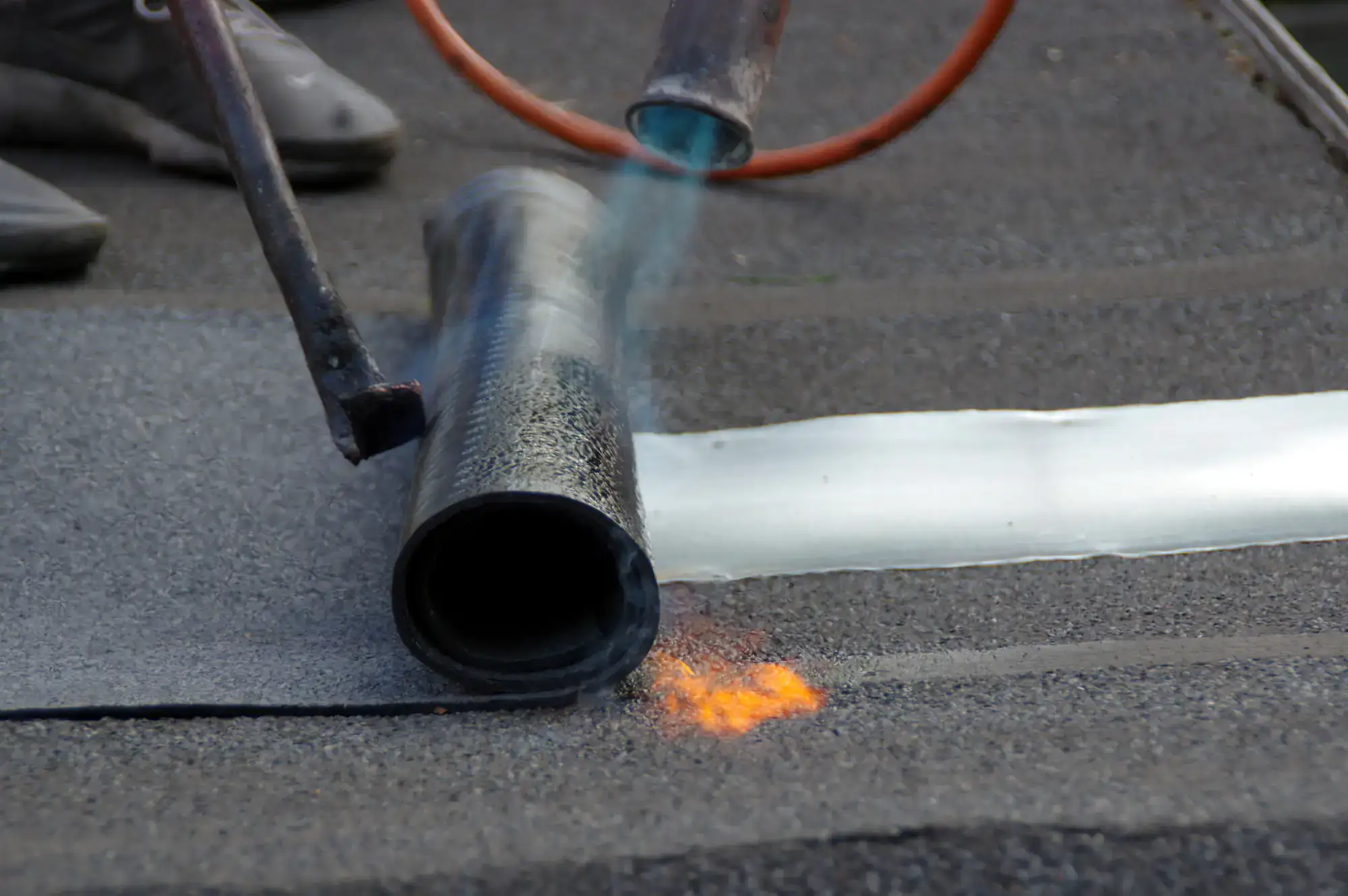
If you’re a Suffolk County homeowner staring at a water stain on your ceiling or picking up shingles from your yard after a nor’easter, you already know something needs to happen. The question is what — and how much it’s going to cost. A roof replacement is one of those projects where the gap between a good decision and a bad one is measured in thousands of dollars and years of headaches. This guide gives you the real picture: what drives costs on Long Island, what materials actually hold up here, how to read an estimate, and what questions to ask before you sign anything.
Average Roof Replacement Cost in Suffolk County, NY
Nationally, roof replacements average somewhere between $15,000 and $27,000. But Suffolk County isn’t a national average kind of place. Labor costs here run 15 to 25 percent higher than the rest of the country, and coastal conditions — salt air, high winds, ice dams — demand better materials and more careful installation than you’d need in central Ohio or the Midwest.
For most Suffolk County homeowners, a full roof replacement runs between $8,500 and $25,000, with the majority of projects landing around $13,000. That range moves based on your roof’s size, pitch, the materials you choose, and what gets discovered during tear-off. A 1970s ranch in Brentwood and a cedar shake home in East Hampton are going to land at very different numbers.
Average Price for a Roof Replacement by Size and Material
The single biggest variable in your roof replacement cost is square footage. Roofing is priced by the “square” — that’s 100 square feet of roof surface, not floor space. A 1,500-square-foot house doesn’t necessarily have a 1,500-square-foot roof, because pitch and overhangs add surface area.
Here’s what Suffolk County homeowners typically pay for asphalt shingle replacements, which account for the majority of residential work:
A 1,000 sq ft roof replacement cost typically runs $5,500 to $10,000. A 1,200 sq ft roof replacement cost lands closer to $6,500 to $12,000. At 1,500 sq ft roof replacement cost, expect $8,000 to $14,500. A 2,000 sq ft roof replacement cost — the most common size in Suffolk County — generally falls between $10,000 and $18,500. Add roughly 30 to 40 percent to national estimates to account for the Long Island labor premium.
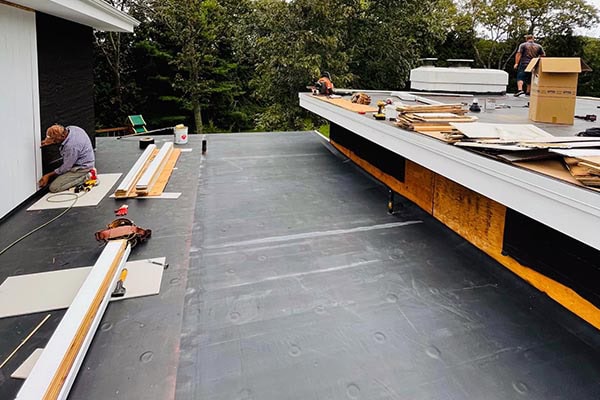
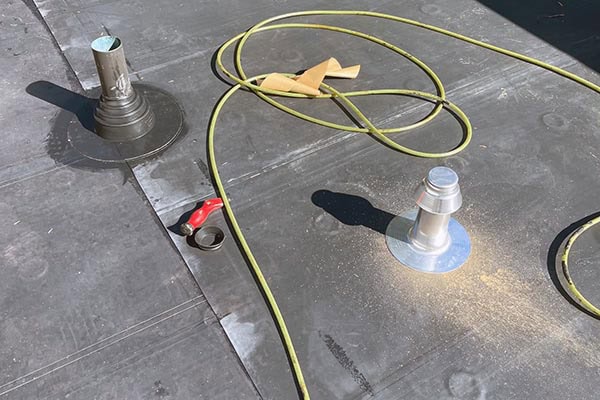
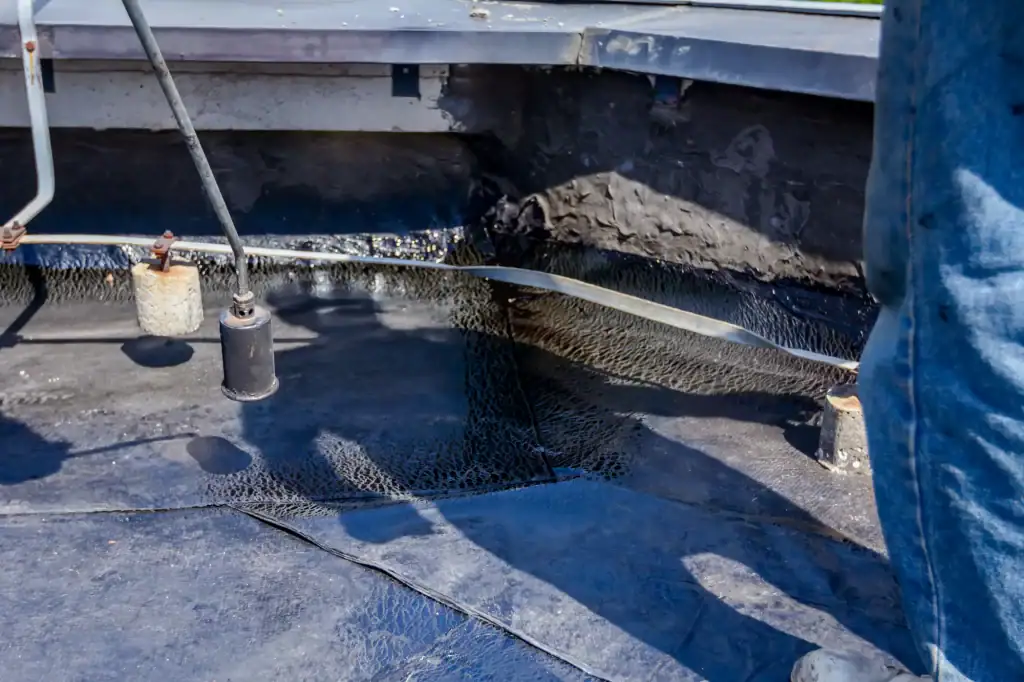
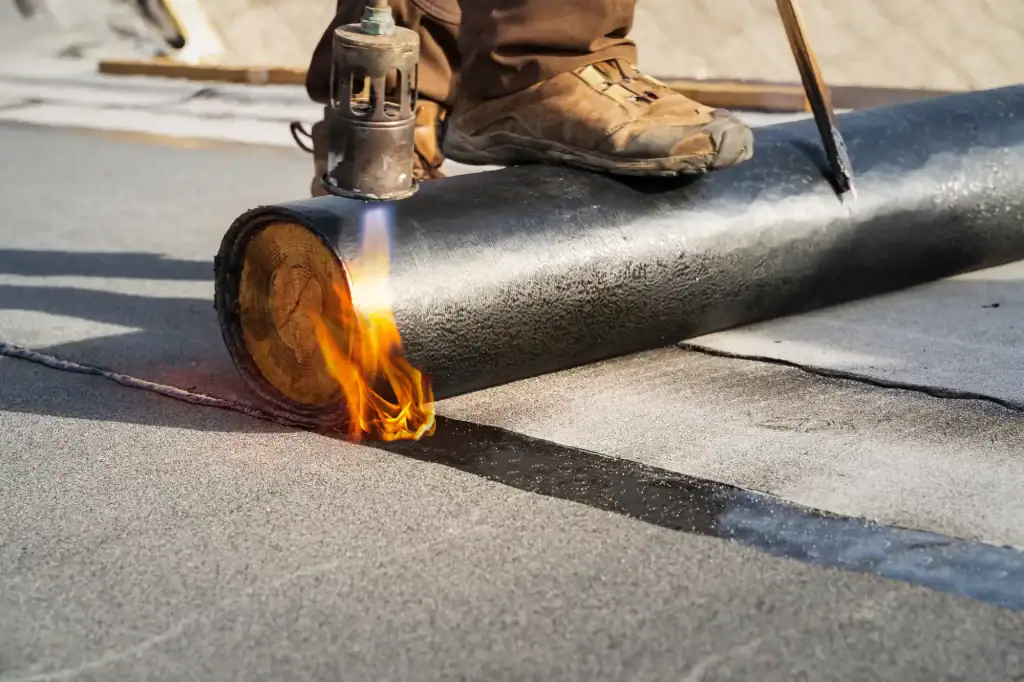
Material choice shifts those numbers significantly. Architectural asphalt shingles are the most popular option — they’re durable, widely available, and cost between $5 and $9 per square foot installed. Metal roof replacement cost runs $10 to $16 per square foot and offers a 50-plus-year lifespan, which makes it worth the upfront investment for homeowners who plan to stay long-term. Cedar shake, common in the Hamptons and on the North Fork, sits in a similar price range to metal but requires more maintenance over time. Flat roof contractors throughout central Suffolk County typically price EPDM, TPO, and modified bitumen systems differently than pitched roofing, and these are common on mid-century ranch homes across the county.
About 20 percent of tear-offs reveal rotted or damaged decking underneath. It’s just reality with a housing stock where the median construction year is 1970. Any honest estimate should account for the possibility of deck repairs, even if it’s listed as a contingency line item.
What the Cost of a New Roof Actually Includes — and What Low Quotes Leave Out
When you get three estimates and one is $4,000 lower than the others, it’s worth asking what’s missing. A complete roof replacement cost should include removal and disposal of your existing shingles, new underlayment, drip-edge flashing, chimney re-flashing, ice-and-water shield along the eaves and valleys, and a workmanship warranty from the installer. Those aren’t extras — they’re the baseline.
Ice-and-water shield deserves a specific mention for Suffolk County properties. It’s required by local building code along eaves and valleys, and for good reason. Ice dams form regularly on Long Island roofs during winter, forcing water back up under the shingles. Skipping or skimping on this layer is one of the most common reasons roofs fail prematurely in this climate.
Similarly, chimney flashing and valley flashing are critical failure points on Long Island homes. Salt air from the South Shore and Great South Bay communities corrodes standard flashing quickly — sometimes within five to seven years. Marine-grade flashing materials cost more upfront but are genuinely necessary in coastal environments like Bay Shore, Sayville, Patchogue, and anywhere along the barrier islands. If a quote doesn’t mention flashing at all, that’s a red flag worth asking about directly.
The other thing low quotes often omit is the permit. Suffolk County requires permits for structural roofing work, and HIC licensing is legally required for any contractor doing home improvement work here. Unpermitted work creates real problems at resale and can complicate insurance claims. A legitimate contractor pulls permits — it’s part of the job, not an optional add-on.
How to Choose a Roof Replacement Company in Suffolk County
After a major storm, Suffolk County gets flooded with out-of-area contractors. They show up with low prices, vague contracts, and no local accountability. It’s a known pattern, and it catches homeowners off guard when they’re already stressed about damage.
The simplest protection is choosing a contractor who was here before the storm and will be here after. That means verifiable HIC licensing through Suffolk County’s official database, proof of liability insurance and workers’ compensation, a physical local address, and a track record you can actually check on Yelp, Google, or Angi.
What a Legitimate Roof Replacement Estimate Should Look Like
A good roof replacement estimate is itemized. It breaks out the cost of tear-off, materials, labor, flashing, underlayment, permits, and disposal separately — so you can actually compare it to other quotes line by line. A one-number estimate with no breakdown isn’t transparency, it’s a starting point for surprises.
When you’re comparing estimates, look for whether each quote specifies the shingle brand and grade, the underlayment type, whether ice-and-water shield is included, and what the warranty terms are — both for materials and for labor. Manufacturer warranties cover defective products. Contractor workmanship warranties cover installation errors, which are actually the more common cause of early roof failure. Both matter.
Getting a new roof estimate from multiple contractors is smart. Three quotes is a reasonable standard. What you’re looking for isn’t necessarily the lowest price — it’s the estimate that gives you the clearest picture of what you’re getting and from whom. A contractor who takes the time to explain what they found during their inspection, what they’re recommending and why, and what happens if they find rotted decking mid-project is worth more than one who just hands you a number.
We guarantee to beat any legitimate written estimate you receive. That means you don’t have to choose between getting a fair price and working with a contractor you actually trust.
Skylights, Gutters, and Chimney Work — What to Handle During a Roof Replacement
A roof replacement is the best time to address anything else that connects to the roof — and doing it all at once saves you money on labor and protects the new roof from day one. The most common additions worth considering are skylights, gutters, and chimney work.
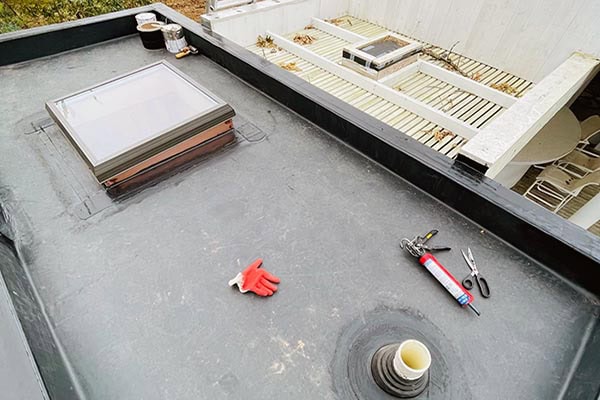
Skylight replacement cost runs between $2,000 and $5,300 per unit in 2025. If your skylights are original to the roof or showing signs of fogging, leaking, or frame deterioration, replacing them during the roofing project eliminates the need to disturb new shingles later. The flashing around skylights is one of the most common leak points on Long Island homes — getting it right during the main replacement is far easier than addressing it as a separate repair.
Gutters are another natural companion project. When the roofline is already being worked on, adding or replacing gutters is more efficient and often less expensive than scheduling it separately. New gutters protect your new roof investment by directing water away from the fascia and foundation — skipping this step after spending $13,000 or more on a roof is a short-term savings that tends to cost more later.
For homes with chimneys — which is most of Suffolk County’s housing stock — re-flashing during a roof replacement is standard practice. But if the chimney itself needs pointing, crown repair, or a new cap, it makes sense to handle that at the same time. Catching chimney issues before they become water intrusion problems is the kind of thing that saves homeowners significant money over time. We handle roofing, chimney, gutters, and skylights under one roof, which means one estimate, one crew, and one point of contact from start to finish.
Getting a Roof Replacement Right the First Time in Suffolk County
The homes in Suffolk County take a beating — 45 hurricanes since 1930, nor’easters every winter, salt air working on flashing and fasteners year-round. A roof replacement done well lasts 20 to 30 years. One done poorly can start causing problems in three.
The difference usually comes down to who you hire and how clearly they communicate before, during, and after the project. Transparent pricing, proper permits, quality materials suited to the Long Island climate, and a workmanship warranty that means something — those are the things worth paying attention to.
We’ve been replacing roofs across Suffolk County since 2000, and we approach every project the same way: the way we’d want someone to handle it for our own family. If you’re ready to get a straight answer on what your roof actually needs, reach out to us for a free, honest estimate — no pressure, no runaround.
Article details:
- Published by:
- Roofing & Chimney Contractor Long Island, NY
- Published to:
- Last modified: June 23, 2026
- July 1, 2026
Share:
Continue learning: