
Fix a Roof Leak: Professional vs DIY Methods in Suffolk County
Drip on your ceiling or a stain that keeps growing? Here's what you need to know before you grab a caulk gun — or pick up the phone.
Water coming through your ceiling has a way of making every other problem feel small. Whether it showed up after the last nor’easter or you’ve been watching that stain slowly spread for a few weeks, the question is always the same: do you fix it yourself, or do you call someone? There’s no single right answer — it depends on what you’re dealing with, how old your roof is, and how much risk you’re willing to take. What we can tell you is what’s actually involved, what it typically costs here in Suffolk County, and where the line is between a manageable DIY job and a situation that needs a professional.
How Roof Leak Repair Actually Works
The first thing most people get wrong about roof leaks is assuming the water is coming in where it’s dripping. It almost never is. Water enters through a breach in the roof surface — a failed piece of flashing, a cracked shingle, a gap around a vent or skylight — and then travels along the decking, across insulation, and down framing before it ever shows up on your ceiling. That means the visible drip point can be several feet away from the actual problem.
A proper repair starts with tracing the water back to its source. That’s harder than it sounds, especially after a nor’easter when you’ve got wind-driven rain hitting the roof from multiple angles. Once the entry point is identified, the repair itself depends on what’s causing it — which is why the process looks different for every job.
When Can You Fix a Roof Leak Yourself?
There are situations where a handy homeowner can handle a minor roof repair without much risk. If a single shingle has blown off or cracked and the decking underneath is dry and intact, replacing it is straightforward. If a small section of flashing around a pipe vent has lifted and the surrounding area is still in good shape, a temporary sealant can buy you time. These are the scenarios where DIY makes sense — limited in scope, easy to access, and not hiding any deeper damage.
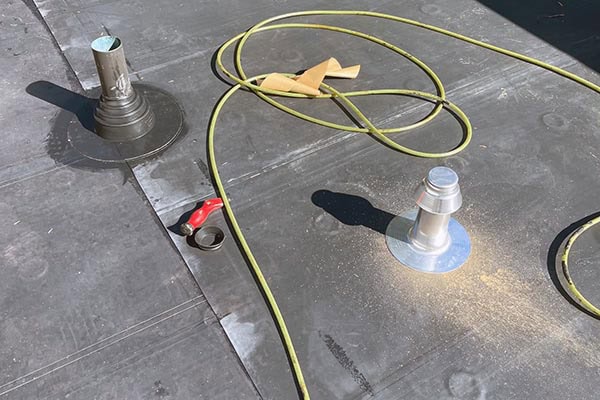
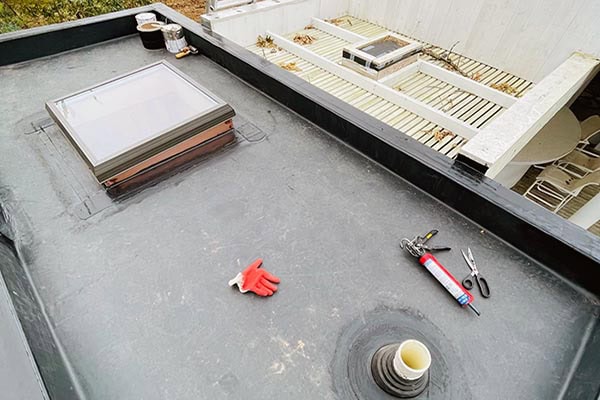
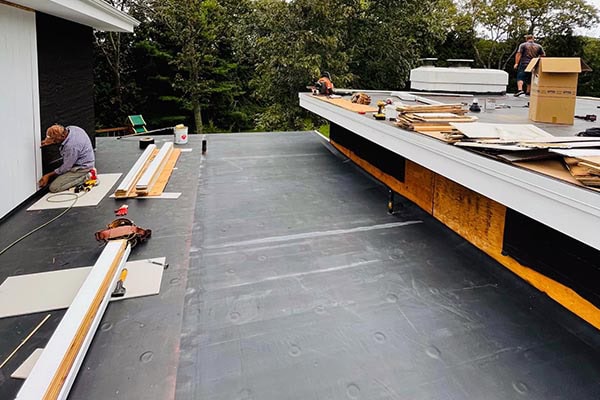
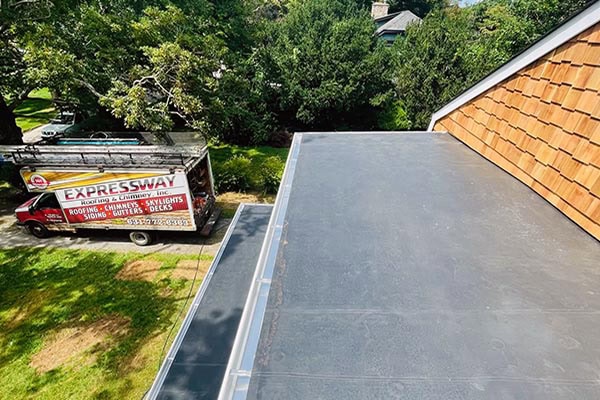
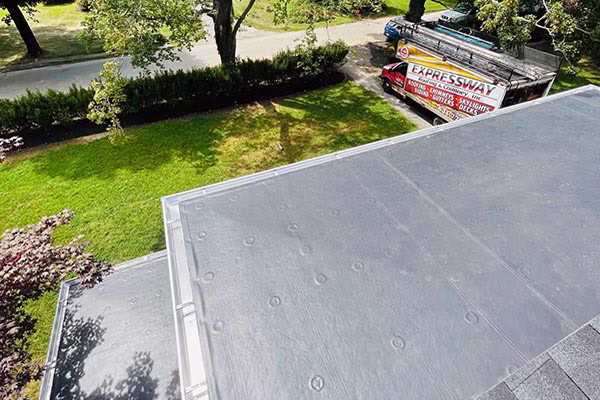
The problem is that most leaks don’t fall into that category. Flashing failures around chimneys and skylights look simple from the outside but involve layered materials that have to be installed in a specific sequence to shed water correctly. Ice dam damage — which is common across Suffolk County after a hard winter — often compromises the underlayment beneath the shingles, and you won’t see that from the surface. Flat roofs, which are found on a lot of additions and older homes throughout Brookhaven and Islip, require completely different repair techniques than pitched roofs, and a patch applied the wrong way can actually accelerate the damage.
Here’s the number that matters: 42% of roof failures are caused by improper installation or repair. That’s not a reflection of homeowner incompetence — it’s just a reflection of how much technique is involved in doing it right. A patch that looks solid from the ground can be allowing water in with every rain, and you won’t know until the damage has spread to the decking or the insulation below. By that point, what started as a $500 repair has become a much larger problem. Mold can begin growing within 24 to 48 hours of water intrusion, and once it gets into the insulation or framing, you’re not just dealing with a roofing bill anymore.
If your roof is over 15 years old — and a significant portion of Suffolk County’s housing stock is well past that mark — the adhesive holding your shingles in place has already been weakened by years of freeze-thaw cycles and summer heat. What looks like a one-shingle problem may be a sign that the system as a whole is starting to fail. That’s worth knowing before you spend a Saturday afternoon on a ladder.
What a Professional Roof Leak Repair Involves — Step by Step
When we respond to a roof leak call, the first priority is stopping active water intrusion. If a storm has just come through and the roof is actively compromised, that might mean emergency tarping to protect the interior while a permanent repair is planned. This matters more than most homeowners realize — getting temporary protection in place quickly is often the difference between a contained repair and water damage that spreads into walls and ceilings.
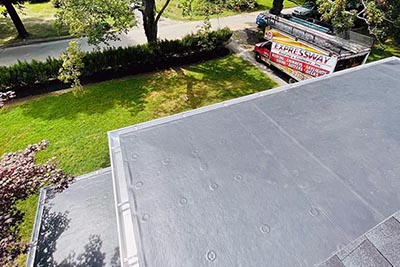
Once the roof is stabilized, the diagnostic work begins. We use drone video to document the damage before anyone sets foot on the roof. This serves two purposes: it gives us a clear picture of what we’re dealing with across the full roof surface, not just the area above the visible leak, and it creates a visual record that’s genuinely useful if you’re filing an insurance claim. Insurance adjusters respond to documentation. A written inspection report paired with drone footage is a much stronger foundation for a claim than a homeowner’s description of a wet ceiling.
The actual repair process depends on what the inspection reveals. Flashing failures — around chimneys, skylights, dormers, and valleys — are the most common cause of leaks on Long Island homes, especially in coastal communities like Babylon and Islip where salt air accelerates corrosion of metal components. Shingle damage from wind or impact is the next most common cause, followed by underlayment failures that are usually only visible once the surface material is pulled back. In every case, the repair addresses the root cause, not just the surface symptom. That’s why a professional repair holds when a DIY patch doesn’t.
After the repair is complete, we walk through the work with you, explain what was found, and make sure you have everything you need if an insurance claim is involved. The goal isn’t just to stop the leak — it’s to make sure you’re not back in the same situation after the next storm rolls through.
Roof Leak Repair Cost in Suffolk County
Cost is usually the first question, and it’s a fair one. Roof leak repair in Suffolk County typically runs between $300 and $1,200 for residential repairs, with the average homeowner paying somewhere in the $1,150 to $1,400 range for a standard job. More extensive damage — compromised decking, widespread flashing failure, or a leak that’s been left too long — can push that number higher, with the full range running up to $4,000 depending on scope and materials.
What drives the variation is usually the extent of the damage and how far the water has traveled before it was caught. A leak addressed quickly is almost always cheaper to fix than one that’s been quietly spreading for a season.
What Affects Your Final Roof Leak Repair Cost
Several factors influence where your repair lands within that range, and understanding them helps you evaluate any estimate you receive. The type of roofing material matters — asphalt shingles are the most common and the most cost-effective to repair, while slate, cedar shake, and metal roofing require more specialized labor. Older homes on the North Shore in communities like Huntington and Cold Spring Harbor often have slate or cedar shake roofs, and finding a contractor who actually knows how to work on them without causing additional damage is its own challenge.
The location and complexity of the leak matters too. A straightforward shingle replacement on an accessible section of a pitched roof is a different job than repairing flashing at the base of a chimney on a steep slope. Chimney flashing failures are one of the most common sources of leaks on Long Island homes, and they’re also one of the most frequently misdiagnosed — contractors who aren’t experienced with chimney work sometimes patch the wrong area and leave the actual source untouched.
Permit requirements can also affect the total cost depending on the scope of the work and the municipality. Some towns within Suffolk County require permits for roofing work above a certain threshold. It’s worth asking any contractor you’re considering whether permits are needed for your specific job — and whether they’ll handle pulling them. Working without a required permit can create complications if you ever sell the home or need to file an insurance claim.
Speaking of insurance: if your leak was caused by a storm event — wind, hail, a nor’easter — it may be covered under your homeowners policy. The key is acting quickly and getting a professional inspection on record before you make any repairs. Insurance companies cover sudden, accidental damage. They don’t cover neglect or gradual wear, and they’re less likely to pay out on a claim where the evidence has been disturbed by a DIY attempt. Getting documentation in place early protects your options.
Repair or Replacement: How to Know What Your Roof Needs
This is one of the most common questions we hear, and the honest answer is that it depends on the age and overall condition of your roof — not just the size of the leak. A single isolated failure on a roof that’s 8 years old and otherwise in good shape is a repair. The same leak on a roof that’s 22 years old, showing granule loss, curling shingles, and soft spots in the decking is a different conversation.
The 15-year mark is a useful benchmark for asphalt shingles. Before that point, repairs are almost always the right call if the damage is isolated. After that point — and a significant number of homes across Suffolk County are well past it, especially those built during the post-war suburban boom in Babylon, Islip, and Brookhaven — it’s worth having an honest conversation about whether you’re patching a roof that’s going to keep asking for repairs, or investing in a replacement that gives you 20 to 30 more years of protection.
A drone inspection makes this conversation a lot easier. Instead of relying on what’s visible from the ground or from one section of the roof, you get a full picture of the roof’s condition — which areas are holding up, which are showing wear, and whether the leak you’re dealing with is an isolated event or a symptom of broader deterioration. That information changes the cost-benefit calculation significantly. A repair that seems like the cheaper option today isn’t always the cheaper option over a three-year window.
What we can tell you from 22 years of working on roofs across Suffolk County is that most homeowners who end up replacing a roof sooner than expected did so because they kept repairing problems on a roof that was already past its useful life. Getting a clear-eyed assessment early — before the next storm season — is almost always the better financial decision.
When to Call a Professional for Your Leaking Roof
If the leak is minor, isolated, and you’re comfortable on a roof, a temporary DIY fix can buy you time. But if you’re not sure where the water is actually coming from, if your roof is getting up in years, or if a storm just came through, the math usually favors calling someone who can find the source and fix it properly the first time. Waiting — or patching over a problem that’s bigger than it looks — rarely saves money in the end.
We’ve been doing this work across Suffolk County since 2000. We run 10 trucks, which means we can actually respond when you need us — not just promise that we can. If you’re dealing with an active leak or want to know what you’re working with before the next nor’easter, give us a call. We offer free estimates and we’ll tell you straight what we find.
Article details:
- Published by:
- Roofing & Chimney Contractor Long Island, NY
- Published to:
- Last modified: July 28, 2026
- July 28, 2026
Share:
Continue learning: