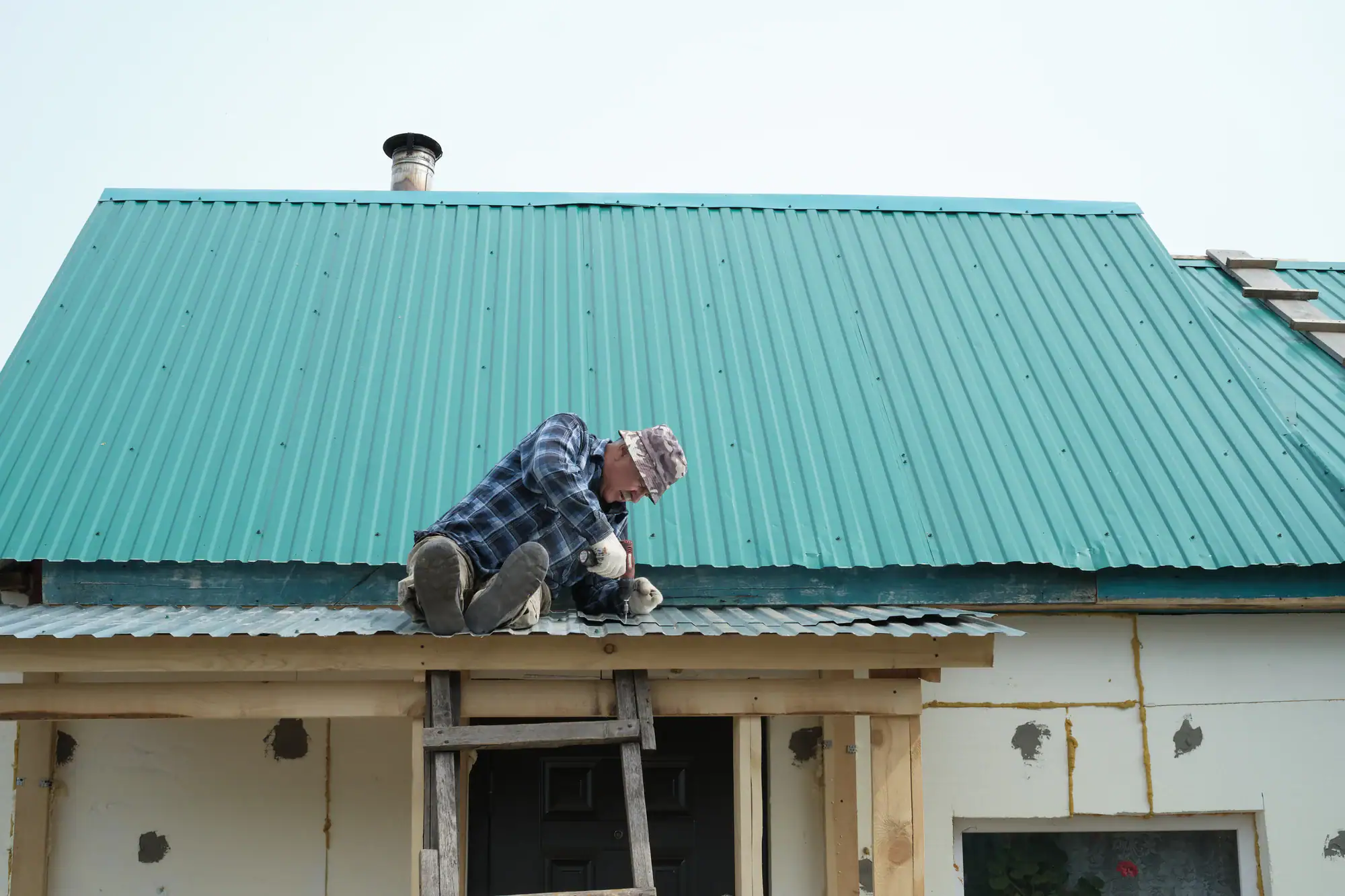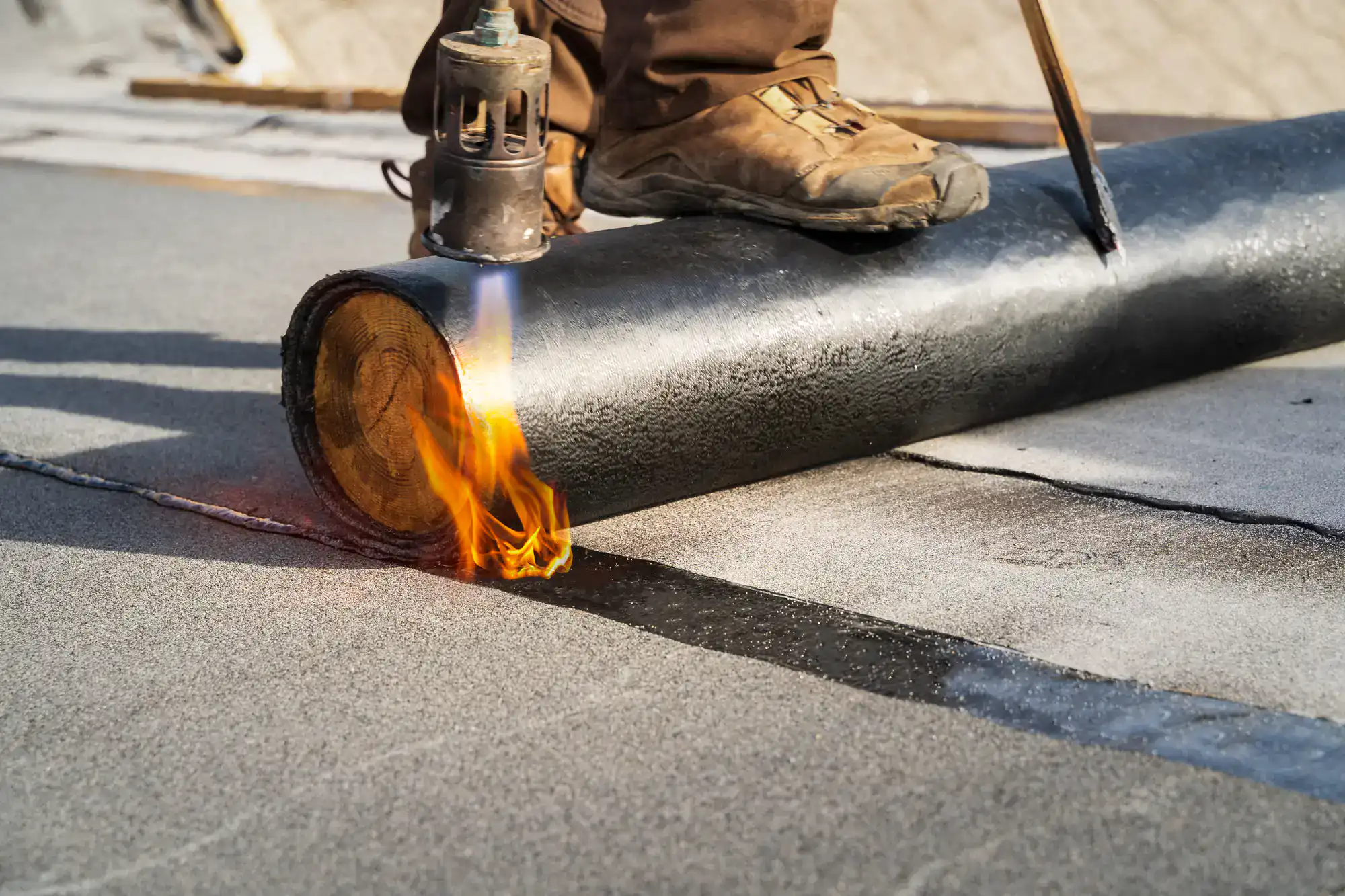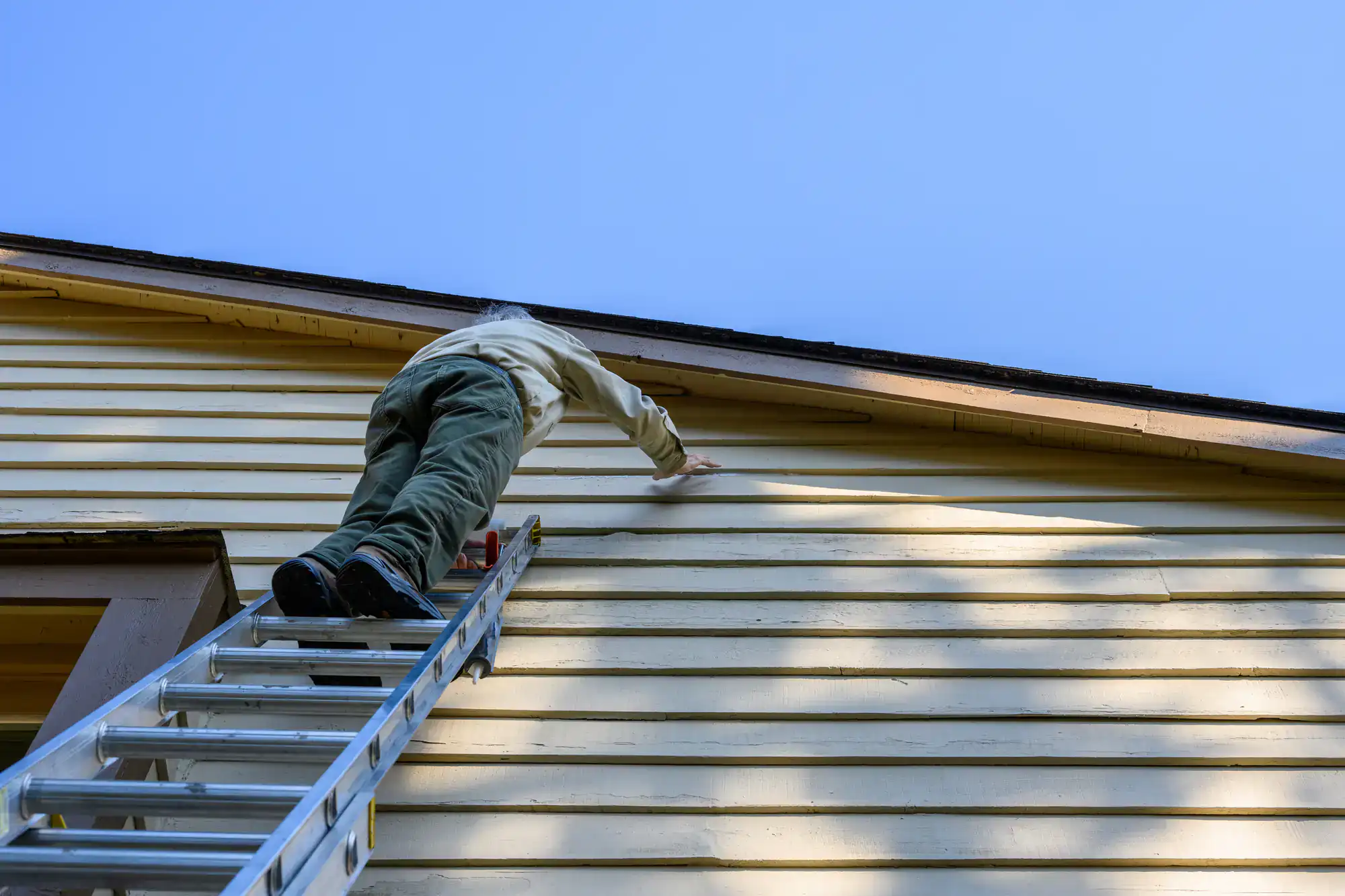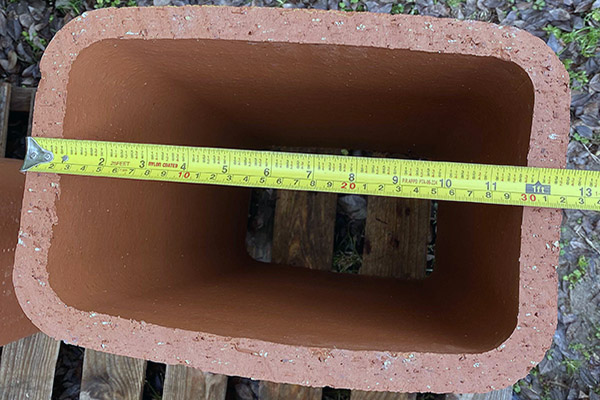

That small roof leak might seem fixable on your own, but most DIY repairs on Long Island roofs end up costing more than calling a professional from the start.
Your roof isn’t just shingles nailed to wood. It’s a system—layers of protection working together to keep water out and air moving properly. When one part fails, it’s usually a symptom of something bigger.
Long Island roofs face challenges most other regions never see. Coastal storms with 60+ mph winds, salt air that corrodes metal flashing and chimney caps faster than you’d think, and temperature swings that make materials expand and contract all year long. A repair that might work fine in Arizona fails here in six months.
The bigger issue is that most homeowners don’t realize how much they don’t know. You see a leak in the ceiling and assume the problem is directly above it. It’s not. Water travels along beams and decking before it drips down, sometimes 10 feet away from where it actually entered. So you patch the wrong spot, the leak continues, and now you’ve got mold growing inside your walls.
Here’s the thing about roof damage—it’s almost never just what you can see from the ground. Those few missing shingles after a storm might look like a simple fix, but what you’re not seeing is the broken seal on the surrounding shingles, the compromised underlayment, or the moisture that’s already soaked into your decking.
Long Island gets hit with nor’easters that don’t just remove shingles—they lift them, break the adhesive seal, and leave your roof vulnerable even where shingles are still attached. The salty coastal air accelerates corrosion on flashing around chimneys and vents. Freeze-thaw cycles cause materials to crack in ways that won’t show up until the next heavy rain.
Most DIY attempts fail because homeowners are treating symptoms instead of causes. You replace a cracked shingle without asking why it cracked. You seal a leak without checking if your ventilation is creating condensation. You nail down lifted shingles without realizing the whole section needs to be replaced because the adhesive has failed.
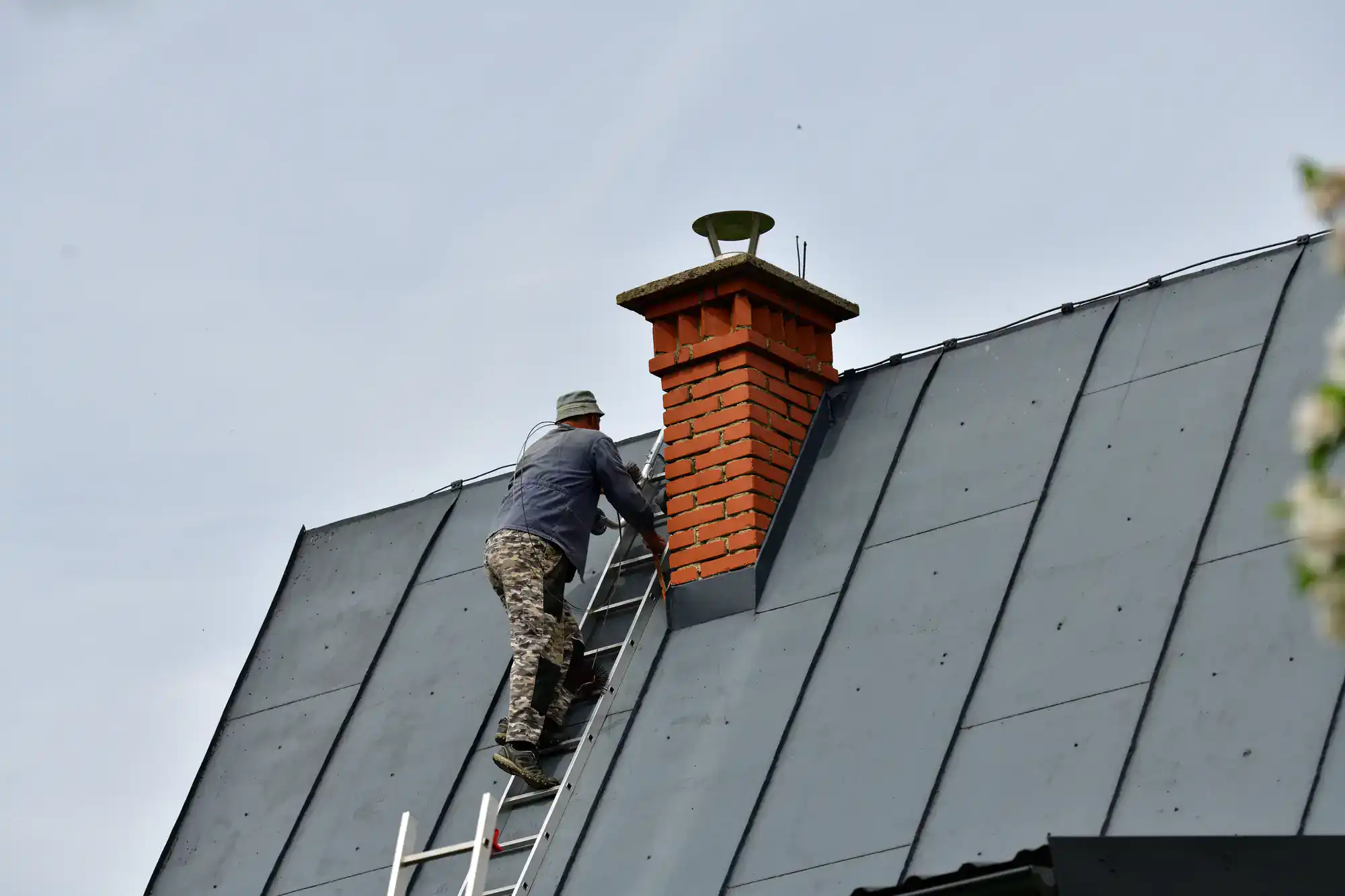
We know what to look for because we’ve seen these patterns hundreds of times. We check flashing, inspect underlayment, test the decking for soft spots, and look at your attic ventilation. We examine chimney flashing and roof penetrations where most leaks actually start. A proper inspection catches problems before they turn into emergencies, and that’s something you can’t replicate with a YouTube video and a weekend.
The other factor most people miss is documentation. If you attempt a DIY repair and it fails, your insurance company can deny your claim for improper workmanship. If you void your manufacturer’s warranty by installing materials yourself, you’re on the hook for the full replacement cost when those shingles fail early. One bad decision can cost you thousands in coverage you thought you had.
Let’s talk about what DIY roof repair actually costs when you add up everything that can go wrong. You might save a few hundred dollars on labor, but here’s what you’re risking.
First, your warranty. Almost every roofing manufacturer requires professional installation to honor their warranty. The moment you DIY your repair, that warranty is void—even if the materials themselves are defective. So when those shingles start failing in five years instead of lasting 20, you’re paying for the replacement out of pocket.
Second, your insurance coverage. If your DIY repair fails and causes water damage to your home’s interior, your insurance company can deny the claim because the damage resulted from improper workmanship. You’re not just paying for a new roof—you’re also paying for drywall, insulation, mold remediation, and anything else that got damaged because your repair didn’t hold.
Third, safety. Roofing is one of the most dangerous jobs in America. Every year, hundreds of people die from falls, and thousands more end up in the hospital with serious injuries. You’re not just risking a bad repair—you’re risking your life. Professional roofers have safety equipment, training, and insurance. You have a ladder from Home Depot and good intentions.
Fourth, the cost of doing it twice. Most homeowners who attempt DIY roof repairs end up calling a professional anyway, usually after the problem has gotten worse. That small leak you tried to patch? It’s now rotted out a section of decking. Those few shingles you replaced? They don’t match, they’re not sealed properly, and now water is getting under the whole area. What would have been a $500 repair is now a $5,000 problem.
And finally, there’s the opportunity cost. The time you spend researching, buying materials, attempting the repair, and then dealing with the aftermath when it fails—that’s time you could have spent doing literally anything else while a professional roofing contractor handled it in a few hours and did it right the first time.
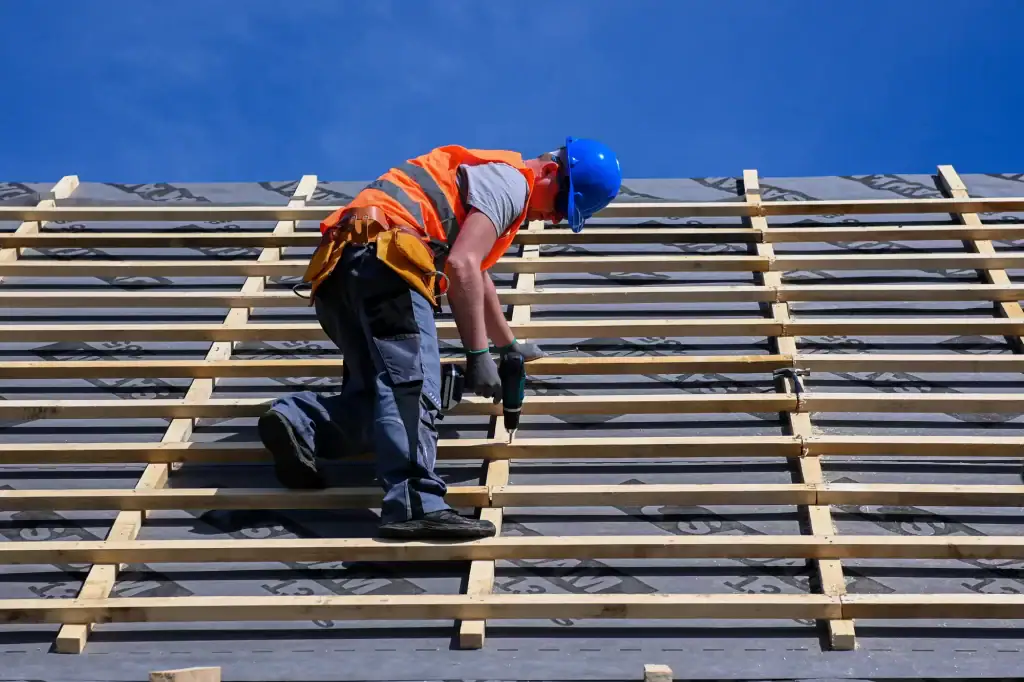
Not every roof problem requires a full replacement, but knowing the difference can save you from throwing money at repairs that won’t last. The decision comes down to three main factors: the age of your roof, the extent of the damage, and what’s happening beneath the surface.
If your roof is under 10 years old and the damage is isolated—a few shingles blown off by wind, a small section damaged by a fallen branch—repair usually makes sense. The rest of the roof still has plenty of life left, and a targeted fix will get you back to full protection.
But if your roof is approaching 15-20 years old and you’re seeing multiple problem areas, you’re usually better off replacing it. Repairs on an aging roof are like putting new tires on a car with a failing engine—you’re spending money on something that’s going to need major work soon anyway. Each repair buys you a little time, but the problems keep coming, and eventually you’ve spent more on patches than you would have on a new roof.
There are specific warning signs that tell you it’s time to call a professional roofer instead of attempting a DIY fix. These aren’t suggestions—they’re red flags that indicate serious problems.
Water stains on your ceiling or walls mean you have active leaks. The water you’re seeing inside has already caused damage you can’t see—soaked insulation, rotted framing, potential mold growth. By the time water shows up inside, the problem has been developing for weeks or months. A DIY patch won’t fix the underlying damage.
Missing or damaged flashing around chimneys, vents, and skylights is another sign you need professional help. Flashing is one of the most common leak sources, and it’s also one of the trickiest things to install correctly. In Long Island’s coastal environment, chimney flashing takes especially brutal abuse from heating and cooling cycles combined with salt air exposure. Improper flashing installation leads to water intrusion that can damage your roof deck and framing. This isn’t something you can fix with caulk and hope.
Sagging sections of your roof indicate structural problems—water damage, rotted decking, or failing support beams. This is an emergency. A sagging roof can collapse, and attempting to walk on it for a DIY repair is dangerous. You need a professional inspection immediately to determine the extent of the damage and what it will take to fix it safely.
Granules accumulating in your gutters mean your shingles are deteriorating. Those granules protect shingles from UV damage and weather. When they’re gone, your shingles age rapidly. If you’re seeing significant granule loss across your roof, you’re looking at replacement, not repair.
Curling, cracking, or brittle shingles are signs of age and weathering. These shingles are no longer protecting your home effectively. You can replace a few here and there, but if it’s widespread, you’re dealing with a roof that’s reached the end of its service life. Repairs will just delay the inevitable while your home remains vulnerable.
Long Island’s coastal climate is brutal on roofs, and it’s especially brutal on DIY repairs that weren’t done right in the first place. Understanding what happens to improper repairs in this environment will save you from making expensive mistakes.
Coastal storms bring high winds that test every seal and fastener on your roof. Professional installations use specific nailing patterns and adhesive techniques designed to withstand wind uplift. DIY repairs usually don’t. Those shingles you nailed down? If they’re not positioned correctly with the right number of nails in the right spots, the next nor’easter will rip them off—and probably take a few more with them.
Salt air from the ocean accelerates corrosion on any metal components—flashing, nails, vents, chimney caps. We use materials rated for coastal environments. The hardware store materials you picked up? They’ll corrode faster, fail earlier, and create new leak points within a year or two.
Freeze-thaw cycles are particularly hard on improper repairs. Water gets into any gaps or improperly sealed areas, freezes, expands, and makes the problem bigger. By spring, that small repair you did has turned into a major leak. This cycle repeats every winter, and each time the damage spreads further.
Temperature swings cause roofing materials to expand and contract. Professional installations account for this with proper spacing and fastening techniques. DIY repairs often don’t, which means materials buckle, crack, or pull loose as they expand and contract through the seasons. What looked fine when you installed it in July is failing by December.
The combination of these factors means DIY repairs in Long Island typically fail faster than they would in other climates. A repair that might last a few years in a mild climate fails in months here. You’re not just competing with normal wear and tear—you’re up against some of the harshest roofing conditions in the country. That’s why professional expertise matters more here than almost anywhere else.
When you do call a roofer, you need to know you’re working with someone who will do the job right. A real professional will inspect your entire roof system—not just the obvious damage. We check your shingles, flashing, underlayment, ventilation, chimney condition, and roof deck. We explain what we find in plain language and give you honest recommendations about whether you need repair or replacement.
We’re licensed and insured, which protects you if something goes wrong. We have references from other Long Island homeowners who’ve dealt with the same weather challenges you face. And we stand behind our work with warranties that actually mean something.
The bottom line is this: your roof is too important to gamble on. It protects everything you own and everyone you care about. When something goes wrong, calling a professional from the start almost always costs less than attempting a DIY fix that fails. If you’re dealing with roof damage in Long Island, NY, Expressway Roofing & Chimney has the experience and expertise to handle it right the first time.
Article details:
Share:
Continue learning: