
Essential Fall Roof Maintenance Checklist
Before the first nor'easter rolls in, your roof needs attention. Here's what Suffolk County homeowners should check — and when to call a pro.
Most homeowners don’t think about their roof until something goes wrong — a water stain on the ceiling, a gutter pulling away from the fascia, or worse, a leak discovered during the first hard freeze of the year. By then, the damage is already done and the repair bill is a lot higher than it needed to be.
Fall is when your roof is most worth paying attention to. The weather is still workable, contractors can actually get up there safely, and small problems are still small. This checklist covers what needs to happen before winter arrives in Suffolk County — and helps you figure out what you can handle yourself versus what’s worth calling in a professional for.
Fall Roof Maintenance: What Suffolk County Homes Actually Need
Long Island roofs take a beating that most people in other parts of the country don’t deal with. Salt air off the Atlantic and Long Island Sound accelerates granule loss on asphalt shingles, which leaves the underlying material exposed to UV damage and moisture well before the shingles look visibly worn. Add in the freeze-thaw cycles that run from October through March, and you’ve got a climate that shortens a standard roof’s lifespan from the national average of 25–30 years down to closer to 15–20 years in many parts of Suffolk County.
A fall inspection isn’t about being overly cautious. It’s about catching the things that will quietly get worse all winter — cracked flashing, missing shingles, blocked gutters — before they become emergency repairs in January. The cost difference between a $300 fix in October and a $3,000 remediation in March is real, and it’s avoidable.
Which Roof Problems Can You Spot Yourself — and Which Ones Stay Hidden?
There’s a meaningful difference between what a homeowner can reasonably assess and what actually requires a trained eye — or in our case, a drone.
From the ground, you can look for obvious signs of trouble: shingles that are visibly missing, curling at the edges, or covered in dark streaks from algae growth. You can check your gutters for an unusual amount of granules — those small, sand-like particles that coat asphalt shingles. Heavy granule loss in your gutters is one of the clearest signs that your shingles are aging faster than they should be. You can also look at your roofline from the yard to see if there’s any sagging, which can indicate a structural issue underneath.
What you can’t easily see from the ground is the condition of your flashing. Flashing is the metal that seals the joints around your chimney, skylights, vents, and roof valleys — and it’s one of the most common sources of leaks. It corrodes, separates, and cracks over time, and those gaps are often invisible until water is already getting in. The same goes for your attic: improper ventilation or inadequate insulation near the eaves won’t show up on a ground-level walk-around, but both are major contributors to ice dam formation. Ice dams happen when heat escapes through a poorly insulated attic, melts snow on the roof, and that water refreezes at the cold eaves — backing up under shingles and forcing water into your home.
Physically climbing onto your roof to inspect it yourself is genuinely risky. Falls from roofs are a leading cause of serious injury, and that’s true even for experienced contractors who use proper safety equipment. The smarter approach is to handle the ground-level checks yourself and have a professional assess everything that requires getting on the roof or into the attic. We use drone video for our inspections, which means we can show you exactly what we’re seeing — not just tell you there’s a problem.
Flashing, Soffits, and Fascia — The Parts of Your Roof Most Homeowners Overlook
Most people think of roof maintenance as a shingle issue. But some of the most expensive winter damage on Long Island homes comes from the parts of the roof that don’t get nearly as much attention.
Flashing failures are the number one source of roof leaks we see, particularly around chimneys and skylights. The flashing gets exposed to the same freeze-thaw cycles as everything else, but because it’s metal bonded to roofing material, it expands and contracts at different rates — which gradually opens up gaps. By the time you notice a water stain on your ceiling, that gap has usually been there for at least one season. Catching it in October means a straightforward repair. Catching it in February means dealing with water damage, potential mold, and a repair that costs several times more.
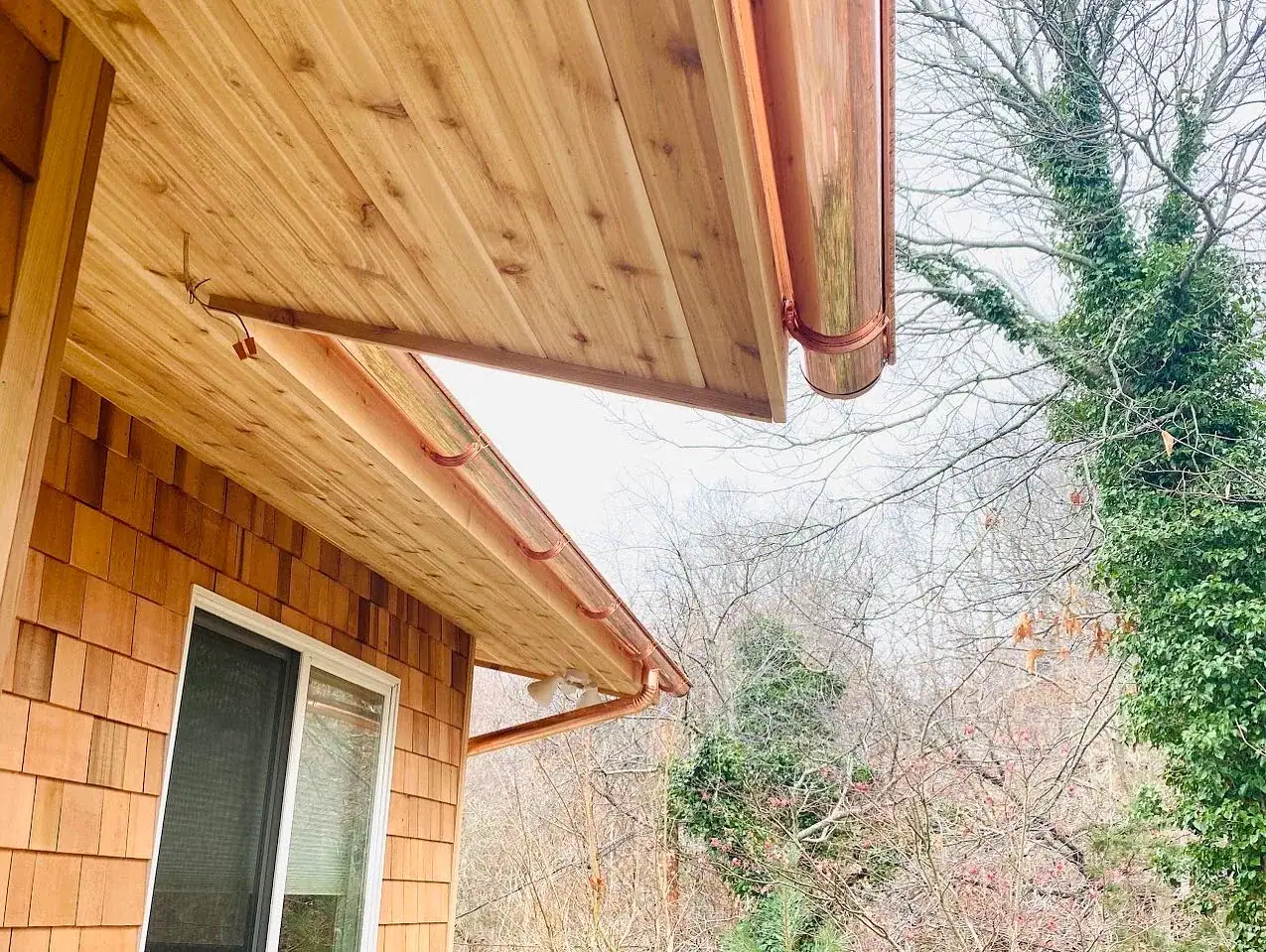
Soffits and fascia — the boards that run along the underside and edge of your roofline — are worth checking too. These are the first places that show rot when gutters are consistently clogged and overflowing, which is common in the fall across Suffolk County given the volume of leaves coming off the tree canopy in communities like Huntington, Smithtown, and Brookhaven. Rotted fascia compromises the attachment point for your gutters, which means the gutters themselves can pull away from the house under the weight of ice or debris. It also creates an entry point for moisture and pests.
The drip edge — a strip of metal along the roof’s lower edge — is another easy thing to overlook. It’s designed to direct water away from the fascia and into the gutters. When it’s damaged or improperly seated, water runs behind the gutter and saturates the fascia instead. It’s a small detail with outsized consequences if it fails heading into winter.
Winter Roof Preparation on Long Island: What Has to Happen Before the First Freeze
October is the practical deadline for most fall roof work in Suffolk County. Nor’easters can arrive as early as late October, and once temperatures drop consistently below freezing, repair work becomes more difficult, more dangerous, and more expensive. The homeowners who call us in November after a storm has already exposed a problem are always paying more than the ones who called us in September or early October to get ahead of it.
Winter preparation isn’t just about the roof surface. It’s about the whole system — gutters, chimney, attic ventilation, and flashing all working together to keep water moving away from your home instead of into it. When one part of that system fails, the others are usually not far behind.
Gutter Cleaning Before Winter: Why Timing Matters More Than You Think
Gutters are the part of fall maintenance that most homeowners know they should handle but keep putting off. The problem is that timing actually matters here — not just whether you do it, but when.
Clean your gutters too early in the fall and they’ll be full again by November. Wait too long and you’re cleaning them in freezing temperatures, or worse, the first hard freeze locks the debris in place and you’ve lost the window entirely. On Long Island, the right time is typically late October to mid-November — after the majority of leaves have come down but before the first freeze. If you’re in a heavily wooded area like the North Shore communities or parts of the East End, you may need to do it twice.
Clogged gutters in winter are a direct cause of ice dams. When water can’t drain freely through your gutters and downspouts, it backs up and freezes at the roofline. That ice dam then forces water back under your shingles with every freeze-thaw cycle. The damage it causes — stained ceilings, warped floors, ruined insulation, mold — is not a quick fix. It’s a weeks-long remediation project that typically runs into the thousands of dollars. Keeping your gutters clear is one of the highest-return maintenance tasks you can do, and the cost of having it done professionally is a fraction of what a single ice dam incident costs to repair.
Downspout extensions are worth checking too. Downspouts should direct water at least six feet away from your foundation. If they’re dumping water right at the base of the house, you’re trading a roof problem for a foundation problem — and foundation issues on Long Island are no small thing given the soil composition in many parts of Suffolk County.
Should You Get Your Chimney Inspected Before Winter in Suffolk County?
Yes — and fall is the right time to do it, not spring.
The chimney is a penetration through your roof, which means the flashing around it is one of the most vulnerable points on the entire structure. But beyond the flashing, the chimney itself needs attention before you start using your fireplace. The National Fire Protection Association recommends an annual chimney inspection and cleaning before heating season begins, and there’s a practical reason for that recommendation: a chimney that sat unused all summer can accumulate moisture damage, animal nesting material, and creosote buildup that becomes a fire hazard the first time you light a fire.
On Long Island, the salt air and weather exposure that affects your roof also affects your chimney. The mortar between the masonry bricks deteriorates over time, especially on the chimney crown — the concrete cap at the very top. Cracks in the crown let water in, and water in masonry during freeze-thaw cycles causes accelerating damage. A chimney cap in poor condition is another common entry point for moisture and animals. These are things that are easy to fix in October and genuinely expensive to ignore until March.
Because we handle both roofing and chimney work, we inspect them as a single integrated system rather than two separate jobs. That matters because the most common chimney-related leaks aren’t actually inside the chimney — they’re at the flashing where the chimney meets the roof. Having one contractor assess both means nothing gets missed at that critical junction. It also means you’re not coordinating two separate companies, two separate schedules, and two separate invoices for what is ultimately one interconnected system.
When to Call a Roofing Professional in Suffolk County Before Winter
The honest answer is: before you think you need to. The problems that turn into expensive winter repairs almost never announce themselves clearly. They show up as a small stain, a gutter that seems fine, a shingle that looks a little off from the driveway. By the time the damage is obvious, it’s been working against you for a season or more.
If you’ve done a ground-level walk-around and something looks off — or even if nothing looks wrong and you just haven’t had a professional inspection in the last year or two — fall is the time to get it done. The window between now and the first nor’easter is short, and it closes fast.
We’ve been working on Long Island roofs for over 22 years. We cover roofing, chimneys, gutters, siding, and soffits — everything on this checklist — so you’re not tracking down four different contractors before winter. Give us a call and we’ll take a look before the season gets away from you.

Article details:
- Published by:
- Roofing & Chimney Contractor Long Island, NY
- Published to:
- Last modified: November 5, 2026
- November 5, 2026
Share:
Continue learning: