
Get Your Roof and Gutters Fixed Together
Dealing with a leaky roof and failing gutters at the same time? Here's why fixing them together — with one contractor — is the smarter move for Suffolk County homeowners.
If you’ve got a roof issue and a gutter problem at the same time, you already know what comes next — two separate calls, two different contractors, two sets of scheduling delays, and no guarantee either of them will actually coordinate with the other. It’s exhausting, and it’s more expensive than it needs to be.
The good news is that roof and gutter repair doesn’t have to work that way. When one contractor handles both, you get a cleaner diagnosis, a faster timeline, and one person accountable for the whole job. Here’s what we’ve learned working with Suffolk County homeowners over the past 22 years.
Why Roof and Gutter Repair Should Be Done at the Same Time
Your roof and gutters aren’t separate systems — they work together to move water away from your home. When one fails, it puts pressure on the other. A clogged or damaged gutter causes water to back up onto the roof edge, which accelerates shingle deterioration and creates the exact conditions that lead to ice dams in a Suffolk County winter. Fix the gutters without looking at the roof, and you’ve only solved half the problem.
The reverse is just as true. A roof that’s losing granules — which happens naturally with asphalt shingles over time — sends that debris straight into the gutters. Even homes with no trees overhead deal with gutter buildup because of this. If your gutters are clogging up faster than they used to, it may be a sign your roof is telling you something.
What Happens When You Ignore a Small Roof or Gutter Problem
Suffolk County’s weather doesn’t give you much grace period. Between the nor’easters that push sustained winds above 60 mph, the average 27 inches of annual snowfall, and the salt air coming off the Great South Bay, Peconic Bay, and the Atlantic, a small problem on your roof or in your gutters can turn into a serious one faster than it would almost anywhere else in New York.
A minor gutter separation — the kind where the section pulls slightly away from the fascia — lets water run directly behind the gutter and down the fascia board. Over one winter, that’s enough to rot the fascia completely. Once the fascia goes, you’re looking at soffit damage, potential water intrusion into the attic, and a repair bill that’s several times what it would have been if you’d caught it early.
Roof leaks follow the same pattern. Water doesn’t drip straight down — it travels along sheathing and rafters before it shows up as a stain on your ceiling. By the time you notice it inside the house, it’s already been working on the structure for a while. The damage is rarely contained to the spot where you see it.
This is especially true for homeowners on the South Shore — communities like West Babylon, West Islip, and Bay Shore take direct hits during coastal storms. And for those with properties on the East End, seasonal vacancy means damage from a fall nor’easter might go undetected until spring, by which point a manageable repair has become a major project.
Garage Roof Repair: The Problem Suffolk County Homeowners Often Overlook
Ranch homes and split-levels throughout western and central Suffolk County — Babylon, Islip, Smithtown, and Brookhaven — frequently have flat or low-slope garage roofs attached to the main structure. These sections behave completely differently from the pitched roof over the rest of the house, and they fail in different ways.
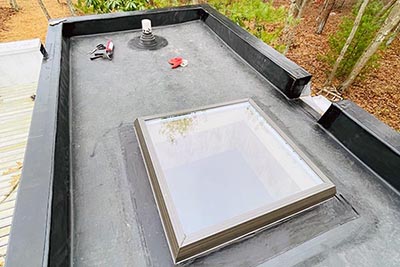
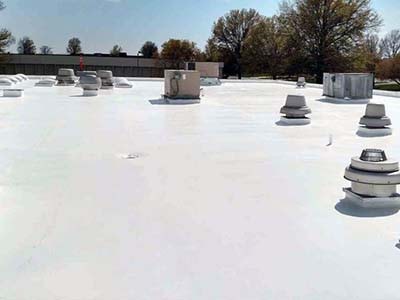
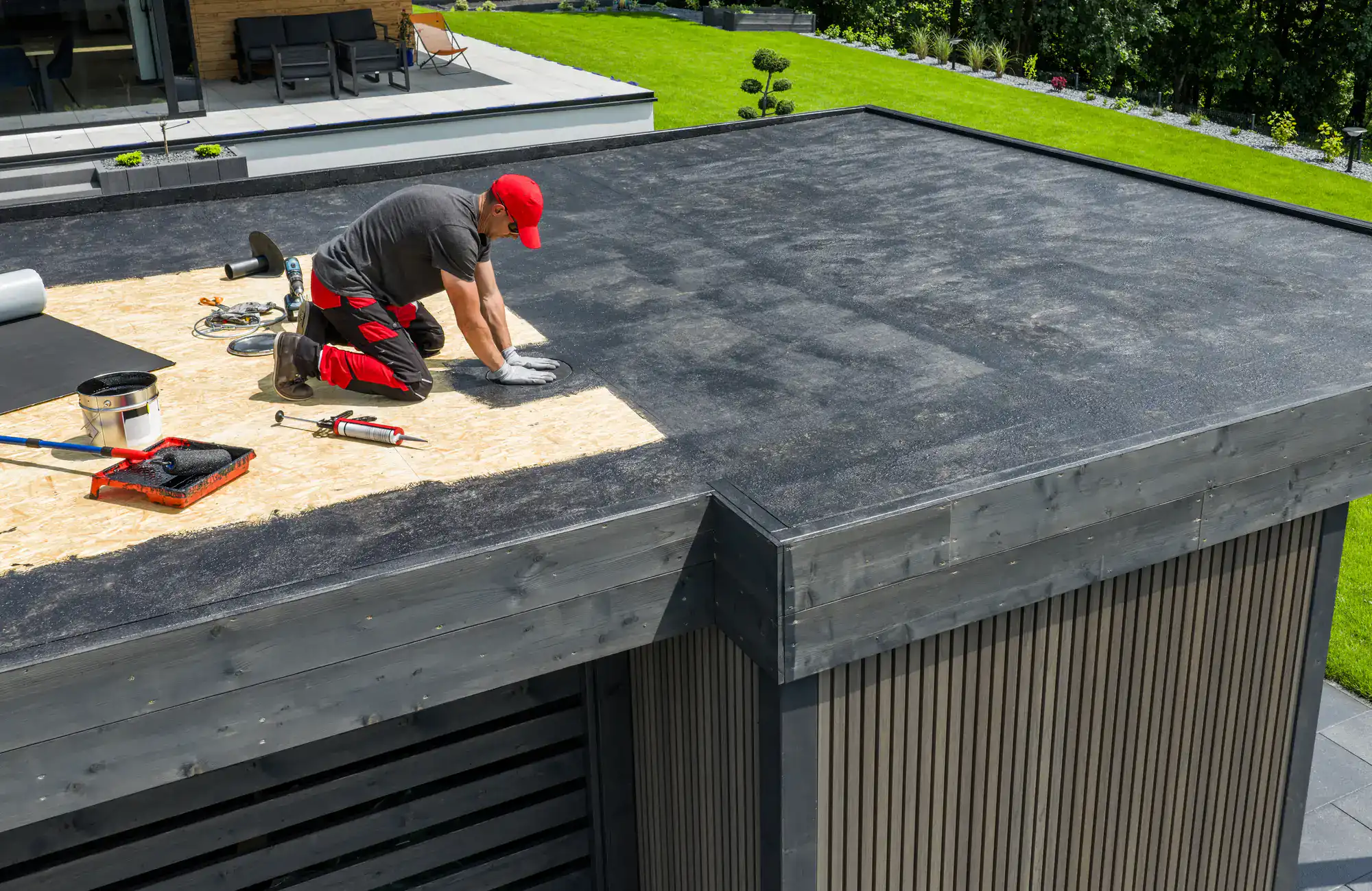
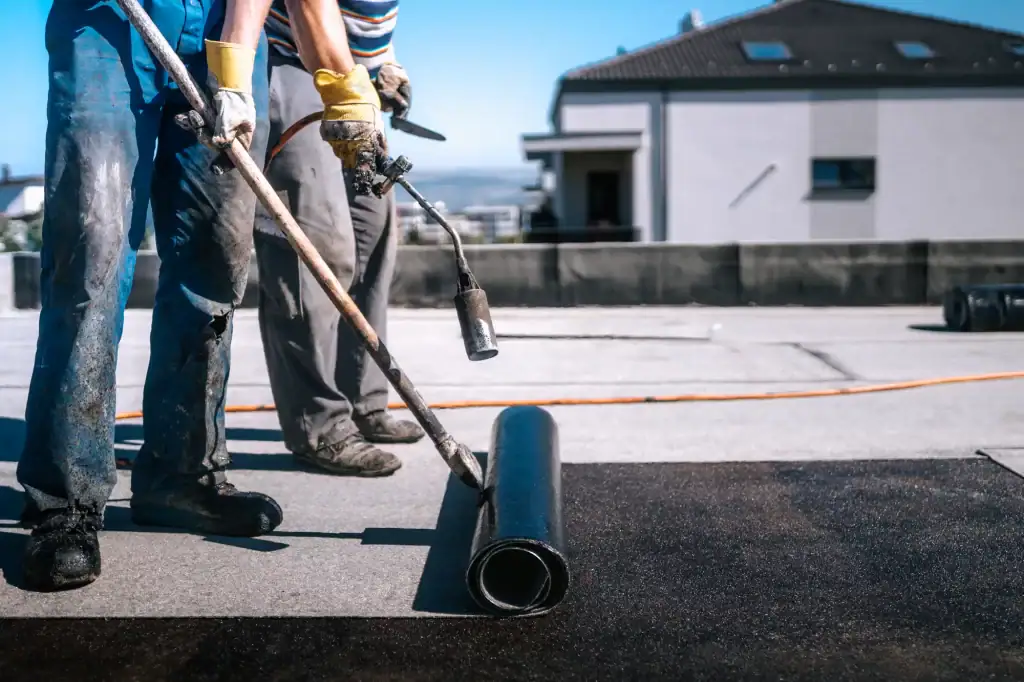
Flat garage roofs are prone to blistering, seam separations, and membrane punctures. They’re also prone to pooling water, which accelerates wear and finds entry points that a pitched roof would simply shed. The repair process — and the materials used — are distinct from what goes on a standard asphalt shingle roof. A contractor who’s only experienced with pitched residential roofing may not be equipped to handle a flat garage roof correctly.
We see this fairly often when we’re called out for what a homeowner thinks is a roof leak, only to find the source is actually the low-slope section over the garage or a rear addition. It’s not an uncommon situation, and it’s a good example of why a thorough inspection of the full roof system matters — not just the most visible sections.
If your garage ceiling has water stains or you’ve noticed soft spots in the roof surface, that’s worth getting looked at before the next heavy rain. Flat roofs don’t announce their problems the way pitched roofs do. By the time you see visible damage, it’s usually been developing for a season or two.
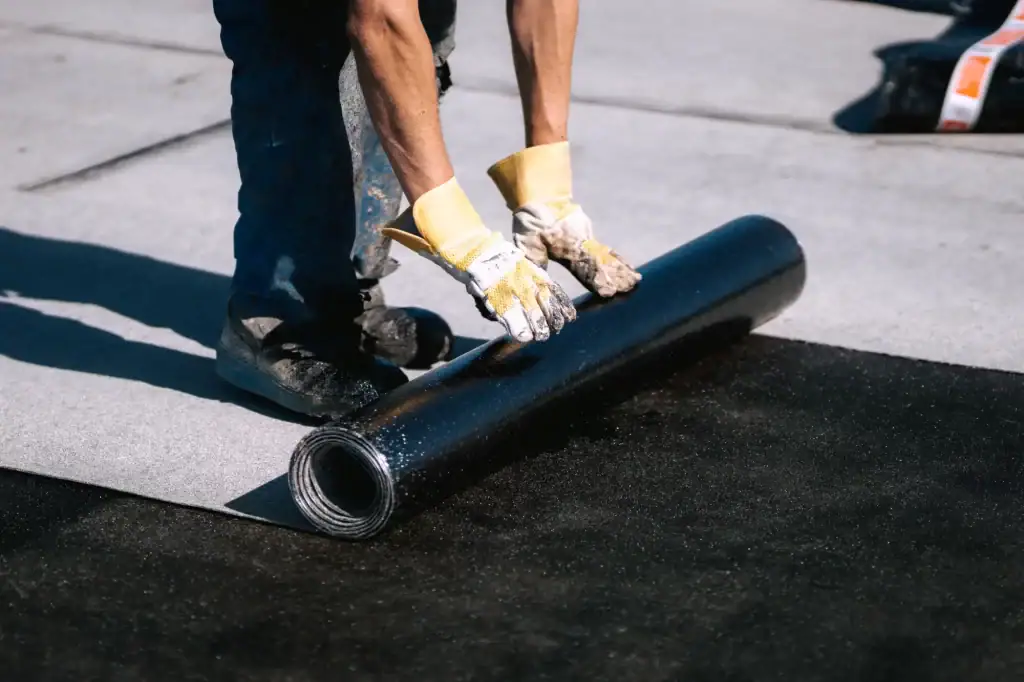
Roofing and Siding Repair: Closing Every Entry Point for Water
Roofing and siding repair often go hand in hand for the same reason roof and gutter work does — they’re all part of how your home manages water. Siding that’s cracked, warped, or pulling away from the wall doesn’t just look bad. It lets water in behind the surface, where it can damage sheathing, insulation, and framing before it ever shows up as a visible problem inside the house.
When we’re already on a roof addressing a leak or doing gutter work, we look at the full exterior picture. If the siding near the roofline is compromised, fixing the roof without addressing it means you still have an open path for water. One contractor who sees all of it is in a better position to solve all of it.
How Roof Siding Repair Works When Done Together
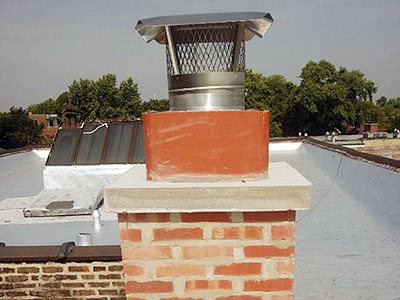
The connection between roof and siding repair is most visible at the transition points — where the roof meets the wall, where flashing is installed around dormers or chimneys, and where soffit and fascia tie the two systems together. These are the spots where water most commonly finds its way in, and they require someone who understands how both systems interact.
When flashing fails at a roof-to-wall junction, water doesn’t just affect the roof. It runs down behind the siding, into the wall cavity, and can show up as interior moisture damage well away from the original entry point. This kind of damage is frequently misdiagnosed because the symptom — a damp wall or a stain near a window — doesn’t obviously point to a roofline issue.
Doing roof siding repair together means those transition points get addressed as a unit rather than piecemeal. The flashing, the siding material at the roofline, the fascia condition — all of it gets evaluated and repaired in a single scope of work. That matters for the quality of the outcome, and it matters for the warranty. When one contractor is responsible for the whole job, there’s no ambiguity about who’s accountable if something develops later. No finger-pointing between trades, no “that’s the other guy’s work.”
For Suffolk County homes with cedar shake siding — common across the North Shore in Huntington and Smithtown, and on the estates in East Hampton and Southampton — this integrated approach is especially important. Cedar shake requires specific fasteners and installation techniques, and the interaction between the shake and the roofing material at the transition points needs to be handled by someone who knows both.
What We Hear Most From Suffolk County Homeowners About Exterior Repairs
One of the most common questions we get is some version of: “Do I actually need to fix all of this at once, or can I just deal with the worst problem now?” It’s a fair question, and the honest answer is that it depends on what’s actually going on — which is why a thorough inspection matters before anyone starts talking numbers.
That said, there are situations where bundling the work clearly makes sense. If your gutters are already pulling away from the fascia and your roof is showing signs of wear, doing both in the same visit eliminates a second mobilization, a second disruption to your day, and the risk that the second contractor finds something the first one disturbed. The cost efficiency is real, and so is the time savings.
Another question we get frequently: “How do I know if a contractor is actually licensed to work in Suffolk County?” This one’s worth taking seriously. New York State doesn’t issue a statewide roofing license — licensing is handled at the county level. In Suffolk County, contractors are required to hold a Home Improvement Contractor license through the Suffolk County Department of Consumer Affairs, along with general liability insurance, workers’ compensation coverage, and a surety bond. The county maintains a searchable database of licensed contractors, and you can verify any contractor’s status before signing anything. A contractor who’s licensed in Nassau County isn’t automatically cleared to work in Suffolk County — they’re separate licenses.
We’re also asked regularly about what to do after a storm. If you’ve had a nor’easter come through and you’re not sure whether your roof or gutters took damage, the safest move is to get an inspection before the next weather event. We use drone video to document roof conditions — which means you can actually see what we’re looking at, not just take our word for it. That kind of transparency tends to make the conversation a lot easier.
Finding the Right Roof and Gutter Repair Contractor in Suffolk County
Roof and gutter repair in Suffolk County isn’t the same as it is somewhere inland. The salt air, the nor’easters, the freeze-thaw cycles, the coastal storm exposure — all of it adds up to a market where experience and material quality actually matter, not just price.
The simplest way to protect your home is to work with one contractor who can look at the full picture — roof, gutters, siding, and everything in between — and give you a straight answer about what needs attention now and what can wait.
We’ve been doing exactly that for Suffolk County homeowners for over 22 years, from Manorville out to Montauk and across to Huntington. If you’ve got questions or you’re ready to get an honest assessment of what’s going on with your exterior, reach out — we offer free estimates, and there’s no obligation to move forward until you’re comfortable with the plan.
Article details:
- Published by:
- Roofing & Chimney Contractor Long Island, NY
- Published to:
- Last modified: August 13, 2026
- August 13, 2026
Share:
Continue learning: