
What Makes Metal Roofing Experts Different?
Metal roofing is a specialty, not a side service. Here's what real expertise looks like — and what to ask before you hire anyone.
Most roofing contractors will tell you they do metal roofing. Fewer of them actually specialize in it. And here in Suffolk County, where salt air, coastal storms, and freeze-thaw cycles put roofs through more stress than most markets, that distinction matters more than you might think.
Metal roofing is a different discipline — different materials, different fastening systems, different flashing details, different failure points. A crew that’s excellent with asphalt shingles isn’t automatically qualified to install a standing seam metal roof. This page explains what separates a true metal roofing expert from a generalist, what that expertise looks like in practice, and what homeowners and commercial property owners across Suffolk County should look for before signing anything.
What Metal Roofing Experts Actually Know That General Roofers Don't
Metal roofing is a system. Every panel, fastener, underlayment layer, and flashing detail has to work together — and the margin for error is smaller than most people realize. Thermal expansion alone is something a lot of general roofers underestimate. Metal expands and contracts with temperature changes, and if the fastening system doesn’t account for that movement, you end up with loose panels, cracked seams, and eventually water intrusion.
That’s just one example. There’s also material selection — aluminum versus steel versus copper, each with different performance characteristics and installation requirements. In coastal areas like the South Shore, the Hamptons, or anywhere near the water in Suffolk County, aluminum’s resistance to salt-air corrosion makes it the right call for long-term performance. A contractor who doesn’t know that distinction will just install whatever they have on the truck.
The NRCA requires a minimum of 36 months of hands-on metal installation experience before a technician can even sit for their metal roof certification exam. That’s the industry’s way of acknowledging that this work takes real, dedicated time to learn.
How to Find Qualified Local Metal Roofing Companies in Suffolk County
Suffolk County has no shortage of roofing contractors. What it does have a shortage of is contractors who can show you a track record specifically with metal roofing — not just a line item on a website, but actual completed projects, documented experience, and credentials you can verify.
The first thing worth asking any contractor is how long they’ve been installing metal roofing specifically. Not roofing in general. Metal specifically. A company that’s been doing general roofing for 10 years but started offering metal two years ago is a different situation than a contractor who has been handling metal installations throughout their entire career on Long Island.
Licensing and insurance are non-negotiable. In Nassau and Suffolk counties, contractors are required to be licensed and insured to perform roofing work, and many towns require a building permit for a full roof replacement or tear-off. A contractor who’s unfamiliar with local permitting requirements — or who suggests skipping the permit — is a red flag worth taking seriously. We’ve been pulling permits in Brookhaven, Huntington, Southampton, and towns across Suffolk County for over 22 years. That kind of local knowledge protects you.
Written contracts and warranties matter just as much as credentials. Any legitimate metal roofing contractor should provide a clear, itemized contract that covers materials, labor, and warranty terms. A manufacturer warranty covers the material itself; a labor warranty covers the installation. You want both. If a contractor is vague about warranty coverage or pushes you to make a same-day decision, that’s worth paying attention to.
Reviews across multiple platforms — not just one — give you a more complete picture. Look for consistent themes: did they show up when they said they would? Did they communicate throughout the project? Did the finished work hold up? Those patterns tell you more than a star rating alone.
What a Metal Roof Specialist Does Before Installation Even Starts
One of the clearest ways to tell whether you’re working with a metal roof specialist or a generalist is what happens before any material touches your roof. We don’t just show up with a quote — we assess the specific conditions of your roof, your home, and your environment before recommending anything.
That assessment matters a lot in Suffolk County. A 15-year-old roof here can show wear patterns equivalent to a 20-year-old roof in a milder climate, simply because of what Long Island weather puts roofing systems through. Salt air accelerates corrosion. Nor’easters drive rain sideways with enough force to find every gap and seam. Ice dams form along eaves during freeze-thaw cycles and force water under roofing materials in ways that aren’t visible from the ground.
We use drone video technology to inspect roofs before any project begins. That means high-resolution footage of every panel, seam, flashing detail, and penetration point — areas that would require risky ladder climbs or expensive scaffolding to assess any other way. You see exactly what we see. The assessment is more accurate, more thorough, and fully documented, which matters both for the installation plan and for your records.
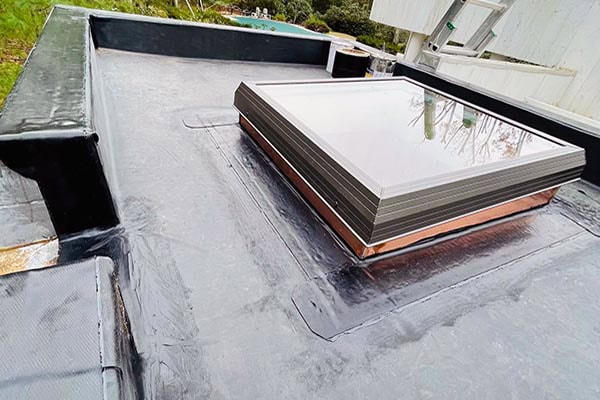
We also evaluate how the roof integrates with everything around it — chimney flashing, gutters, skylights, siding transitions, and ventilation. Flashing failures around chimneys and pipe penetrations are among the most common sources of roof leaks in Suffolk County, and they’re almost always the result of poor coordination between roofing and adjacent systems. Because we handle roofing, chimney, siding, and gutters under one roof, every integration point gets the same level of attention.
Commercial Metal Roof Projects Require a Different Level of Capacity
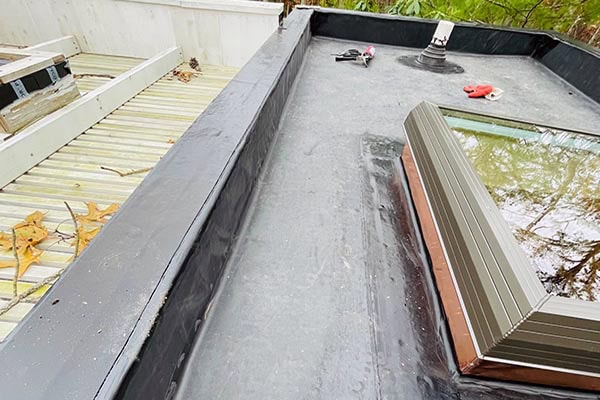
Residential and commercial metal roofing share the same fundamental principles, but the scale, timeline, and logistical demands are completely different. A commercial metal roof on a shopping center, industrial building, or municipal facility in Suffolk County isn’t a two-crew, one-week job. It requires project management, material coordination, crew availability, and the physical capacity to mobilize quickly and work efficiently across a large footprint.
That’s where fleet size and operational depth start to matter. We run a fleet of 10 trucks, which means we can handle multiple simultaneous projects, respond quickly after storm events, and staff commercial-scale jobs without pulling resources from other clients. Most local roofing contractors operate one to three vehicles. That gap in capacity is real, and it shows up in project timelines.
Why Commercial Property Owners in Suffolk County Choose Metal Roofing
Metal roofing has become one of the most practical choices for commercial buildings across Suffolk County, and the reasons aren’t hard to follow. A properly installed commercial metal roof provides 40 to 50 years of protection — sometimes longer — with minimal maintenance requirements compared to built-up or modified bitumen systems. It handles flat and steep-sloped applications, resists wind uplift and water intrusion, and carries Cool Roof certification from the Department of Energy, which matters for energy code compliance in New York’s Climate Zone 4A.
For commercial property owners, the math is straightforward. A roof that lasts twice as long and requires less maintenance over its lifespan is a better long-term investment, even if the upfront cost is higher. When you factor in reduced repair calls, lower energy costs from reflective metal surfaces, and the avoidance of a full replacement cycle, the numbers shift significantly in metal’s favor.
What commercial clients in Suffolk County also need is a contractor with the capacity and experience to manage the project professionally from start to finish. That means accurate timelines, clear communication, proper permitting, and crews that show up consistently. It also means understanding the specific demands of commercial construction — material staging, phased installation to keep a building operational, and coordination with property managers or tenants. We’ve built that experience over more than two decades working at commercial scale on Long Island.
Suffolk County's Coastal Climate and What It Means for Metal Roof Longevity
If you live or own property near the water in Suffolk County — whether that’s the South Shore in Islip or Babylon, the East End in Southampton or East Hampton, the North Fork, or anywhere along the Long Island Sound — your roof is dealing with conditions that most national roofing guides don’t fully account for.
Salt air is corrosive. It breaks down materials faster than standard weather exposure, and it’s relentless. The same coastal environment that makes the Hamptons one of the most desirable places to own property in the country is also one of the most demanding environments for roofing systems. Asphalt shingles that might last 25 years in an inland market often show significant deterioration in 15 years or less along the South Shore. Metal roofing — particularly aluminum — is engineered for exactly this kind of exposure. Aluminum doesn’t rust, and it holds up against the combination of salt air, moisture, and temperature cycling that defines Long Island’s coastal climate.
Wind resistance is the other factor worth understanding. Suffolk County building codes include specific requirements for coastal installations that exceed general state standards, recognizing the enhanced wind loads that properties near the water face during nor’easters and tropical storm events. A metal roofing system installed to those standards, with the right underlayment, properly engineered flashing, and concealed or correctly spaced fasteners, performs significantly better in high-wind conditions than a standard asphalt installation. That’s what the code requirements are designed to reflect.
For high-value residential properties in communities like Bridgehampton, Quogue, or Cutchogue, metal roofing also makes financial sense from a return-on-investment standpoint. A new roof in Suffolk County delivers roughly 60 to 70 percent ROI in home value, and a metal roof’s lifespan — 40 to 80 years, depending on the material and installation quality — means you’re protecting a significant asset for the long term rather than scheduling the next replacement in 15 years.
How to Choose the Right Metal Roofing Contractor in Suffolk County, NY
The short version: look for documented experience with metal specifically, verifiable local credentials, a written warranty on both labor and materials, and a contractor who takes the time to assess your roof properly before quoting you.
The longer version is everything on this page. Metal roofing is a long-term investment, and the quality of the installation determines whether you get 50 years of performance or 15 years of repairs. Suffolk County’s coastal climate, local building codes, and the specific demands of high-value residential and commercial properties all factor into what a good installation actually requires here.
If you’re weighing your options, we’ve been doing this work on Long Island for over 22 years. Reach out for a free estimate — no pressure, no obligation, just a straight conversation about what your roof actually needs.
—
**Frequently Asked Questions**
**What makes a metal roofing expert different from a regular roofer?** Metal roofing requires specific training in material selection, thermal expansion management, specialized fastening systems, and flashing details that differ significantly from asphalt or other roofing systems. The NRCA requires a minimum of 36 months of dedicated metal installation experience for certification — which is the industry’s acknowledgment that this isn’t a skill you pick up by occasionally adding metal to a general roofing practice. A true metal roof specialist has installed enough systems to know where failures happen and how to prevent them.
**What type of metal roofing is best for homes near the water in Suffolk County?** For coastal communities along the South Shore, the East End, or anywhere with significant salt air exposure in Suffolk County, aluminum roofing is typically the strongest choice. Aluminum doesn’t rust, which matters enormously in a salt-air environment where steel products — even galvanized or coated steel — can show corrosion over time. The right material depends on your specific location, roof pitch, and budget, which is exactly why a proper site assessment matters before any recommendation is made. We’ve installed aluminum systems across Islip, Babylon, Southampton, and East Hampton that have held up through decades of coastal exposure.
**How much does a metal roof cost?** Pricing varies based on roof size, pitch, complexity, and local labor costs — and Suffolk County’s labor market affects the final number more than most homeowners expect. Premium metal roofing systems like stone-coated steel sit at the higher end of the market, while standing seam aluminum offers strong durability at a more moderate price point. There’s no meaningful way to give an accurate figure without assessing the specific property. We provide free estimates that include a detailed breakdown of materials and labor so you know exactly what you’re paying for.
**Do I need a permit to replace my roof with metal in Suffolk County?** In most towns across Suffolk County, yes — a building permit is required for a full roof replacement or tear-off, regardless of material. Towns like Brookhaven, Huntington, Islip, and Southampton each have their own permitting processes, and some have local amendments that go beyond the state baseline. We handle the permitting process as part of the job and know exactly what’s required in your town.
**Is metal roofing worth the higher upfront cost?** Over the life of the roof, usually yes. Metal roofs last 40 to 80 years compared to roughly 20 years for asphalt shingles. When you factor in energy savings from reflective metal surfaces — up to 25 percent reduction in cooling costs — lower maintenance requirements, and the avoided cost of a second replacement cycle, the total cost of ownership often favors metal significantly. In Suffolk County’s high-value real estate market, the long-term protection of a premium installation also makes financial sense for homeowners protecting a significant asset.
Article details:
- Published by:
- Roofing & Chimney Contractor Long Island, NY
- Published to:
- Last modified: July 16, 2026
- July 16, 2026
Share:
Continue learning: