
Chimney leaks often start where your roof meets the chimney. Professional flashing and waterproofing create lasting protection against Long Island's harsh coastal climate.

Chimney flashing is the metal barrier installed where your chimney penetrates your roof. Think of it as a weatherproof seal that channels water away from this vulnerable junction. Without proper flashing, there’s essentially a hole in your roof where water pours directly into your home.
The flashing system typically includes two layers working together. Step flashing runs along the sides of your chimney in a stair-step pattern, with each piece overlapping the one below. Counter flashing sits above the step flashing and tucks into your chimney’s mortar joints, covering the top edge to prevent water from sneaking behind.
When this roof-chimney seal works correctly, water flows around your chimney and down your roof instead of finding its way inside. But flashing doesn’t last forever, especially not in Long Island, NY’s coastal environment.
Long Island, NY’s location creates a perfect storm for chimney flashing failure. You’re dealing with salt air that corrodes metal components faster than inland areas experience. Winter brings freeze-thaw cycles that expand and contract materials hundreds of times per season. Heavy nor’easters dump rain that finds every tiny gap and weakness in your roof-chimney seal.
Salt carried by coastal winds doesn’t just sit on surfaces—it penetrates into mortar joints and accelerates metal corrosion. What might take 30 years to fail in a dry climate can fail in 10 to 15 years here. The constant temperature swings make metal flashing expand and contract, loosening nails and creating gaps that weren’t there when the work was new.
Freeze-thaw damage happens when water gets into small cracks and freezes. Ice expands with tremendous force, widening those cracks into bigger problems. One winter might not cause visible damage, but after years of this cycle, the deterioration becomes impossible to ignore. You’ll see rust stains on your chimney, gaps between the flashing and your roof or chimney, or water stains appearing inside your home after every significant rain.
The metal itself can corrode through completely in exposed areas. Aluminum flashing might develop holes. Steel flashing rusts. Even copper, which resists corrosion better than other metals, can fail at the seams where it’s joined or where it enters the mortar. Once the metal develops holes or the sealant cracks, water has a direct path into your home’s structure.
Long Island homeowners also deal with wind-driven rain that doesn’t just fall straight down. Coastal storms push water sideways and upward, testing every seal and finding weaknesses that normal rainfall might not exploit. This is why chimney flashing repair becomes necessary even when the flashing looks fine from the ground—the water is coming from angles you can’t easily see.
Most homeowners don’t discover flashing problems until water damage appears inside their home. By that point, the leak has often been active for weeks or months, quietly causing damage you can’t see yet. Catching the warning signs early makes the difference between a straightforward chimney flashing repair and a major reconstruction project.
Water stains on your ceiling or walls near the chimney are the most obvious indicator. These stains might be brown, yellow, or even just darker patches where the paint or drywall looks different. They typically appear after heavy rain and might seem to dry out between storms. Don’t assume that means the problem fixed itself—it just means the leak is intermittent, which is exactly how most chimney flashing failures behave.
Dampness in your attic near the chimney tells you water is getting past your roof’s defenses. Check your attic after a rainstorm and look for wet insulation, dark streaks on wood framing, or water running along rafters. Sometimes you’ll smell the problem before you see it—a musty, mildew odor that’s strongest near the chimney indicates moisture that shouldn’t be there.
From outside, look for rust stains running down your chimney or visible gaps between the flashing and either the roof or the chimney itself. The flashing might be pulling away, bent, or obviously corroded. You might see missing or cracked caulk around the flashing edges. White staining on your chimney’s exterior indicates efflorescence—a sign that water is moving through your masonry and bringing mineral deposits to the surface.
Inside your home, paint might be peeling near the chimney, or you might notice the wallboard feels soft or sounds hollow when you tap it. These are signs that water has been present long enough to damage the interior finishes. Mold growth, even small spots, indicates a moisture problem that needs immediate attention from a qualified chimney company.
The challenge with chimney flashing leaks is that water doesn’t always appear directly below the problem. Water can travel along rafters, down walls, or through insulation before it becomes visible. You might see stains several feet away from where the water is actually entering. This is why professional inspection is so important—we know how to trace the water back to its source instead of just treating the symptoms.
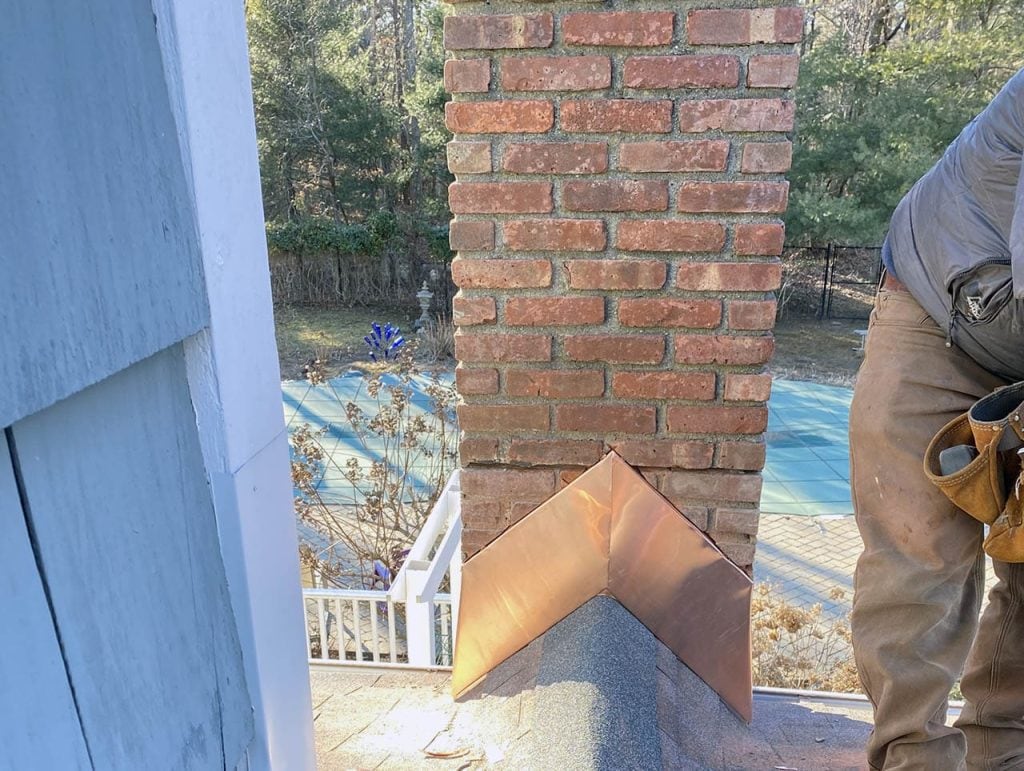
Even with perfect flashing, your chimney can still leak. Masonry chimneys are built from porous materials that absorb water like a sponge. Bricks and mortar weren’t designed to be completely waterproof—they naturally allow some water penetration. In moderate climates with occasional rain, this might not cause immediate problems. But in Long Island, NY’s environment, that water absorption accelerates deterioration and leads to leaks.
Professional chimney waterproofing applies a specially formulated sealant to your chimney’s exterior surfaces. This isn’t the same as painting your chimney or slapping on some generic waterproof coating. The products we use for chimney waterproofing are vapor-permeable, meaning they block liquid water from entering while still allowing water vapor to escape from inside your chimney.
Why does this matter? Your chimney needs to breathe. When you use your fireplace, moisture from combustion needs to vent through the masonry. If you seal your chimney with a non-breathable coating, you trap that moisture inside, causing damage from within. Professional-grade waterproofing products reduce water penetration by up to 99.9% while maintaining the breathability your chimney requires.
Freeze-thaw damage is one of the most destructive forces your chimney faces, and it’s particularly severe in Long Island, NY’s climate. Here’s how it works: water soaks into your chimney’s porous masonry during rain or snow. When temperatures drop below freezing, that water turns to ice. Ice occupies about 9% more volume than liquid water, so it expands with enough force to crack brick and crumble mortar.
One freeze-thaw cycle doesn’t destroy your chimney. But Long Island winters put your chimney through this cycle dozens or even hundreds of times per season. Each cycle widens existing cracks and creates new ones. Over time, you’ll see spalling—where the face of bricks flakes off in layers. Mortar joints crumble and fall out. The chimney crown develops cracks that let even more water in, accelerating the damage.
Chimney waterproofing stops this cycle before it starts by preventing water from soaking into the masonry in the first place. When water can’t penetrate the brick and mortar, it can’t freeze inside those materials and cause expansion damage. This single preventive measure extends your chimney’s lifespan by decades and prevents the need for expensive masonry reconstruction.
The protection is particularly important for the upper portions of your chimney, which face the most severe exposure to weather. The chimney crown—the concrete or mortar cap at the very top—takes direct hits from rain, snow, and ice. Without proper waterproofing, small cracks in the crown become major problems within just a few seasons. Water enters through these cracks, soaks into the chimney structure, and causes damage that spreads downward through your entire chimney system.
Long Island’s coastal humidity adds another layer of complexity. Even without rain, moisture in the air can be absorbed by porous masonry. This constant exposure to dampness means your chimney never fully dries out between weather events. Waterproofing creates a barrier that keeps this ambient moisture from saturating your chimney’s structure, reducing the overall moisture load your chimney has to handle.
Professional chimney waterproofing is more than just spraying a sealant on your chimney and calling it done. The process starts with a thorough inspection to identify existing damage that needs repair before waterproofing can be effective. Applying sealant over cracked mortar or damaged bricks doesn’t fix the underlying problems—it just hides them temporarily while they continue to worsen.
The chimney needs to be cleaned before any waterproofing product is applied. Dirt, soot, algae, and efflorescence on the surface prevent proper adhesion and reduce the effectiveness of the sealant. We use appropriate cleaning methods that remove contaminants without damaging the masonry. This might include pressure washing, chemical cleaners, or manual scrubbing depending on your chimney’s condition and materials.
Any necessary repairs happen next. Cracked mortar joints get repointed with fresh mortar that’s properly matched to your chimney’s age and brick type. Damaged bricks are replaced. The chimney crown is repaired or rebuilt if it shows significant cracking or deterioration. These repairs ensure that the waterproofing sealant is applied to sound masonry that can properly absorb and bond with the product.
The waterproofing product itself is specifically formulated for masonry chimneys. These aren’t the same products you’d use on concrete foundations or basement walls. Chimney waterproofing sealants need to withstand extreme temperature changes, from the heat of fireplace use to winter cold. They must remain flexible enough to accommodate the natural expansion and contraction of masonry without cracking or peeling.
Application technique matters significantly. The sealant needs to be applied at the right temperature and humidity levels for proper curing. It must be worked into the masonry surface, not just sprayed on top. Multiple coats are often necessary to achieve the level of protection your chimney needs, especially in Long Island, NY’s harsh coastal environment.
Professional waterproofing typically lasts 5 to 10 years before it needs renewal, depending on your chimney’s exposure and the quality of the original application. This is dramatically different from DIY waterproofing attempts, which might fail within a single season. The investment in professional application pays for itself by preventing water damage that would cost thousands to repair.
After waterproofing, your chimney sheds water instead of absorbing it. Rain beads up and runs off the surface rather than soaking in. This visible change in how water behaves on your chimney’s surface is your confirmation that the waterproofing is working as intended. The protection extends to all the masonry surfaces—the chimney shaft, the crown, and even the mortar joints—creating a comprehensive barrier against water intrusion and supporting effective chimney leak prevention.
Chimney flashing repair and waterproofing aren’t optional maintenance items you can put off indefinitely. They’re essential protection systems that prevent water damage from spreading through your home’s structure. The few hundred dollars you invest in professional flashing repair or waterproofing prevents the thousands you’d spend fixing water-damaged ceilings, rotted framing, or compromised insulation.
Long Island, NY’s coastal environment makes these services even more critical. Your chimney faces challenges that inland homes don’t experience—salt air corrosion, extreme freeze-thaw cycles, and weather patterns that test every roof-chimney seal and surface. Working with an experienced chimney company that understands these local conditions ensures you get repairs and protection that actually last.
If you’re seeing water stains, dealing with leaks, or just want to prevent problems before they start, we’ve been protecting Long Island homes for over 20 years. We understand exactly how coastal weather affects your chimney and what it takes to create lasting protection against water damage.
Article details:
Share:
Continue learning: