Not all roofers are created equal. Learn how to identify quality contractors on Long Island before signing anything or letting anyone climb your roof.
The difference between a quality roofer and someone who just owns a ladder comes down to three things: legitimate credentials, transparent business practices, and a permanent local presence. These aren’t nice-to-haves. They’re non-negotiables that protect you legally, financially, and structurally.
A quality roofing contractor operates a real business with a physical address, proper licensing for Nassau or Suffolk County, and insurance that actually covers the work being done on your property. They provide written estimates with detailed breakdowns, explain exactly what they’ll do and why, and give you time to make an informed decision. No pressure. No gimmicks.
You won’t find them knocking on your door after a storm claiming they “happened to notice damage” from the street. They don’t demand large cash deposits before materials arrive or offer deals that expire if you don’t sign today. Quality roofing companies earn business through referrals, proven work, and standing behind what they install—not through high-pressure sales tactics that prey on your urgency.
This is where most homeowners make their first mistake: they assume the contractor is legitimate and skip the verification step. Don’t do that.
In New York, roofing contractors must hold proper Home Improvement licenses specific to the county where they’re working. Nassau County requires one license. Suffolk County requires another. A contractor working in both counties needs both. Ask for the license number upfront and verify it yourself through the county licensing board. Don’t just accept a photocopy or trust what’s printed on a business card—scammers fake documents all the time.
Insurance is even more critical because it determines who pays if someone gets hurt on your property. You need to see two specific types: general liability insurance (minimum $1 million coverage) and workers’ compensation. But here’s the catch. Some contractors carry “ghost policies” that provide a certificate but exclude actual coverage.
The only way to verify real coverage is to request a Certificate of Insurance issued directly from the insurance company to you, the homeowner, with your name and address listed. If a roof contractor hesitates, makes excuses, or says they’ll “get that to you later,” you’ve just identified someone to avoid. Legitimate roofing companies provide this documentation immediately because they know it’s standard practice.
At Expressway Roofing & Chimney, we’ve served Long Island, NY for over 20 years, and we understand that transparency around credentials isn’t optional—it’s what separates professionals from scammers. The licensing and insurance check takes maybe 20 minutes of your time. That small investment protects you from liability if a worker falls off your roof, ensures you have legal recourse if work is substandard, and confirms you’re dealing with someone who follows the law.
Storm chasers—contractors who follow severe weather from town to town—are a real problem on Long Island. They show up after nor’easters and hurricanes, sign up as many jobs as possible, collect deposits, and disappear before completing the work or when problems arise. The easiest way to spot them? Their lack of a permanent local presence.
A quality roofer has a physical business address you can visit. Not a P.O. box. Not just a cell phone number. An actual location where they store equipment, manage operations, and conduct business year-round. You should be able to find their address online, see it on their website, and verify it exists through a simple Google Maps search.
Why does this matter so much? Because when something goes wrong six months or two years after installation, you need to be able to find the contractor. A local business with a permanent address has accountability. They’re invested in their reputation within the community. They can’t just pack up and move to the next storm-damaged area when complaints start rolling in.
Check their online presence too. A legitimate roofing company will have a professional website, verifiable reviews on Google and other platforms, and a history you can trace. If you can’t find any information about them online, or if the only thing that comes up is a Facebook page created last month, that’s a massive red flag. Long Island has plenty of established roof contractors who’ve been serving Nassau and Suffolk Counties for decades.
These companies have built their businesses on referrals and repeat customers—not on chasing storms and pressuring vulnerable homeowners. When you’re comparing contractors, prioritize the ones with deep local roots and a track record you can verify.
Some warning signs are so clear that you should end the conversation the moment you spot them. These aren’t minor concerns or things that might be explained away. They’re indicators that you’re dealing with someone who either doesn’t know what they’re doing or is actively trying to scam you.
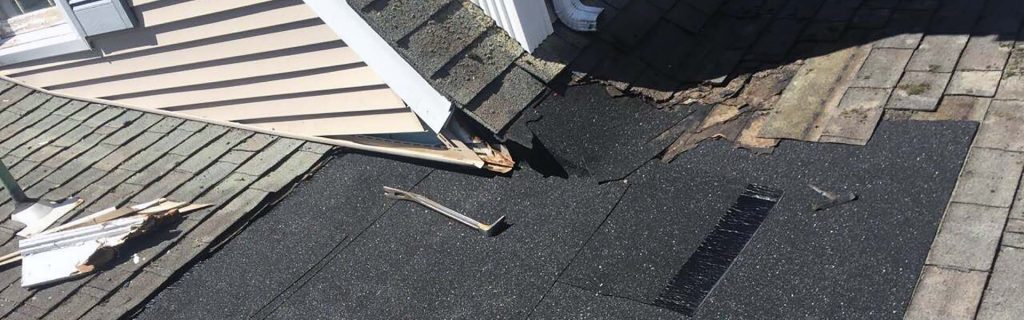
First, any contractor who shows up at your door uninvited after a storm is suspect. Nassau County officials have explicitly warned homeowners about this tactic after cases where scammers impersonated legitimate roofing companies and tricked homeowners into signing contracts for fraudulent repairs. In documented instances, these “contractors” actually created damage while on the roof, then came down to sell the repair.
Second, if the estimate is dramatically lower than every other quote you received, there’s a reason. Roofing materials cost what they cost. Labor has a market rate. A bid that’s 30-40% below everyone else means corners are being cut somewhere—either in materials, labor quality, insurance coverage, or the contractor’s intention to actually complete the work.
Quality roofers understand that replacing or repairing a roof is a significant decision that requires time, research, and comparison shopping. They’re comfortable giving you space to think, get other estimates, and make an informed choice. Scammers, on the other hand, create artificial urgency designed to short-circuit your decision-making process.
Common pressure tactics include “limited time offers” that expire if you don’t sign today, claims that they can only hold your spot on the schedule for the next hour, or warnings that delaying will void your insurance coverage. These are manipulation techniques, not legitimate business practices. A reputable contractor will give you a written estimate that remains valid for a reasonable period—typically 30 days—and won’t penalize you for taking time to think.
The contract itself tells you everything you need to know about how the job will go. A detailed contract should include the complete scope of work broken down by specific tasks, all materials listed by brand and product line, a clear timeline with start and completion dates, the total cost with a payment schedule tied to project milestones, permit requirements and who handles them, cleanup procedures, and warranty information for both materials and workmanship.
If you receive a contract that just says “roof replacement” with a total price and nothing else, don’t sign it. Vague contracts give unscrupulous contractors room to cut corners, substitute inferior materials, add surprise fees, or claim that problems you expected them to fix weren’t included in the scope. Everything should be spelled out in writing before any work begins.
The payment terms deserve special attention. Never agree to pay the full amount upfront or even a large percentage. Legitimate roof contractors typically ask for a small deposit—maybe 10-15% or $500-$1,000—to secure your spot on the schedule and cover initial material orders. The bulk of payment should come after materials arrive and as work progresses, with final payment due only after completion and your approval. Anyone demanding 50% or more before they’ve done anything is either financially unstable or planning to take your money and run.
Here’s something many homeowners don’t realize: a legitimate estimate requires an actual inspection of your roof, not a quick glance from the ground or a number thrown out over the phone. The condition of your roof decking, the number of existing layers, ventilation setup, flashing around chimneys and skylights, and dozens of other factors affect both the scope of work and the final cost.
A quality roofer will spend time examining your roof from multiple angles, checking the attic if accessible, taking measurements, and documenting current conditions. They might take photos to show you exactly what they’re seeing and why they’re recommending specific repairs or replacement. This inspection process typically takes 30-60 minutes for a standard residential roof. Sometimes longer for complex situations.
The written estimate that follows should reflect this thorough inspection. You should see specific details about what they found, what needs to be done, and why. If a contractor gives you a price quote without ever getting on your roof or examining the attic, they’re guessing. Those guesses often turn into “unexpected additional costs” once work begins.
Pay attention to how the contractor communicates during this process. Are they willing to answer your questions in plain language? Do they explain their recommendations and give you options at different price points? Can they tell you specifically how Long Island’s coastal climate affects roofing materials and what products work best in this environment?
Companies with real expertise in the Long Island, NY market understand the unique challenges here—salt air corrosion, freeze-thaw cycles, nor’easter wind patterns, and humidity issues that don’t exist in other regions. We can explain why certain materials or installation techniques matter specifically for Nassau and Suffolk County homes. If a roofing company can’t demonstrate that local knowledge, they probably don’t have it.
The inspection and estimate process is also your chance to assess professionalism. Did they show up on time? Were they respectful of your property? Did they provide the estimate when promised? These small details predict how they’ll handle the actual job.
Spotting a quality roofer before they touch your property isn’t complicated, but it does require you to verify credentials, ask direct questions, and trust your instincts when something feels off. Check licensing and insurance first—no exceptions. Look for a permanent local business with verifiable history in Nassau or Suffolk County. Get everything in writing with detailed breakdowns of materials, labor, timeline, and costs. Walk away from anyone using pressure tactics, offering deals that seem too good to be true, or refusing to provide the documentation you request.
Your roof protects everything underneath it. The contractor you choose determines whether that protection lasts 25 years or fails in five. Taking the time to properly vet roofing companies before making a decision isn’t being overly cautious—it’s being smart about one of the largest investments you’ll make in your home.
When you’re ready to move forward, work with a contractor who’s proven their commitment to Long Island homeowners through decades of service, proper credentials, and transparent business practices. We’ve been serving Nassau and Suffolk Counties for over 20 years with the licensing, insurance, and local expertise that gives homeowners confidence their roof is in capable hands.
Article details:
Share:
Continue learning: