
Garage Roof Replacement From Start to Finish
From structural assessment to permits to material selection — here's what a real garage roof replacement looks like on Long Island, from start to finish.
Most homeowners don’t think much about their garage roof — until water shows up somewhere it shouldn’t. By then, what started as a few missing shingles or a slow drip has often turned into rotted decking, damaged rafters, or worse. The garage roof tends to be the last one anyone checks, and that’s exactly why it ends up being a bigger job than it needed to be.
Whether your garage is attached to the house or sitting detached in the backyard, replacing the roof involves more moving parts than most people expect — especially here in Suffolk County, where permit requirements, coastal weather, and local building codes all factor into the picture. Here’s what the process actually looks like. When you need professional roofing services, working with an experienced local contractor can help ensure the job is done properly.
What Garage Roof Replacement Actually Involves
A proper garage roof replacement starts before a single shingle comes off. The first step is a structural assessment — checking the decking, rafters, and fascia for rot, sagging, or water damage that’s been accumulating quietly underneath the surface. Skipping this step is one of the most common ways a “new roof” ends up leaking within a year or two.
From there, the old roofing material gets torn off. In most cases, a full tear-off is the right move — it lets you see exactly what you’re working with underneath and ensures the new materials bond and perform correctly. Layering new shingles over old ones might save a little time upfront, but it hides problems, adds weight to the structure, and typically voids the manufacturer warranty on the new material. For homeowners considering a professional roofing solution, a proper tear-off provides a better foundation for long-term performance.
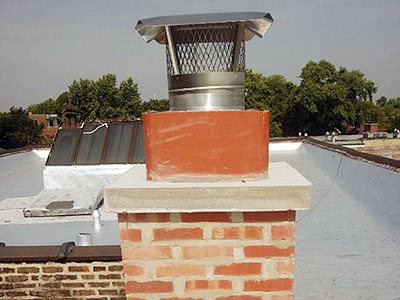
Once the deck is clean and inspected, the installation sequence matters: new underlayment, ice and water shield at the eaves and valleys, drip edge along all edges, new flashing at any penetrations or walls, and then the finish material. Each of those layers has a job to do. When one gets skipped — and it happens — that’s usually where the next leak starts.
Shed Roof Replacement Cost in Suffolk County
Shed roof replacement cost varies more than most people expect, mostly because “shed” covers a wide range — from a small 8×10 backyard structure to a large workshop or outbuilding that’s closer to a garage in size. Nationally, asphalt shingles run about $3 to $6 per square foot installed, while metal roofing lands closer to $7 to $16 per square foot.
Here in Suffolk County, you should expect to land at the higher end of those ranges — or above them. Long Island labor and material costs consistently run 15 to 30 percent above national averages, and that’s before factoring in permit fees, which are required even for detached outbuildings in most of the county’s 10 towns.
That last part catches a lot of homeowners off guard. Suffolk County splits permitting authority across Babylon, Brookhaven, East Hampton, Huntington, Islip, Riverhead, Shelter Island, Smithtown, Southampton, and Southold — each with its own building department, fee schedule, and inspection process. A shed roof replacement in Huntington goes through a completely different process than the same job in Southampton. Budget up to $400 for permit fees, and another $400 or so for debris disposal, on top of material and labor costs.
One more thing worth knowing: the minimum service call for a licensed roofing contractor typically runs $150 to $300. For a very small shed, that floor matters — the labor cost doesn’t scale down as much as you might assume. If you’re dealing with multiple outbuildings or want to address the shed alongside the garage, doing it in one mobilization usually makes more financial sense than scheduling separate jobs.
Mobile Home Roof Over Cost and Conservatory Roof Replacement
Two structure types that come up less often but deserve a real answer: mobile homes and conservatories.
For mobile homes, the most common question is whether a roof-over — installing new roofing directly over the existing material — makes sense, or whether a full replacement is the better call. A roof-over typically costs between $1,000 and $4,500 and avoids the labor and disposal costs of a full tear-off. Full replacement on a single-wide runs $1,500 to $9,600 depending on size and material, and double-wides can push significantly higher. In the Northeast, metal roofing is widely considered the best option for manufactured homes — it handles snow load, ice, and the kind of sustained wind that comes with a Long Island nor’easter better than most alternatives, and it can last 40 to 60 years with minimal maintenance.
The mobile home roof over cost question also depends heavily on what’s underneath. If the existing roof has structural issues, water infiltration, or compromised framing, a roof-over is a short-term fix that delays a larger problem. An honest assessment before committing to either path is worth the time.
Conservatory roof replacement is a different animal entirely. Options range from polycarbonate panels on the budget end to glass and solid insulated panels at the premium level. The reason more Long Island homeowners are looking at solid panel conversions is straightforward: a glass or polycarbonate conservatory roof is often too hot in summer and too cold in winter to use comfortably. A solid insulated roof changes that — it makes the space genuinely usable year-round, which matters in a four-season climate like ours. Costs vary widely based on conservatory size and the panel system chosen, but solid roof conversions typically start around $5,000 and can run $20,000 or more for larger structures.
Garage Roof Replacement Cost Factors Most Contractors Don't Mention Upfront
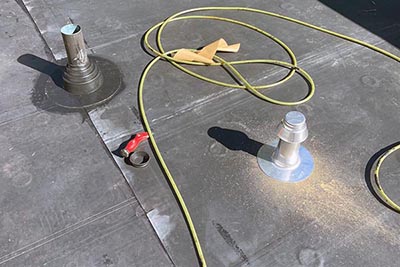
The national average for garage roof replacement sits around $3,970, with a typical range of $2,390 to $5,560 for a standard two-car garage using mid-range materials. On Long Island, expect those numbers to run higher — sometimes significantly, depending on where you are in Suffolk County and what the job actually involves.
What moves the number up or down isn’t just square footage. Pitch, accessibility, the condition of the existing deck, material selection, and whether the structure is attached to the house or sitting detached all affect the final cost. So does the question of whether the job requires a permit — and in Suffolk County, it almost always does.
Attached vs. Detached Garage: Does It Change the Replacement Cost?
Yes, and in more ways than one. An attached garage shares a wall with the house, which means the roofline often ties directly into the main roof system. That connection affects how flashing is handled, how the new material integrates with the existing roof, and sometimes what materials you can realistically use without creating an aesthetic mismatch. If your garage and home have the same roofline, matching materials — shingle style, color, profile — matters more than it would for a detached structure sitting in the backyard.
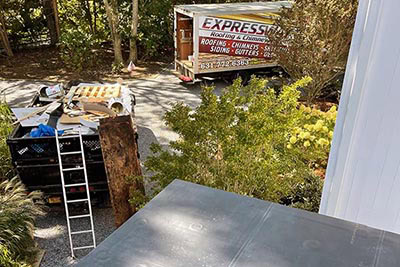
A detached garage brings its own set of considerations. Access is often more complicated, especially if the structure is close to a fence, a neighboring property line, or landscaping that limits where equipment can be staged. Debris removal is a separate operation. And in many Suffolk County towns, a detached structure requires its own permit, separate from any permit tied to the main house.
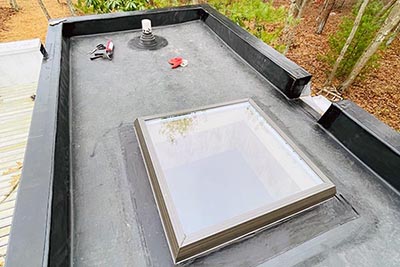
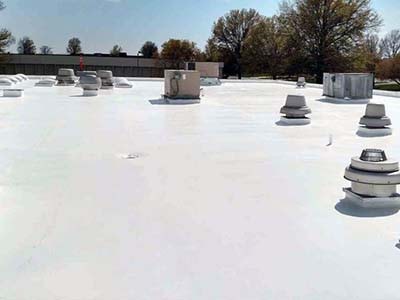
For detached garages with low-slope or flat roofs — which is common in older Long Island neighborhoods — the material options shift as well. Asphalt shingles aren’t appropriate for very low pitches. EPDM rubber membrane, modified bitumen, and TPO are the standard choices for flat or near-flat garage roofs, each with different cost profiles and lifespans. Modified bitumen typically lasts up to 20 years with proper maintenance; EPDM can last longer with the right installation. Getting the material selection right for the actual pitch of your garage roof is something we handle automatically — it’s not something you want to discover was wrong after the first heavy rain.
What Should I Ask a Roofing Contractor Before Replacing My Garage Roof?
This is the question that separates a good outcome from a frustrating one. Here are the things worth asking before you agree to anything.
First: are you licensed in Suffolk County? New York State doesn’t issue a statewide roofing license — it’s handled at the county level. In Suffolk County, roofing contractors are legally required to hold a Home Improvement Contractor license. If a contractor can’t confirm they hold one, that’s a hard stop. Hiring an unlicensed contractor leaves you without legal recourse if the work fails and potentially liable if someone gets hurt on your property.
Second: will you pull the permit? In all 10 Suffolk County towns, a permit is required for a full roof replacement — including on garages and outbuildings. Any contractor who suggests skipping it is either cutting corners or unfamiliar with local requirements. Unpermitted work creates real problems at resale and can void your homeowner’s insurance coverage for related claims.
Third: what does the estimate actually include? A legitimate written estimate should break out materials, labor, disposal, and permit fees as separate line items. Vague verbal quotes are a red flag. You should know exactly what you’re paying for before any work starts.
Fourth: what’s covered under warranty, and for how long? There are two separate warranties in play — the manufacturer’s warranty on the materials and the contractor’s workmanship warranty on the installation. Both matter. A manufacturer warranty means nothing if the installation is the problem, and vice versa.
Finally: how long have you been working in this area? There’s a real difference between a contractor who knows Long Island and one who’s just licensed to work here. Coastal salt air, the freeze-thaw cycles that hit Suffolk County every winter, the specific permit quirks of individual towns — these are things you learn from years of doing the work here, not from a manual.
Finding the Right Contractor for Garage Roof Replacement in Suffolk County
A garage roof replacement done right isn’t complicated — but it does require someone who knows what they’re looking at, knows the local permit process, and isn’t going to cut corners on the parts you can’t see. The structural assessment, the underlayment, the flashing, the deck condition — that’s where the quality of the job actually lives. The shingles are just the part you can photograph.
Suffolk County homeowners have a lot of options when it comes to roofing contractors. The ones worth hiring are the ones who’ve been doing this work here long enough to know the difference between what Islip requires and what Smithtown requires, and who treat your garage roof with the same care they’d give the main house.
We’ve been handling roof replacements across Nassau and Suffolk County since 2000. If you’re trying to figure out what your garage, shed, or outbuilding actually needs — and what it’s going to cost — reach out for a free estimate. No pressure, no guesswork, just a straight answer from people who’ve been doing this on Long Island for over two decades.
Article details:
- Published by:
- Roofing & Chimney Contractor Long Island, NY
- Published to:
- Last modified: September 10, 2026
- September 15, 2026
Share:
Continue learning: