
Prevent Roof Leaks Before They Damage Your Home
Your roof faces nor'easters, salt air, and freeze-thaw cycles every year. Here's how to stay ahead of the damage before it finds its way inside.
Most roof problems don’t announce themselves. They build quietly — a little granule loss here, some separated flashing there — until one night in January, you’re putting a bucket under a drip in your living room ceiling. By that point, the damage has usually been happening for weeks. Suffolk County homeowners deal with some of the harshest roofing conditions in the Northeast: coastal salt air that corrodes metal components faster than inland markets, nor’easters that arrive with little warning, and freeze-thaw cycles that exploit every small gap. The good news is that most of this is preventable. Here’s what you need to know.
What Roof Maintenance Actually Involves on Long Island
Roof maintenance gets reduced to “cleaning your gutters” in most conversations, but that’s only one piece of a much larger picture. A proper maintenance visit covers shingle condition, flashing integrity around chimneys and skylights, valley drainage, soffit and fascia, attic ventilation, and the overall state of your drainage system. Each of these components interacts with the others, and a failure in one often shows up as a symptom somewhere else entirely.
That’s especially true across Suffolk County, where salt air from the Atlantic and Long Island Sound accelerates corrosion on metal flashing, gutter hardware, and roofing fasteners. A nail that might last 30 years in an inland market can begin pulling loose in 15 to 20 years here. When those fasteners fail, shingles lift — and lifted shingles are how water finds its way in. Getting ahead of that process is the whole point of regular maintenance.
How Often Should Suffolk County Homeowners Schedule a Roof Inspection?
We recommend twice a year — once in the fall before nor’easter season, and once in the spring after winter has done its worst. For roofs older than 15 years, annual inspections are considered the minimum. Once a roof crosses the 20-year mark, you really want a professional set of eyes on it every year without exception.
The fall timing matters more than most people think. September and October are your window to catch anything that could become a serious problem between November and March. Ice dams — those ridges of ice that form at the roof’s edge and force meltwater back under your shingles — don’t happen because of one bad storm. They happen because of small vulnerabilities that already existed: inadequate ventilation, minor gaps in flashing, areas where heat is escaping unevenly from the attic. Catching those in October costs a few hundred dollars. Dealing with the water damage they cause in February can run $15,000 to $30,000 once you factor in insulation replacement, drywall repair, and mold remediation.
There’s also the insurance angle, which doesn’t get talked about enough. When a homeowner files a claim after storm damage, insurers increasingly look at maintenance history. If there’s no documentation of regular inspections and upkeep, the claim can be denied on the grounds that the damage resulted from neglect rather than a sudden event. A documented maintenance relationship with a licensed contractor isn’t just good for your roof — it’s protection for your claim.
We use drone video during our inspections so you can see exactly what we’re seeing. There’s no guesswork, no “trust us.” You get a clear picture of your roof’s actual condition, documented in detail. For homeowners who’ve been burned by vague contractor assessments in the past, that kind of transparency tends to matter.
Why Long Island's Aging Housing Stock Makes Maintenance More Urgent
A significant portion of Suffolk County’s housing stock was built during the post-World War II suburban expansion of the 1950s through the 1970s. Those homes are now 50 to 75 years old. Many of them are on their second or third roof, and a meaningful number of those roofs were installed in the 1990s or early 2000s — which means they’re approaching or already past their expected lifespan.
Asphalt shingles, which cover the majority of residential homes across Brookhaven, Islip, Babylon, and Smithtown, are rated for 20 to 30 years under normal conditions. Long Island’s conditions are not normal. The combination of coastal exposure, seasonal temperature swings, and the sheer volume of weather events this region sees can compress that timeline considerably. A roof installed in 1998 that was never inspected or maintained may have only a few years left on it — or it may already be failing in ways that aren’t visible from the street.
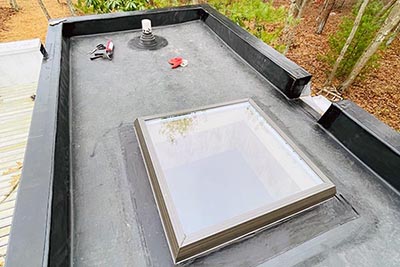
This is why we look at the whole system, not just the shingles. Algae and moss growth — common on north-facing slopes and shaded sections of roofs across central Suffolk County — can reduce shingle lifespan by 30 to 50 percent by trapping moisture against the surface. Granule loss, which you might notice in your gutters after a heavy rain, is an early indicator that shingles are losing their protective coating. Flashing around chimneys and skylights is often the first place water finds an entry point, because it’s the most exposed and the most frequently overlooked.
We’ve been working on Long Island roofs since 2000, which means we’ve seen these homes at every stage of their lifecycle. We know what a 25-year-old Cape Cod in Medford looks like from the inside of an attic, and we know what warning signs to look for in a 1960s Colonial in Huntington. That kind of local, hands-on experience is hard to replicate.
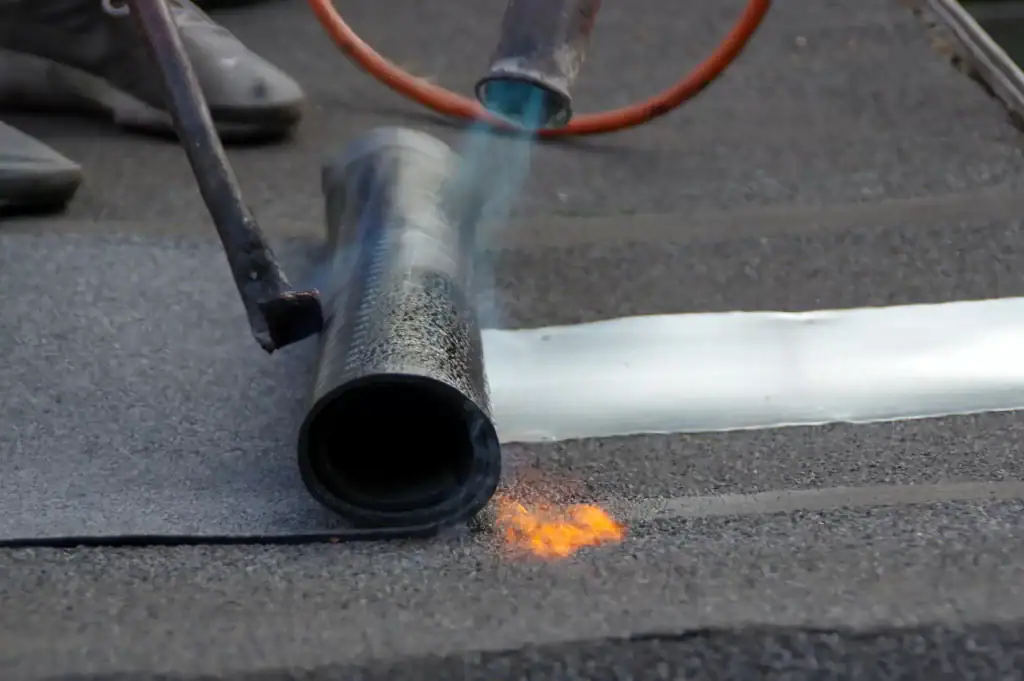
Roof Leak Emergency in Suffolk County: What to Do and Who to Call
Even with regular maintenance, emergencies happen. A nor’easter rolls through overnight, a tree limb comes down, or a section of flashing finally gives way after years of salt air exposure. When water is actively coming into your home, the priority shifts from prevention to containment — fast.
The biggest mistake homeowners make in a roof leak emergency is waiting until morning, or waiting until Monday, to call someone. Water doesn’t wait. Every hour it’s moving through your roof decking, insulation, and ceiling materials, the scope of the repair grows. A leak that costs $800 to fix at 11 PM can become a $12,000 remediation job if it’s left to run through the weekend.
24 Hour Roof Leak Repair: What Actually Happens When You Call at 2 AM
When you call us at 2 AM on a Sunday during a nor’easter, someone answers. That’s not a marketing line — it’s how we’re set up to operate. We run a 10-truck fleet staged across Suffolk County, which means we’re not waiting for a single crew to finish one job before responding to the next. We can deploy multiple teams simultaneously, which matters enormously when a major storm hits and half of Brookhaven Town is dealing with damage at the same time.
The first step in any emergency response is stabilization. Before any permanent repair can happen, we need to stop the water from continuing to enter the home. That typically means professional-grade temporary waterproofing — not just a tarp thrown over a hole, but a proper temporary seal that protects the structure while we assess the full scope of the damage. We document everything during this phase, both because it informs the permanent repair plan and because that documentation is critical if you’re filing an insurance claim.
Once the immediate situation is stabilized, we put together a clear plan for the permanent roof water leak repair. That means identifying the actual source of the leak — not just where the water is showing up inside, but where it’s entering the roof system. Those two locations are often not the same. Water that appears as a ceiling stain in your bedroom may be entering through a failed chimney flashing 15 feet away and traveling along a rafter before dripping down. Finding the true source is the difference between a fix that lasts and one that fails again in six months.
We’ve been responding to emergencies across Suffolk County long enough to know that the communities along the south shore — Babylon, Islip, Mastic, Shirley — take the hardest hits from Atlantic storms. Homes in those areas often need emergency response faster and more frequently than properties further inland. Our location in Manorville puts us in the middle of the county, which is no accident. We can reach Patchogue or Hauppauge in roughly the same amount of time, and we can be in Riverhead or Westhampton without a long drive.
Finding the Right Roof Leakage Solution — Not Just the Fastest Patch
There’s a meaningful difference between stopping a leak and solving it. A patch addresses the symptom. A real roof leakage solution addresses the cause — and on Long Island, the cause is often more layered than it first appears.
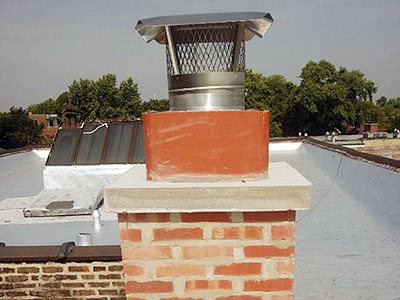
Take chimney flashing as an example. It’s one of the most common sources of water intrusion in Suffolk County homes, particularly in older properties where the original copper or aluminum flashing has been exposed to decades of salt air and freeze-thaw cycling. When that flashing separates or corrodes, water runs down the chimney chase and into the home. The leak shows up inside, often far from the chimney itself, and it’s easy to misdiagnose as a shingle problem. A contractor who only does roofing — and doesn’t handle chimneys — may patch the shingles and call it done. The leak comes back. Then you’re calling someone else.
We handle roofing, chimneys, gutters, skylights, and siding under one roof, which means we can actually diagnose the full system rather than the piece of it that falls within a narrow specialty. That matters more than most homeowners realize until they’ve been through the cycle of hiring three separate contractors and still having a leak.
The other piece of a real solution is planning beyond the immediate repair. If your roof is 18 years old and you’ve just had a significant leak, the honest conversation is about what comes next — whether that’s targeted repairs to extend the roof’s life by another 5 to 7 years, or whether a full replacement is the better financial decision. We’ll tell you what we actually think, not what generates the larger invoice. We’ve built our reputation in Suffolk County over more than two decades on that kind of straight talk, and we’re not about to change that approach now.
If you’re comparing estimates, we’ll beat any legitimate written quote you receive. Not because we cut corners — we don’t — but because we run an efficient operation and we’d rather earn your business than lose it over a number.
Suffolk County Roof Maintenance: The Bottom Line
Your roof is doing a harder job in Suffolk County than it would almost anywhere else in New York. Salt air, coastal storms, ice dams, and aging housing stock all work against it year-round. The difference between a roof that reaches its full lifespan and one that fails early almost always comes down to whether it was maintained — and whether the right people were looking at it.
Regular inspections, honest assessments, and fast response when something goes wrong aren’t complicated concepts. They’re just hard to find in a market full of contractors who overpromise and underdeliver. If you want a second opinion on your roof’s condition, or you need someone out there today, reach out to us. We’ve been doing this on Long Island since 2000, and we’ll give you a straight answer.
Article details:
- Published by:
- Roofing & Chimney Contractor Long Island, NY
- Published to:
- Last modified: August 18, 2026
- August 18, 2026
Share:
Continue learning: