
Your Long Island roof faces nor'easters, salt air, and hurricanes. Discover how experienced roofing companies prepare homes before storms hit—and why waiting costs more.
Your roof isn’t dealing with average weather. Long Island sits right in the path of nor’easters that dump feet of snow overnight and coastal storms that bring wind gusts strong enough to peel shingles like stickers.
Then there’s the salt air. If you’re anywhere near the coast—Long Beach, Babylon, Northport—your roof is constantly exposed to salt spray that corrodes flashing and accelerates material breakdown. That’s on top of the normal wear from summer heat and winter freezing cycles.
Suffolk County alone has weathered 45 hurricanes since 1930. Add in the nor’easters, severe thunderstorms, and the fact that Long Island has seen over 40 tornadoes since 1950, and you start to understand why generic roofing advice doesn’t cut it here. A roofing company that knows Long Island doesn’t just install shingles. We understand what your roof is up against and build accordingly.
Walk around your house right now and look up at your roof. Looks fine, right? No missing shingles, no obvious damage.
Here’s the problem: the vulnerabilities that turn into expensive leaks during storms are almost never visible from ground level. Wind doesn’t randomly choose which shingles to remove during a nor’easter. It finds the weak spots—the areas where adhesive seals have already failed, where materials have lost flexibility, where flashing has started to pull away.
A professional roof inspection catches these issues before severe weather exploits them. Experienced roofers check for nail pops (small holes where nails have pushed through shingles), compromised ridge caps, underlayment failures, and sealing strip damage. These are the things that become catastrophic in high winds but look perfectly fine when you’re standing in your driveway.
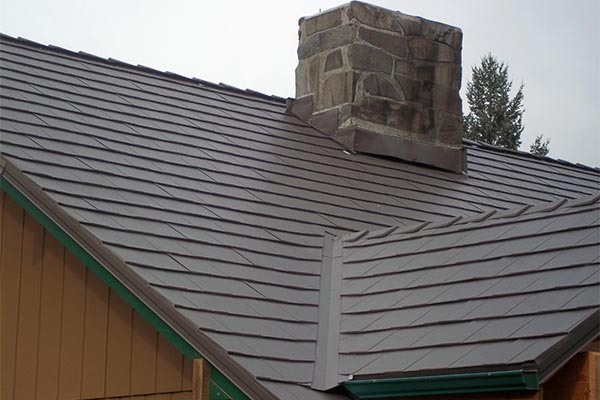
Flashing around chimneys takes the most abuse on Long Island roofs. The constant heating and cooling cycles, combined with salt air exposure near the coast, make chimney flashing particularly vulnerable. If your home is more than 15 years old and you’ve never had the flashing inspected, you’re looking at one of the most common entry points for storm-related leaks.
The inspection also covers your attic. Why? Because proper attic ventilation does more than regulate temperature. During storms, a well-ventilated attic equalizes air pressure, which helps prevent wind uplift that can tear shingles off from below. Most homeowners have no idea their attic plays a role in storm protection, but roofing contractors who specialize in Long Island weather absolutely do.
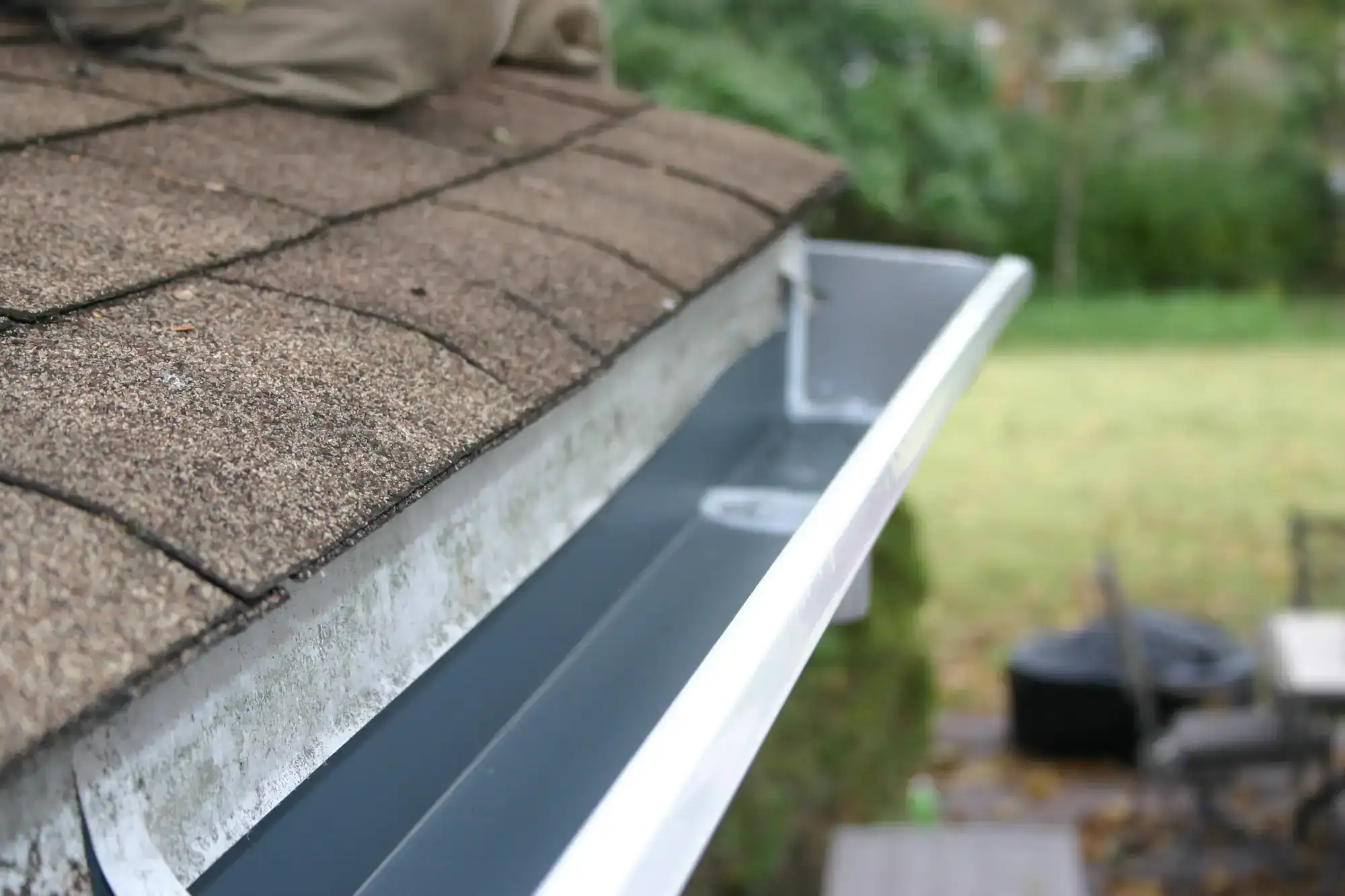
Gutters get checked too. If your gutter system is sagging, pulling away from the fascia, or showing rust damage, it won’t handle the water volume from a heavy Long Island rainstorm. When gutters fail during severe weather, water backs up under your shingles and into the roof deck. A $300 gutter repair becomes a $5,000 structural problem real fast.
Here’s what most Long Island homeowners don’t understand about storm damage: you might not see it for months.
Hail is the perfect example. A hailstorm hits, you walk outside after it’s over, and your roof looks fine. No holes, no visible damage. But hail doesn’t need to punch through your shingles to destroy them. It knocks the protective granules loose, cracks the asphalt underneath, and drastically shortens your roof’s lifespan.
You won’t see a leak right away. But six months later, when the next rainstorm comes through, water starts finding its way into your attic. By then, the damage has spread, and what could have been addressed early is now a replacement conversation.
Wind damage works the same way. High winds lift shingles just enough to break the sealing strips between them. The shingles settle back down and look completely normal from the ground. But that seal is gone. The next time wind-driven rain hits your roof, water gets underneath those shingles and into the underlayment.
Insurance companies know this. They actually subscribe to tracking services that monitor hail and wind activity in specific areas. If your neighborhood experienced damaging weather, your insurance company likely knows about it. That’s why we recommend getting an inspection after any significant storm—not because we’re looking for extra work, but because waiting to address hidden damage often means your insurance company denies the claim later for “pre-existing conditions.”
The challenge with Long Island’s location is that multiple factors work against your roof simultaneously. You get high winds that lift shingles, salt air that corrodes flashing, heavy rain that tests every seal, and temperature swings that cause materials to expand and contract. Each storm takes years off your roof’s life, even when you don’t see obvious damage.
We regularly see roofs that look fine from the street but are actually one storm away from failure. The homeowner had no idea. They thought everything was okay because they couldn’t see missing shingles or obvious leaks. Then a nor’easter comes through, and suddenly they’re dealing with water damage, emergency repairs, and insurance claims.
This is exactly why the homeowners who prepare before storm season spend a fraction of what those who wait end up paying. It’s not about being paranoid. It’s about understanding that Long Island weather doesn’t give you second chances.
Preparing a Long Island roof for storm season isn’t about crossing your fingers and hoping for the best. Professional roofing companies follow a specific process that addresses the vulnerabilities severe weather targets first.
It starts with timing. Roofing contractors who understand Long Island don’t wait until hurricane warnings are posted or nor’easters are in the forecast. We schedule inspections in early spring and late fall—before storm season hits and after it passes. This catches winter damage early and prepares your roof for the severe weather ahead.
The preparation process focuses on the areas where storms cause the most damage: shingles, flashing, gutters, and structural weak points. Each gets evaluated for current condition and storm-readiness.
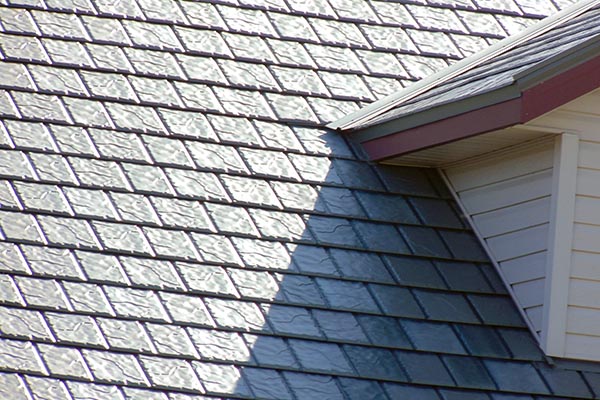
Your shingles are your roof’s first line of defense, which means they’re also the first to fail when severe weather strikes. Professional roofers walk your roof looking for specific warning signs that indicate vulnerability.
Curling shingles mean the adhesive seal is breaking down. Cracked shingles show age and brittleness. Missing granules (those small rock-like pieces that cover asphalt shingles) indicate the protective coating is wearing away. Any of these conditions means your roof has weak points where wind can get underneath during a storm and peel entire sections away.
South and west-facing slopes take the most punishment from sun exposure on Long Island. These areas tend to show wear faster, which makes them more vulnerable during storms. A pre-storm inspection identifies these problem areas and replaces damaged shingles before high winds exploit the weakness.
Here’s the cost reality: replacing a section of damaged shingles before a storm might run a few hundred dollars. Waiting until a nor’easter rips that section off and water gets into your attic? You’re looking at thousands in emergency repairs, interior damage, and potentially mold remediation.
The type of shingles matters too. Impact-resistant shingles are specifically engineered to withstand hail damage that would crack standard asphalt shingles. They’re rated to handle hail impacts up to two inches without breaking, and many insurance companies offer premium discounts for homes with impact-rated materials. In Long Island’s storm-prone environment, that upgrade pays for itself.
We also check the nailing pattern. Improperly nailed shingles are one of the most common reasons roofs fail during high winds. If the nails aren’t driven in correctly or if they’ve popped up over time, those shingles are coming off in the next big storm. Fixing this before severe weather hits is straightforward. Fixing it after your roof is already damaged is expensive.
The installation method matters as much as the materials. Experienced Long Island roofers know that shingles need to be installed with specific techniques that account for coastal wind conditions. The adhesive needs proper time to seal. The overlap needs to be precise. The edge protection needs reinforcement. These aren’t details that show up in a quick visual inspection, but they’re the difference between a roof that survives a nor’easter and one that doesn’t.
Ask any experienced roofing contractor where most storm-related leaks begin, and they’ll tell you the same thing: flashing. Not shingles. Flashing.
Flashing is the metal material installed around chimneys, skylights, vents, and anywhere your roof has a transition or penetration. It’s designed to direct water away from these vulnerable areas. When flashing fails, water goes exactly where you don’t want it—into your home.
Over time, the caulk around flashing dries out, the metal corrodes (especially in Long Island’s salt air), and the seal loosens. During a storm, wind-driven rain finds these gaps and gets underneath your roofing system. By the time you notice a leak inside your house, the damage has often spread to the roof deck and insulation.
We check every flashing point before storm season. We look for rust, gaps in the sealant, loose sections, and areas where previous repairs were done incorrectly. Chimney flashing gets extra attention because it deals with the most stress—temperature changes from the chimney itself, plus exposure to all the weather Long Island throws at it.
Replacing or repairing flashing before a storm is a relatively simple job for an experienced roofer. Waiting until water is pouring into your attic during a nor’easter? That’s an emergency call, and emergency repairs cost significantly more than preventive maintenance.
Gutters play a bigger role in storm protection than most homeowners realize. During a heavy rainstorm, your gutters need to move a lot of water away from your roof and foundation—fast. If they’re clogged with leaves and debris, sagging away from the fascia, or showing damage, they can’t do their job.
When gutters fail during severe weather, water backs up onto your roof. It sits there, finding any small gap or weakness in your shingles. Eventually, it works its way under the roofing material and into the deck below. What started as a clogged gutter becomes a rotted roof deck, and you’re looking at structural repairs.
We don’t just clean gutters—we check the entire drainage system. Are the downspouts directing water away from the foundation? Are there dents or uneven sections that prevent proper water flow? Is the gutter securely attached, or will it pull away when it gets heavy with water and debris?
Trees are another factor that gets addressed during storm preparation. Overhanging branches are one of the biggest threats to your roof during high winds. A heavy limb crashing down in a nor’easter can punch through shingles and decking, causing thousands of dollars in damage in seconds. We recommend trimming all branches back at least six feet from your roofline and removing any dead or weakened trees before storm season arrives.
These aren’t the glamorous parts of roofing. Nobody gets excited about gutter maintenance or flashing repairs. But they’re the details that determine whether your roof survives the next big storm or becomes an insurance claim.
Being storm-ready doesn’t mean your roof is indestructible. It means the vulnerabilities that severe weather exploits have been identified and addressed before the storm hits.
It means your flashing is sealed, your shingles are secure, your gutters can handle heavy rain, and the weak points that turn into expensive leaks have been fixed. It means a professional has looked at your roof with an understanding of what Long Island weather does to roofing systems—not just what looks good from the ground.
Most importantly, it means you’re not crossing your fingers every time the forecast shows a nor’easter heading toward Suffolk County. The homeowners who prepare spend less, stress less, and avoid the emergency repair calls that come with storm damage.
If you’re in Nassau or Suffolk County and you’re not sure whether your roof is actually ready for the next storm, we’ve been preparing Long Island homes for severe weather for over two decades. We know what coastal storms do to roofs because we’ve been repairing and preventing that damage since before most roofing companies in the area existed.
Article details:
Share:
Continue learning: