Seamless gutters eliminate joint failures and reduce maintenance headaches that plague traditional sectional systems on Long Island homes.
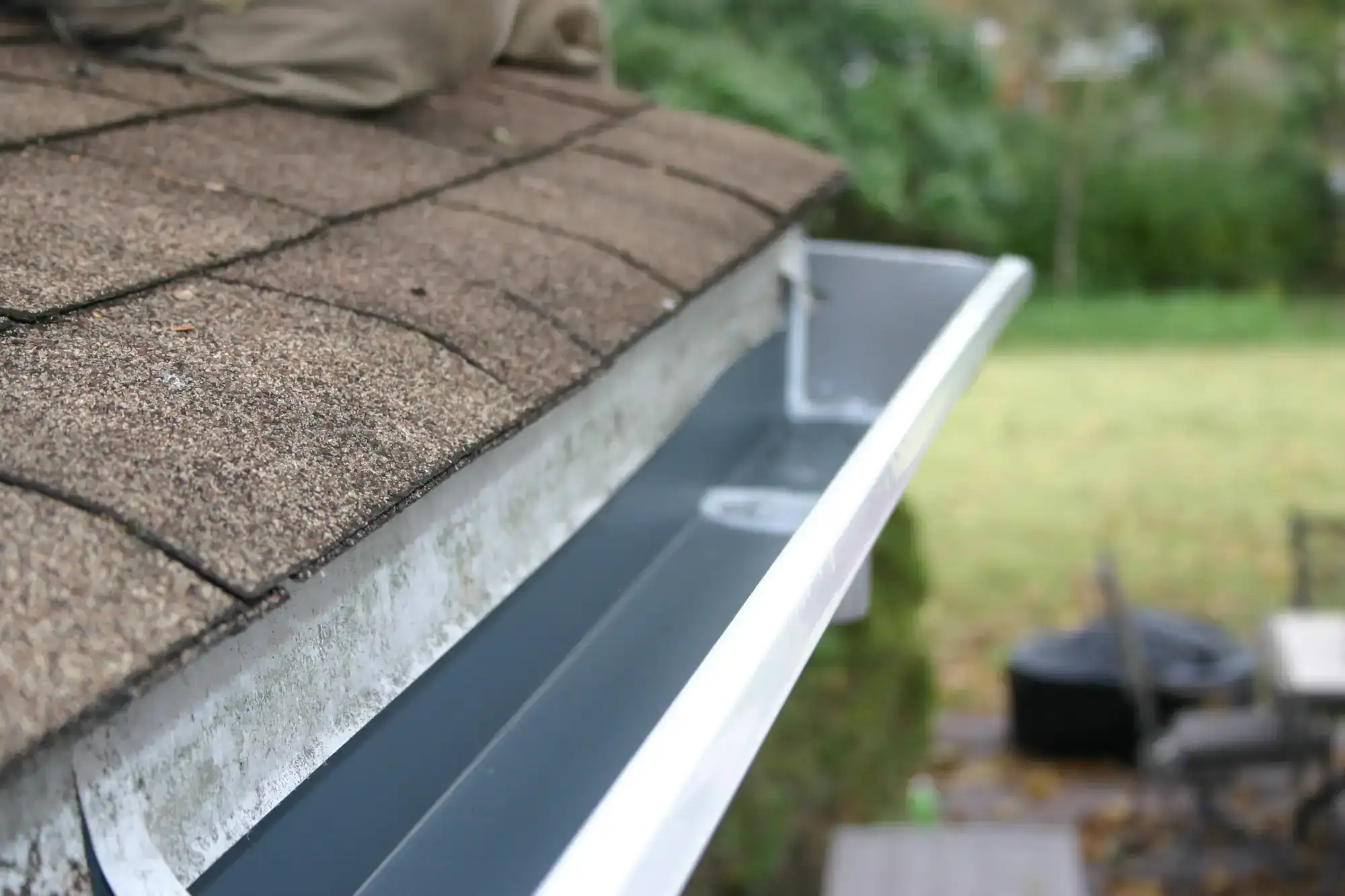
Traditional gutters come in 10 to 20-foot sections that get pieced together along your roofline. Each connection point needs sealant to prevent water from escaping, but these seams become the weakest links in your system.
Long Island’s weather cycles stress these joints repeatedly. Summer heat expands the metal, winter cold contracts it, and the constant movement eventually breaks down even the best sealants. Once that happens, water starts dripping behind your gutters where it can rot fascia boards and damage your home’s structure.
The problem gets worse over time because debris naturally collects at these seam points, creating dams that force water to back up and find new escape routes.
When traditional gutter seams fail, the damage often goes unnoticed until it’s extensive and expensive. Water that escapes at joint points doesn’t just drip harmlessly to the ground—it infiltrates areas where it can cause serious structural problems.
The most common issue is fascia board rot. These wooden boards support your gutters and protect the edges of your roof structure. When water consistently leaks behind the gutter at seam points, it soaks into this wood and creates perfect conditions for decay. Replacing rotted fascia boards requires removing gutters, cutting out damaged sections, and installing new lumber—a job that typically runs $15 to $25 per linear foot in labor and materials.
But the damage doesn’t stop there. Water that gets past your fascia can penetrate into your roof’s edge, potentially damaging the roof deck and creating entry points for more water infiltration. This type of damage often requires extensive repairs that can cost thousands of dollars and may not be covered by standard homeowner’s insurance if it’s deemed the result of poor maintenance.
Foundation problems represent another serious concern when gutter seams fail. Water that should be directed away from your home instead pools near your foundation walls. Long Island’s clay soil compounds this issue because it expands when wet, creating additional pressure against foundation walls and potentially leading to cracks that allow water into your basement.
Traditional sectional gutters require significantly more maintenance attention than most homeowners realize. Each seam point needs regular inspection and eventual re-sealing, turning gutter maintenance into an ongoing project rather than a simple cleaning task.
We typically recommend checking seam integrity twice per year and re-sealing joints every 3 to 5 years, depending on weather exposure and material quality. This maintenance isn’t just about applying new sealant—it involves cleaning out old, failed sealant, properly preparing the surfaces, and applying new material under the right weather conditions for proper adhesion.
The process becomes more complicated when you factor in Long Island’s coastal environment. Salt air accelerates the breakdown of both metal components and sealants, meaning maintenance cycles often need to be shortened. Many homeowners discover this the hard way when they follow standard maintenance schedules only to find their gutters failing prematurely.
Debris accumulation at seam points creates additional maintenance challenges. Leaves, twigs, and other materials naturally collect where sections join, creating small dams that force water to back up and overflow. These collection points need more frequent cleaning attention than smooth, continuous gutter runs, and the debris often gets packed into seam areas where it’s harder to remove completely.
The cumulative effect of this increased maintenance burden often exceeds the initial cost savings of choosing traditional gutters over seamless systems. When you factor in the time, materials, and potential professional service calls required to keep sectional gutters functioning properly, the total cost of ownership typically favors seamless installations within the first decade of use.
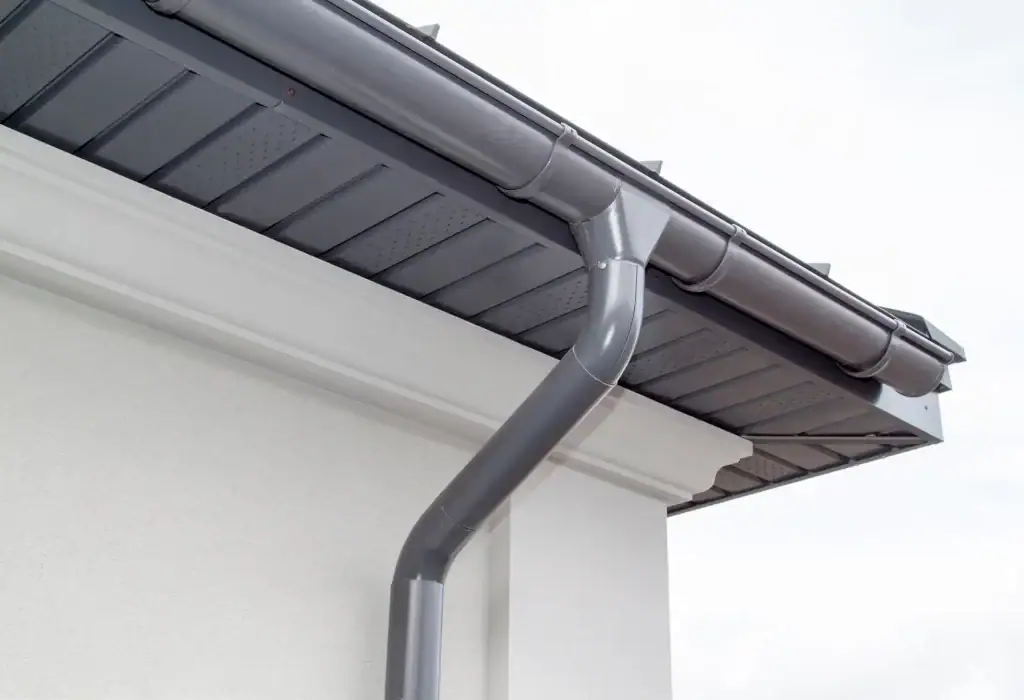
Seamless gutters take a fundamentally different approach by eliminating joints along straight runs. Instead of connecting multiple sections, these systems use continuous pieces of aluminum that are custom-formed on-site to match your home’s exact dimensions.
This manufacturing process happens at your property using portable roll-forming equipment. We feed flat aluminum coil through the machine, which shapes it into the gutter profile and cuts it to the precise length needed for each run. The result is a single piece of gutter that spans from one end of a roofline section to the other without any intermediate connections.
The only seams in a seamless system occur at corners and downspout connections—areas where joints are structurally necessary but can be properly engineered and sealed for long-term performance.
The on-site fabrication process for seamless gutters provides significant advantages beyond just eliminating seams. Because each piece is made specifically for your home, you get precise fit and optimal performance characteristics that aren’t possible with pre-manufactured sectional systems.
We measure each run carefully, accounting for proper slope, architectural details, and drainage requirements. The roll-forming machine then creates gutters that match these exact specifications, ensuring water flows efficiently toward downspouts without creating standing water areas where debris can accumulate.
This custom approach also allows for better integration with your home’s existing features. We can adjust the gutter profile, depth, and mounting details to work optimally with your roof edge, fascia boards, and architectural style. The result is a system that not only functions better but also looks more finished and professional than sectional installations.
Material consistency represents another advantage of the seamless fabrication process. Each piece comes from the same aluminum coil, ensuring uniform thickness, finish, and color throughout the entire installation. Traditional systems often use gutters from different production runs or even different manufacturers, leading to slight variations that can affect both performance and appearance over time.
The installation process for seamless systems also tends to be more efficient and precise. Because each piece is pre-cut to exact specifications, there’s no field cutting, fitting, or adjustment required. We can focus on proper mounting, slope adjustment, and connection details rather than spending time making sections fit together properly.
The maintenance advantages of seamless gutters become apparent within the first few years of installation. Without multiple seam points to inspect and maintain, your gutter system requires significantly less ongoing attention and professional service.
Cleaning becomes more straightforward because debris flows more easily through continuous runs without getting caught at joint points. Most homeowners find they can clean seamless gutters less frequently while achieving better results, and professional cleaning services often charge less for seamless systems because the work goes faster and more efficiently.
Long-term maintenance costs drop dramatically when you eliminate the need for regular seam re-sealing. Traditional systems typically require professional seam maintenance every 3 to 5 years, with costs ranging from $3 to $7 per linear foot depending on access difficulty and material requirements. Over a 20-year period, this maintenance expense alone can exceed the initial price difference between traditional and seamless systems.
The durability advantages of seamless construction also reduce replacement costs over time. While traditional gutters often need section replacement due to seam failures or localized damage, seamless systems typically maintain their integrity much longer. When repairs are needed, they’re usually limited to specific areas rather than requiring extensive seam work or section replacement.
Insurance benefits sometimes apply to seamless gutter installations as well. Some homeowner’s insurance providers offer premium discounts for homes with seamless gutters because they reduce water damage risks. While these discounts are typically modest, they provide additional long-term value that helps offset the higher initial installation cost.
The evidence strongly favors seamless systems for Long Island homes, where coastal weather and seasonal extremes put extra stress on gutter systems. While the initial investment is higher, the reduced maintenance requirements, better performance, and longer lifespan make seamless gutters the more cost-effective choice over time.
Your decision should factor in how long you plan to stay in your home and your tolerance for ongoing maintenance tasks. If you’re looking for a system that performs reliably with minimal attention, seamless gutters provide the peace of mind that comes with professional-grade protection.
For expert seamless gutter installation that’s designed to handle Long Island’s challenging weather conditions, we at Expressway Roofing and Chimney Inc bring over two decades of local experience to every project.
Article details:
Share:
Continue learning: