
Storm Damage Roof: Hurricane Prep Essentials for Suffolk County
What Suffolk County homeowners need to know about storm damage, roof prep, and why the first 48 hours after a storm matter more than most people realize.
Suffolk County homeowners don’t need to be convinced that storms are serious. The South Shore communities that lived through Sandy already know what a compromised roof can turn into overnight. But most storm damage doesn’t announce itself with a ceiling collapse — it starts quietly, under a lifted shingle or a cracked flashing seal, and works its way inward for weeks before you notice anything. That’s what makes preparation and early inspection so important. This guide covers what to check before storm season peaks, what to do in the hours after a storm, and how modern inspection tools have changed what “knowing your roof’s condition” actually looks like.
Hurricane Roof Damage: What Long Island Homes Are Actually Up Against
Long Island isn’t just theoretically in a hurricane zone — it has the history to prove it. The 1938 “Long Island Express” hit Suffolk County as a Category 3 storm with wind gusts reaching 125 mph and an 18-foot storm surge that destroyed nearly 9,000 homes across New York. Sandy followed in 2012, and Tropical Storm Isaias tore through in 2020 with 65 mph winds that left widespread roof damage from Babylon to Brookhaven. Each of those storms left behind a different kind of damage, and each one exposed the same basic truth: a roof that looks intact from the street can be quietly failing underneath.
The primary way hurricanes destroy roofs isn’t dramatic. Wind uplift gradually peels shingles away from the surface, breaks their adhesive seal, and exposes the underlayment beneath. Once that layer is compromised, even a moderate rainstorm can drive water into the decking and cause damage that spreads fast. Combine that with the salt air corrosion that accelerates wear on metal components along the South Shore and East End, and you have a situation where regular inspection isn’t optional — it’s just part of owning a home in Suffolk County.
Pre-Storm Roof Inspection: What to Check Before Hurricane Season Hits
The best time to find a problem with your roof is before a storm forces you to find it. A pre-storm inspection isn’t just about peace of mind — it’s about knowing exactly where your roof stands before wind and rain put it to the test. For Suffolk County homes, especially those built in the 1950s through 1970s when most of the county’s housing stock went up, that inspection often surfaces issues that have been quietly developing for years.
Start with what you can see from the ground. Missing or curling shingles are the most obvious signs, but look also at the ridge cap along the peak of your roof — that’s often the first place storm winds attack. Check your gutters for an unusual accumulation of granules, which look like coarse sand. Granule loss means your shingles are aging and losing their ability to deflect impact and shed water effectively. Clogged gutters are also worth addressing before storm season: when water can’t drain properly during a heavy downpour, it pools at the roof edge and works its way under the shingles.
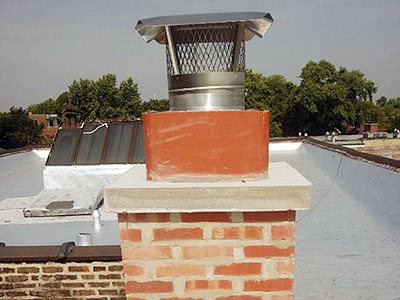
From inside, check your attic after any rain for water stains, soft spots in the decking, or daylight coming through where it shouldn’t. These are signs that water has already found a path in. If you have a chimney, the cap and crown deserve a close look too — cracked crowns and missing caps are common entry points for water that most homeowners don’t think to check until there’s already a problem inside.
The trees around your home matter more than most people realize. Branches within ten feet of your roof become projectiles in high winds. A branch that’s been rubbing against your shingles for years may have already worn through the protective granule layer in that spot. Trimming them back before storm season is one of the simplest and most effective things you can do.
If your home is on the South Shore — in Islip, Babylon, or any of Brookhaven’s oceanside communities — you’re dealing with both wind exposure and the potential for storm surge. That means your gutters, flashing, and any metal components have been working in a salt-air environment that accelerates corrosion. What looks structurally sound from the outside may be more compromised than it appears.
Emergency Roof Inspection After a Storm: What Happens and Why Drone Technology Changes It
After a storm passes, the instinct is to get up on the roof and see what happened. That instinct is understandable, but it’s also one of the most common ways post-storm injuries happen. A roof that took wind and rain damage may have loose or missing shingles, wet and slippery surfaces, and structural concerns that aren’t visible from the edge of a ladder. The safer and more thorough approach is a professional inspection — and today, that doesn’t necessarily mean anyone has to climb up there at all.
We use drone video technology to conduct post-storm roof assessments, and it changes what an inspection can actually tell you. A drone can capture high-resolution footage of every surface, valley, ridge, and flashing point on your roof without putting anyone on an unstable structure. The documentation it produces — detailed video, still images, and precise measurements — is exactly the kind of evidence an insurance adjuster needs to process a claim accurately. The first 24 to 48 hours after a storm are the critical window for documentation. Mistakes made in that window, or documentation that’s incomplete, can result in a denied claim or a payout that doesn’t cover the actual damage.
For Suffolk County homeowners navigating an insurance claim, this matters enormously. Hurricane deductibles in New York typically run between one and five percent of your home’s insured value — on a $400,000 home, that’s $4,000 to $20,000 out of pocket before your policy pays anything. Getting the documentation right isn’t a formality. It directly affects what you’re reimbursed.
There’s also a distinction worth understanding between temporary and permanent repairs. After a storm, the priority is stopping additional water from entering the home — which may mean emergency tarping or patching while a full assessment is completed. Some emergency crews nail tarps directly through shingles and underlayment, creating new damage on top of the storm damage. We handle both the emergency stabilization and the permanent repair to ensure that the temporary fix doesn’t become a second problem to solve.

Roof Storm Damage Prevention: The Steps That Actually Reduce Your Risk
Prevention doesn’t eliminate storm risk on Long Island — nothing does. But it does change what a storm does to your specific roof. The difference between a roof that loses a few shingles and one that requires a full section replacement often comes down to the condition it was in before the storm arrived. That’s what makes the pre-season window, roughly May and June before Atlantic hurricane season peaks, such a valuable time to act.
Beyond the inspection checklist, there are structural upgrades worth knowing about. Hurricane straps — metal connectors that tie your roof framing to the wall framing below — can be retrofitted to most existing homes for roughly $1,000 to $3,000 and significantly reduce the risk of roof-to-wall separation in high winds. Impact-resistant shingles rated to withstand 110 mph or more are another option, and in many cases they qualify homeowners for insurance discounts. These aren’t emergency measures. They’re investments that pay off the next time a named storm tracks up the East Coast toward Suffolk County.
Does Homeowners Insurance Cover Storm Roof Damage in Suffolk County?
This is one of the most common questions we hear, and the honest answer is: it depends on the type of damage and how well it’s documented. Standard homeowners insurance in New York generally covers wind damage to your roof — missing shingles, damaged flashing, structural compromise caused by wind uplift. What it does not cover is storm surge flooding. If rising water enters your home, that falls under flood insurance, which is a separate policy typically issued through FEMA’s National Flood Insurance Program.
For South Shore homeowners in communities like Lindenhurst, Bay Shore, or Mastic Beach — many of which sit in designated FEMA flood zones — this distinction is critical. A storm that brings both high winds and storm surge can cause two entirely different categories of damage that require two entirely different claims processes. Knowing which policy covers what before a storm hits is far better than sorting it out afterward.
There’s also the matter of hurricane deductibles, which apply specifically to named storm events in New York. These are separate from your standard deductible and are calculated as a percentage of your home’s insured value rather than a flat dollar amount. The result is that even homeowners with solid coverage can face significant out-of-pocket costs after a hurricane. Understanding your deductible structure now — not the day after a storm — puts you in a much better position.
One more thing worth knowing: mold coverage after storm damage is typically time-sensitive. If water enters your home through a damaged roof and mold develops, your insurer will generally cover remediation if it’s addressed quickly. Delays in cleanup or repairs can void that coverage. This is one of the reasons the post-storm response window matters as much as it does — not just for the roof claim, but for everything downstream from it.
How to Spot a Storm-Chasing Contractor Before You Sign Anything
After every major storm to hit Long Island, the same thing happens: contractors from out of state flood the market, going door to door in hard-hit neighborhoods, offering fast repairs at prices that seem reasonable in the moment. Suffolk County homeowners saw this after Sandy, and it didn’t end well for a lot of people. Deposits were paid, work was done poorly or not at all, and the contractors were unreachable within weeks.
The warning signs are consistent. A legitimate roofing contractor serving Suffolk County will hold a Home Improvement Contractor license — this is a legal requirement in the county, not optional. They’ll have a verifiable local address, not just a phone number. They’ll give you a written, itemized estimate before any work begins, and they won’t pressure you to sign immediately. If someone knocks on your door the day after a storm and offers to waive your deductible, walk away — that’s insurance fraud, and it puts you at legal risk, not just them.
When you’re evaluating any contractor after storm damage, check for third-party reviews on platforms like Angi or Google — not just testimonials on their own website. Ask how long they’ve been operating in Suffolk County specifically. A contractor who’s been working in Brookhaven, Islip, and Huntington for over two decades has pulled permits at those town building departments, knows the local code requirements, and has a reputation that’s worth protecting. That accountability matters when you need someone to stand behind their work six months later.
We’ve been based in Manorville and serving all of Suffolk County since 2000. Every storm that’s hit this county in the past 22-plus years, we’ve been here for it — before, during, and after. That’s the kind of continuity a company that drove in from out of state can’t offer.
Storm Damage Roof Repair in Suffolk County: What to Do Next
If storm season is approaching and you haven’t had your roof inspected, that’s the most useful next step you can take right now. Not because something is necessarily wrong, but because knowing your roof’s condition before a storm is the only way to make informed decisions after one.
If you’ve already experienced storm damage, the priority is documentation and temporary stabilization — in that order. Don’t let anyone make permanent repairs before your insurance adjuster has seen the damage, and make sure whoever handles your emergency response is the same contractor who’ll see the job through to completion.
We’ve been serving Suffolk County homeowners for over 22 years. We handle roofing, chimneys, gutters, siding, and everything else a storm can damage — so you’re making one call, not four. If you have questions about your roof’s condition or need an inspection before the season peaks, reach out. We offer free estimates and we’re available around the clock when the weather doesn’t cooperate.

Article details:
- Published by:
- Roofing & Chimney Contractor Long Island, NY
- Published to:
- Last modified: October 1, 2026
- October 13, 2026
Share:
Continue learning: